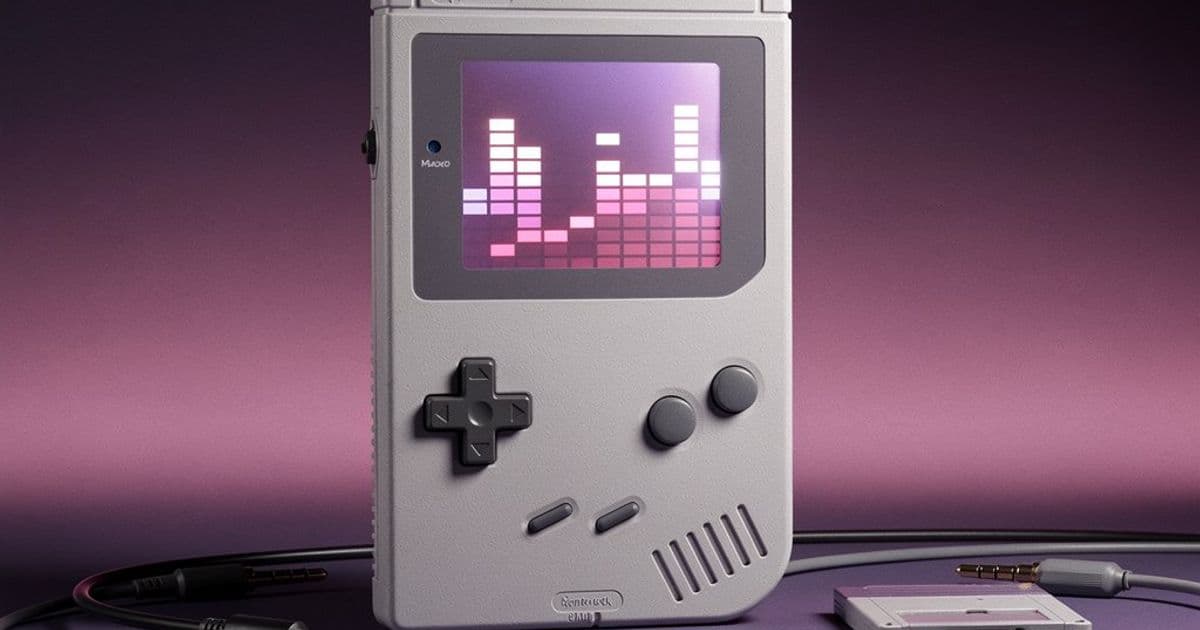
Little Sound Dj (LSDj) persists as the quintessential music sequencer for Nintendo's Game Boy, empowering both Grammy-winning artists and bedroom producers through its accessible yet powerful 4-bit sound design toolkit.
In an era dominated by sophisticated digital audio workstations, the unassuming Little Sound Dj ROM continues to shape electronic music creation from its unlikely home: Nintendo's original Game Boy hardware. This specialized sequencer transforms the 1989 handheld into a legitimate musical instrument, leveraging the console's distinctive 4-channel, 4-bit sound architecture to generate crunchy basslines, crystalline arpeggios, and the unmistakable timbres that define the chiptune genre. Its enduring appeal lies not in technical complexity, but in constraints that foster creativity—a philosophy evident in its design.
Functionally, LSDj operates within strict hardware limitations while offering surprising depth. Users manipulate four parallel sound channels: two pulse wave generators capable of variable duty cycles, a programmable wavetable synthesizer for custom waveforms, and a noise channel for percussive elements. The software further expands possibilities through dual sample playback capabilities and synthesized speech functionality. Synchronization options reveal LSDj's adaptability, allowing integration with analog gear via sync pulse, connection to other Game Boys, or modern MIDI/VST environments—effectively bridging retro hardware with contemporary production setups.
The software's accessibility fuels its cultural impact. While designed for original hardware using flash cartridges like the EverDrive, LSDj thrives through emulation. Projects like the cycle-accurate Sameboy emulator and Windows-focused BGB enable operation across modern systems, while portable emulation devices such as the RG350 maintain the tactile experience. This ecosystem lowers barriers to entry, inviting experimentation without demanding expensive vintage gear.
Behind LSDj's longevity lies a community-driven support model. Development persists through a public wishlist where users propose features, alongside a transparent bug reporting system. Financial sustainability comes from voluntary contributions, with recent donations funding hosting and development—a testament to user investment in preserving this unique creative tool. The project maintains independence despite its Nintendo associations, explicitly noting lack of official endorsement while respectfully acknowledging trademark boundaries.
What emerges is more than software: LSDj represents a philosophy of accessible artistry. By transforming mass-market gaming hardware into an instrument, it democratizes electronic music production. The constraints of 4-bit audio become virtues, pushing composers toward melodic clarity and rhythmic innovation. As evidenced by its continued use decades after the Game Boy's commercial sunset, LSDj proves that creative tools need not chase technical perfection when they instead perfect creative expression within defined boundaries.
Comments
Please log in or register to join the discussion