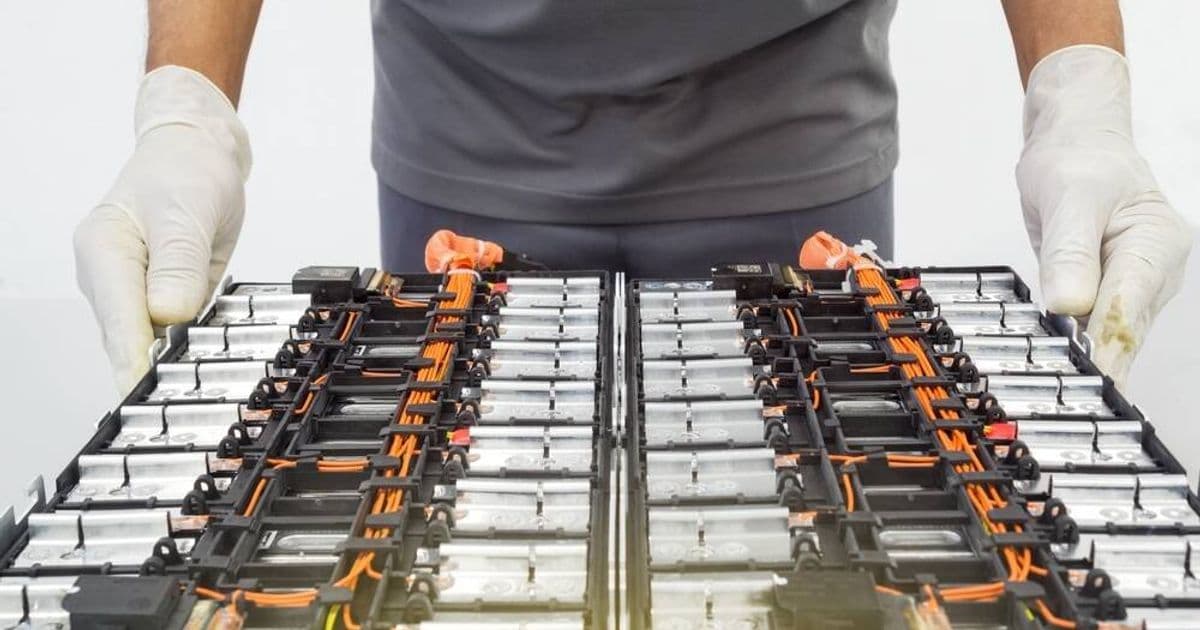
Researchers have developed a machine learning framework that reduces lithium-ion battery testing time by 98% and costs by 95%, potentially revolutionizing energy storage development.
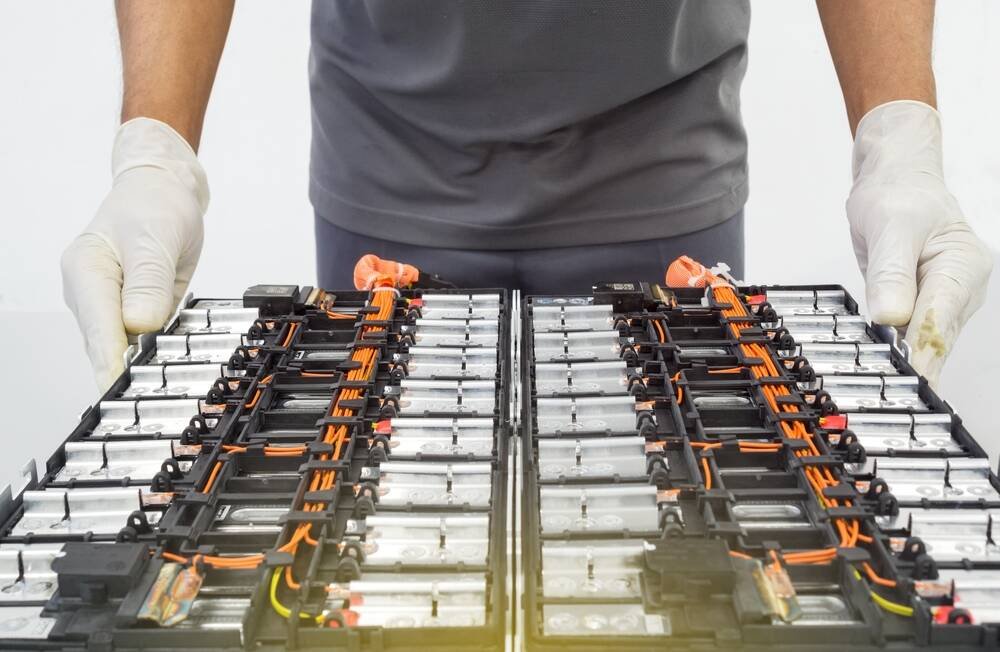
The energy-intensive process of validating lithium-ion batteries faces a fundamental bottleneck: brute-force testing requires months or years of repeated charge-discharge cycles to determine lifespan. According to industry studies, continuing current testing methods could consume 130,000 GWh from 2023-2040—equivalent to half of California's annual electricity output. This inefficiency significantly delays deployment of improved batteries for EVs, electronics, and grid storage.
Published in Nature, a new machine learning framework called Discovery Learning demonstrates how to bypass this bottleneck. Developed by Jiawei Zhang's team at the University of Michigan, the system achieved 98% time reduction and 95% cost savings compared to conventional testing protocols while maintaining prediction accuracy within 15% mean error.
The framework operates through three integrated modules:
| Module | Function | Data Input |
|---|---|---|
| Learner | Selects promising battery prototypes for initial testing | Historical datasets |
| Interpreter | Analyzes early-cycle data using physics-based models | Prototype test data |
| Oracle | Predicts full lifespan based on partial data | Interpreter outputs |
Crucially, the Oracle's predictions continuously feed back into the Learner module, creating an iterative self-improvement loop. "This avoids time-consuming full-life testing by using predicted lifetimes instead of experimentally measured ones," explains University of Connecticut professor Chao Hu in an accompanying commentary.
Performance benchmarks reveal the system's efficiency: Where traditional methods require thousands of cycles over years to validate a single design, Discovery Learning achieves accurate predictions after just 100-200 cycles. This compression stems from strategically selecting prototypes that maximize learning value per test cycle.
However, limitations exist. Validation is pending for batteries operating under real-world variable temperatures and load conditions. Hu notes uncertainty remains when evaluating radically new battery chemistries lacking historical training data. Still, with the global battery market projected to grow from $120 billion to $500 billion by 2030, even marginal improvements yield massive savings.
This approach fundamentally shifts battery R&D economics. By replacing physical endurance tests with AI-driven predictions, manufacturers could accelerate development of next-generation batteries while conserving gigawatt-hours of electricity previously wasted in validation cycles.
Comments
Please log in or register to join the discussion