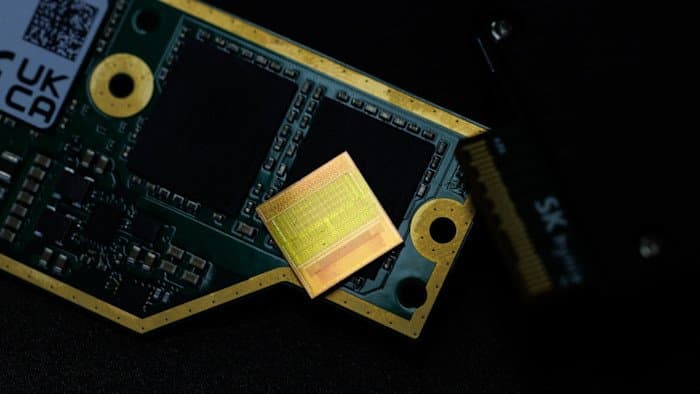
US memory chip stocks lost ~$100B in market value this week, led by Micron's 15% drop, after Google Research detailed its TurboQuant compression algorithm
US memory chip stocks suffered a devastating $100 billion market value loss this week, with Micron Technology leading the decline after Google Research unveiled its TurboQuant compression algorithm. The 15% drop in Micron's stock price sent shockwaves through the semiconductor industry, raising questions about the future demand for high-bandwidth memory in AI data centers.
The Google TurboQuant Revelation
Google Research's detailed publication of the TurboQuant compression algorithm appears to be the catalyst for this market rout. The algorithm promises to significantly reduce the memory requirements for AI workloads, potentially up to 50% in some cases. This efficiency gain directly threatens the business models of memory manufacturers who have been betting heavily on explosive AI data center growth.
Industry analysts suggest that investors had been pricing in optimistic scenarios for memory demand, assuming AI models would continue to grow exponentially in size and complexity. Google's transparency about TurboQuant's capabilities has forced a painful market reassessment of these assumptions.
Market Impact Beyond Micron
The carnage wasn't limited to Micron alone. Other major memory chip manufacturers saw substantial losses, with the Philadelphia Semiconductor Index dropping sharply. Companies like SK Hynix and Samsung Electronics, though traded primarily in Asian markets, also felt the pressure as investors reassessed the AI infrastructure spending outlook.
This market reaction highlights the interconnected nature of the semiconductor supply chain and how quickly sentiment can shift when fundamental assumptions about technology roadmaps change.
The AI Memory Economics Shift
What makes this particularly concerning for memory manufacturers is that TurboQuant represents a broader trend toward AI efficiency rather than just a one-off optimization. The algorithm is part of Google's larger effort to make AI more computationally and memory-efficient, which could have long-term implications for hardware requirements.
Industry experts note that as AI models become more sophisticated in their architecture and training methodologies, the raw memory requirements may plateau even as capabilities continue to advance. This decoupling of performance from hardware demands could fundamentally alter the economics of AI infrastructure.
Investor Sentiment and Future Outlook
Market analysts are now questioning whether the current AI infrastructure buildout represents a sustainable long-term trend or a temporary boom that could cool as efficiency improvements accelerate. The memory chip sector had been one of the biggest beneficiaries of the AI gold rush, with prices and demand surging over the past two years.
Some investors see this as a healthy correction that better aligns market expectations with technological reality. Others worry it could signal the beginning of a more prolonged downturn if AI efficiency continues to improve faster than anticipated.
Broader Tech Market Context
This memory chip selloff occurred against a backdrop of broader tech market weakness, with major companies like Meta, Alphabet, and Microsoft also experiencing significant declines. The convergence of multiple negative factors - from geopolitical tensions to regulatory challenges - has created a perfect storm for tech stocks.
However, the specific timing and magnitude of the memory chip decline suggests that Google's TurboQuant announcement was a key trigger rather than just coincidental market movements.
What This Means for the AI Industry
The market's reaction to TurboQuant reveals how sensitive investors have become to any signals about AI infrastructure costs and requirements. While more efficient AI is generally positive for the industry's long-term sustainability, it creates short-term pain for companies that had positioned themselves around different assumptions.
This episode may also accelerate the trend toward vertical integration in AI hardware, as companies like Google, Amazon, and Microsoft seek to control more of their infrastructure stack to optimize for their specific algorithmic approaches rather than relying on commodity hardware assumptions.
The $100 billion market value loss serves as a stark reminder that in the rapidly evolving AI landscape, technological breakthroughs can create winners and losers overnight, and the ability to adapt to changing efficiency paradigms may be as important as raw performance gains.
Comments
Please log in or register to join the discussion