The gap between understanding message queues conceptually and actually knowing when to use them comes down to one simple comparison: warehouses versus post offices.

The gap between understanding message queues conceptually and actually knowing when to use them comes down to one simple comparison: warehouses versus post offices. Most developers reach for a database when they need to store data, but message queues solve a fundamentally different problem—they're not about long-term storage at all.
Databases vs Message Queues: The Warehouse vs Post Office Mental Model
Databases function like warehouses. They're designed to hold diverse items indefinitely, with complex querying capabilities to retrieve specific pieces when needed. PostgreSQL or MongoDB instances store your application's state, user data, and historical records because those systems need persistent, queryable storage.
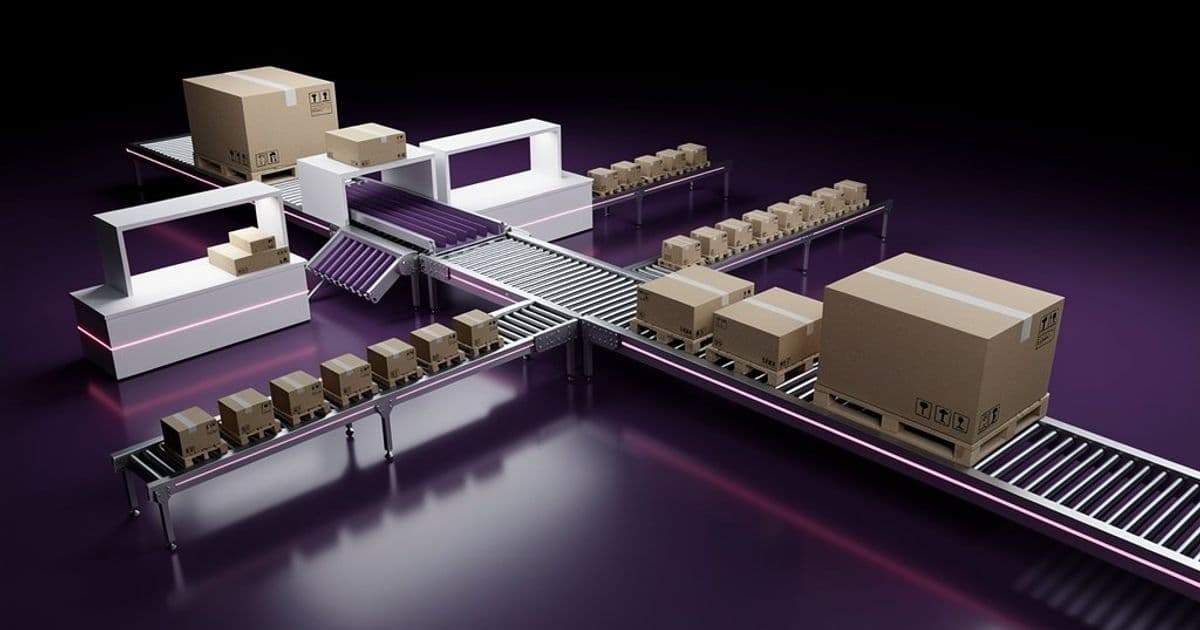
Message queues operate more like post offices. Messages arrive, get sorted into appropriate queues based on routing rules, and wait briefly until a consumer picks them up for delivery to their final destination. The key insight is temporal: post offices don't keep mail indefinitely—they're transit hubs, not storage facilities.
This distinction matters because it reveals the core purpose of message queues: they're flow control mechanisms, not databases. When you send a message through a queue, you're saying "this data needs to move somewhere, not stay here."
How Message Queues Actually Work
A message queue sits between your systems as a broker, implementing protocols like AMQP, MQTT, or STOMP. Producers (source systems) send messages to the queue, which maintains them in order until consumers retrieve and process them.
The protocol layer is crucial here. Most message brokers support at least one standard protocol, and client libraries handle the communication details. This means your producer and consumer don't need to know about each other directly—they only need to understand the queue's protocol.
Consider a typical flow:
- Producer sends a message to the queue (e.g., "order #12345 processed")
- Queue stores the message and acknowledges receipt immediately
- Consumer polls or subscribes to the queue, receives the message
- Consumer processes the message and acknowledges completion
- Queue removes the message from its storage
The entire interaction happens asynchronously. The producer doesn't wait for the consumer to finish processing—it just needs confirmation that the queue accepted the message.
The Microservice Connection: Why Async Communication Matters
Monoliths start simple: one codebase, one database, synchronous API calls between components. But as applications grow, this approach creates friction:
- Deployment coupling: Changing one component requires deploying the entire application
- Technology lock-in: You're stuck with your initial technology choices
- Scaling inefficiency: You must scale the entire monolith even if only one component is overloaded
- Fault propagation: A bug in one module can cascade and bring down everything
Microservices solve these problems by breaking the monolith into independent, single-responsibility services. Each service owns its data, uses appropriate technology, and scales independently.
But this independence creates a new challenge: how do services communicate?
Synchronous vs Asynchronous Communication
Synchronous communication (REST APIs, direct database calls) works like a phone call:
- Service A calls Service B
- Service A waits on the line
- Service B finishes its work
- Service B responds
- Service A continues
This works fine for simple flows, but breaks down under load. If Service B gets overwhelmed, Service A waits longer. If Service A needs to call multiple services sequentially, the total latency adds up. And if Service B fails, Service A's entire operation fails.
Asynchronous communication (message queues) works like email:
- Service A sends a message to the queue
- Service A immediately gets back to work
- Service B processes the message when ready
- Service B sends a response or triggers another message if needed
This pattern provides several advantages:
Load leveling: The queue buffers incoming requests during traffic spikes. Services process messages at their own pace instead of being overwhelmed.
Fault tolerance: If Service B goes down, messages accumulate in the queue. When Service B recovers, it processes the backlog without losing data.
Decoupling: Service A doesn't need to know which service handles its messages, or even how many services exist. You can add consumers without changing producers.
Parallel processing: Multiple consumer instances can pull from the same queue, distributing work automatically.
Real-World Patterns and Trade-offs
When Message Queues Shine
Order processing systems: When a customer places an order, the web application can immediately respond "order received" while the queue handles payment processing, inventory updates, email notifications, and shipping coordination across multiple services.
Image/video processing: Upload a file, get instant confirmation, then let background workers handle resizing, format conversion, and thumbnail generation without blocking the user interface.
Event-driven architectures: Services publish events ("user registered," "payment failed") to queues, and other services subscribe to relevant events without direct dependencies.
Batch operations: Instead of processing thousands of records synchronously, queue each record for parallel processing by worker pools.
When NOT to Use Message Queues
Real-time user interactions: If you need immediate responses (like validating a username during signup), queues add unnecessary latency.
Simple CRUD applications: A basic blog or content management system rarely benefits from message queues.
Small-scale systems: The complexity of setting up and monitoring queues may outweigh benefits for low-volume applications.
Transactional consistency requirements: If you need immediate, atomic transactions across services, synchronous coordination might be simpler.
Choosing Your Queue Technology
Different protocols and brokers optimize for different use cases:
AMQP (RabbitMQ, LavinMQ): Feature-rich, flexible routing, excellent for complex enterprise messaging patterns.
MQTT (Mosquitto, EMQX): Lightweight, designed for IoT and mobile, minimal bandwidth usage.
STOMP (ActiveMQ, RabbitMQ): Simple text-based protocol, good for web applications and simple messaging needs.
Redis Streams: If you're already using Redis, provides basic pub/sub and streaming capabilities.
Apache Kafka: For high-throughput event streaming and log aggregation, though it's more complex than traditional message queues.
Implementation Considerations
Message durability: Should messages survive broker restarts? Most queues offer persistence options, but with performance trade-offs.
Acknowledgment modes: Should the broker wait for consumers to acknowledge processing before removing messages? This affects reliability but adds latency.
Dead letter queues: What happens to messages that can't be processed after multiple attempts? You need a strategy for handling poison messages.
Monitoring and observability: Queue depth, consumer lag, and message rates are critical metrics. A growing queue indicates consumers can't keep up.
Message size limits: Most queues have maximum message sizes. Large payloads might need external storage with queue references.
Ordering guarantees: Do messages need to be processed in exact order? This limits horizontal scaling options.
The Bottom Line
Message queues aren't a replacement for databases—they're a complement. Use databases for storage and querying, use queues for flow control and asynchronous communication.
The post office analogy holds because it captures the essential truth: message queues are about movement, not storage. They enable your systems to communicate efficiently without tight coupling, handle load spikes gracefully, and continue operating even when individual components fail.
For microservice architectures, this becomes essential. Direct synchronous calls between services create a web of dependencies where one failure can cascade through the system. Message queues break these dependencies, allowing services to evolve and scale independently.
The transition from monolith to microservices isn't just about code organization—it's about changing how components interact. And that's where message queues become the infrastructure that makes everything else possible.
This guide draws from CloudAMQP's approach to explaining message queues through practical analogies. For deeper technical details on implementing message queues with RabbitMQ or LavinMQ, check out their comprehensive documentation and protocol comparisons.
Further Reading:
Nyior Clement writes about distributed systems and messaging patterns for CloudAMQP, an industry-leading provider of managed RabbitMQ and LavinMQ services.
Comments
Please log in or register to join the discussion