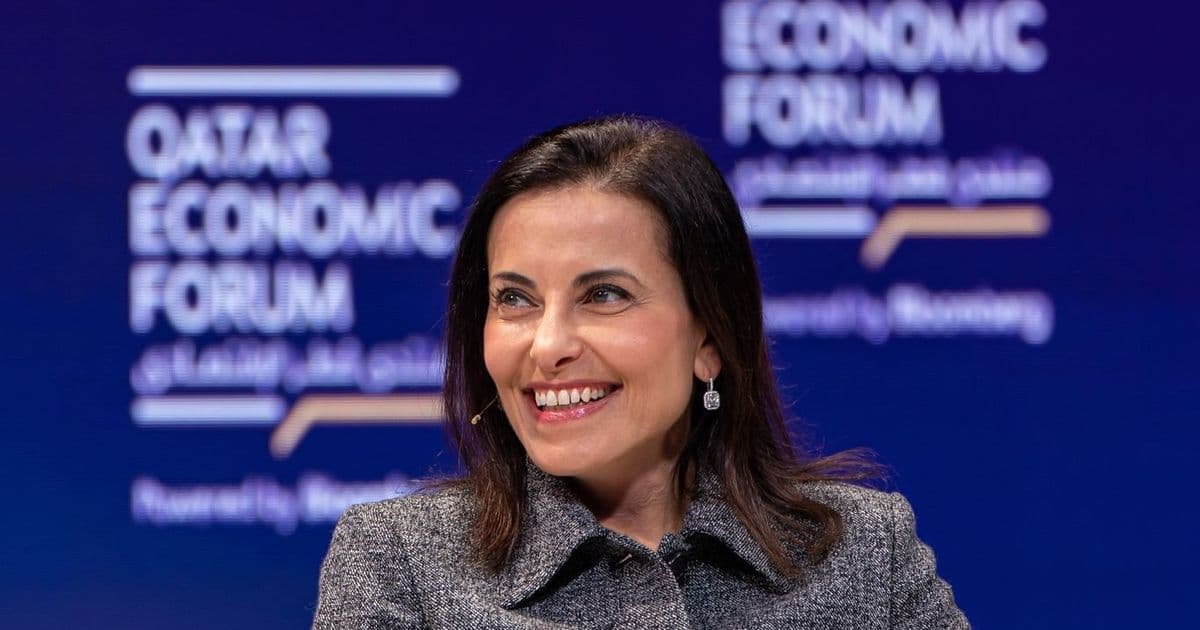
Meta appoints former Republican official and banking executive Dina Powell McCormick as president and vice chair, reporting directly to Mark Zuckerberg. The move represents the company's most significant executive shift toward political experience as it navigates regulatory pressure and prepares for potential policy changes under the Trump administration.
Meta's decision to bring Dina Powell McCormick into its senior leadership marks a calculated shift in how the social media giant approaches governance, regulatory relations, and strategic positioning in Washington. The company announced Tuesday that Powell McCormick will serve as president and vice chairman, reporting directly to Mark Zuckerberg, a role that places her at the center of Meta's most critical business and policy decisions.
Powell McCormick arrives with a resume that reads like a roadmap of the institutions Meta needs to navigate. She spent years at Goldman Sachs, where she rose to partner and head of the office of global sovereign client relationships, building relationships with governments and financial institutions worldwide. Her political credentials are equally substantial: she served as a deputy secretary of state under President Trump and held senior positions in the Republican establishment, including as a key fundraiser and advisor.
The appointment comes at a moment when Meta faces unprecedented scrutiny from both sides of the political aisle. Democrats have criticized the company for misinformation and privacy violations, while Republicans have accused it of censoring conservative voices. With Trump back in office and regulatory pressure mounting globally, Powell McCormick's presence suggests Meta is preparing for a more complex political environment where bipartisan relationships and policy expertise matter more than ever.
What makes this move particularly significant is the reporting structure. By placing Powell McCormick directly under Zuckerberg rather than alongside other business unit leaders, Meta signals that her role transcends traditional government relations. She'll likely be involved in strategic decisions about everything from content moderation policies to merger reviews to the company's aggressive AI investments. This mirrors how other tech giants have integrated political insiders into their C-suites, but Meta's choice is more pointed given Powell McCormick's specific Republican background and Trump administration experience.
The hiring also reflects Meta's evolution from a growth-at-all-costs startup to a mature corporation managing global regulatory risk. Over the past five years, the company has faced FTC antitrust investigations, EU privacy fines, and congressional hearings that have forced it to build more sophisticated government relations capabilities. Powell McCormick brings Wall Street discipline and Washington savvy to a company that has often struggled to balance innovation with compliance.
Critics within the tech community question whether this represents an overcorrection toward political accommodation at the expense of product focus. Some former employees worry that bringing in high-profile political figures could shift the company's culture away from engineering-driven decision making. Others point out that Meta's challenges require more than just political connections—they demand fundamental product changes and better governance structures.
Supporters argue that Powell McCormick's dual expertise in finance and politics is precisely what Meta needs as it invests hundreds of billions in AI infrastructure while managing complex cross-border data flows and content policies. Her experience managing relationships with sovereign wealth funds and governments could prove invaluable as Meta expands its AI cloud services and navigates different regulatory regimes.
The appointment also raises questions about how Meta will position itself in the increasingly partisan tech policy debates. While Powell McCormick is a Republican, Meta's user base and workforce lean more progressive. The company must maintain credibility across political divides while advocating for policies that affect its business model, from Section 230 reform to AI regulation to antitrust enforcement.
Looking ahead, Powell McCormick's role will likely extend beyond traditional government relations into strategic partnerships, M&A, and possibly even Meta's metaverse ambitions. Her banking background could help Meta evaluate potential acquisitions and partnerships in the AI space, where the company is spending aggressively to compete with Google, Microsoft, and OpenAI.
The broader pattern here is tech companies increasingly treating government relations as a core competency rather than a necessary evil. Google, Microsoft, and Amazon have all brought former officials into senior roles, but Meta's appointment feels more politically charged given the company's history with Trump and the current political climate. Powell McCormick's success will depend on her ability to bridge internal divisions, build trust across political lines, and help Meta chart a course through regulatory challenges that could fundamentally reshape its business.
For Meta employees, the message is clear: the company is preparing for a period where political navigation matters as much as technical innovation. For competitors and regulators, it signals that Meta intends to play the Washington game with more sophisticated players. And for the broader tech industry, it's another data point in the ongoing professionalization of tech policy, where the line between Silicon Valley and Washington continues to blur.
The real test will be whether Powell McCormick can help Meta achieve policy wins that protect its business model while addressing legitimate concerns about its power and influence. That requires more than relationships—it demands a coherent strategy that balances the company's interests with public policy goals. Her appointment suggests Meta is betting that someone who understands both Wall Street and Washington is best positioned to find that balance.

Meta's choice reflects a maturing industry grappling with its own power. As AI, social media, and digital commerce become central to economic and political life, the companies that shape these sectors can no longer afford to treat government as an afterthought. Powell McCormick's appointment is both a symptom of that reality and a bet that insider expertise will prove more valuable than outsider disruption in the years ahead.
Comments
Please log in or register to join the discussion