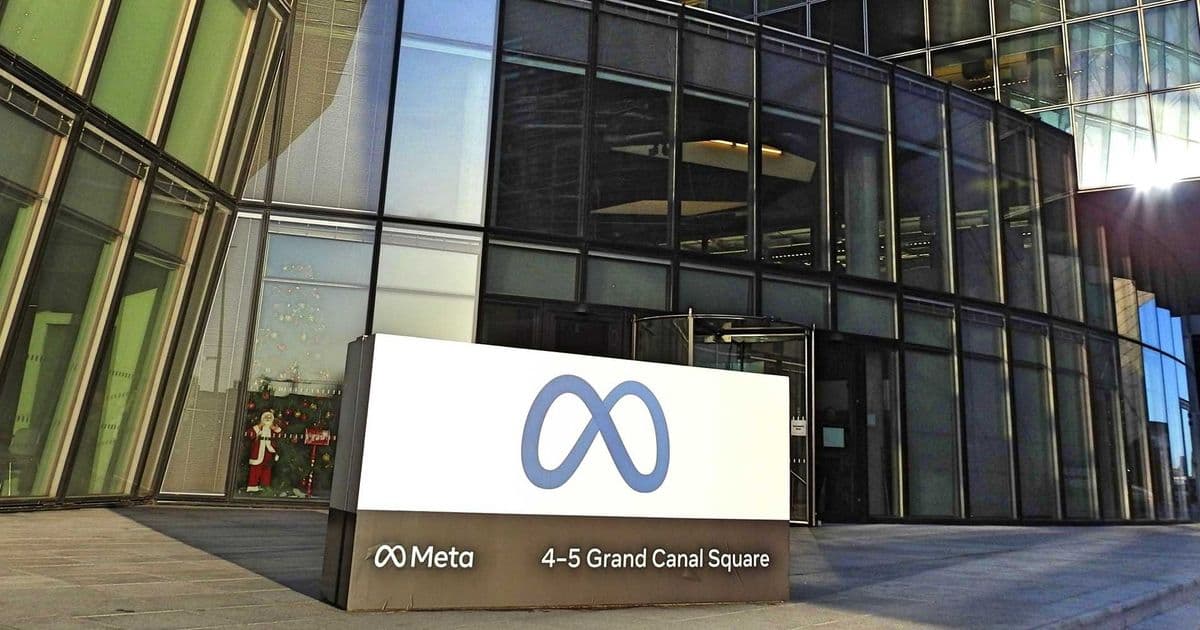

Meta begins workforce reduction as it pivots resources toward AI development, datacenter expansion, and custom chip design, signaling a major strategic shift away from metaverse ambitions.
Meta has initiated a workforce reduction of approximately 700 employees as the social media giant accelerates its pivot toward artificial intelligence, according to sources familiar with the company's restructuring efforts.
The job cuts, which began this week, are hitting Meta's Reality Labs, social media division, and recruitment teams hardest. The layoffs represent the company's latest move to streamline operations and redirect resources toward AI development, datacenter expansion, and custom chip design.
A former senior recruiter at Meta shared her experience on LinkedIn, describing the emotional impact of being let go after returning to the company in 2024. "After 6 years at Meta, my role was impacted by the recent reduction in force today," she wrote. "This one is especially tough. After returning as a short-term employee in 2024, I was grateful to receive a full-time offer again last year and I'm incredibly proud of what I was able to accomplish during that time."
Meta spokesperson confirmed the restructuring, framing it as part of the company's broader strategy to work more effectively with AI. "Teams across Meta regularly restructure or implement changes to ensure they're in the best position to achieve their goals. Where possible, we are finding other opportunities for employees whose positions may be impacted," the company stated.
CEO Mark Zuckerberg outlined this strategic shift during January earnings reports, describing 2026 as the year Meta would begin "flattening teams." He emphasized that the company is moving toward a model where "projects that used to require big teams now be accomplished by a single very talented person."
This restructuring comes amid Meta's aggressive AI investment strategy. The company's expenses rose 24% during 2025 to $118 billion, with plans to spend between $162 billion and $167 billion this year. Capital expenditures alone are expected to reach $115 billion to $135 billion, primarily for datacenter buildouts to power AI initiatives.
Meta is also developing its own custom chips for generative AI workloads. The company released its first in-house MTIA (Meta Training and Inference Accelerator) chip in 2023 and plans to build multiple generations over the next two years. "MTIA 300 will be used for ranking and recommendations training, and is already in production. MTIA 400, 450 and 500 will be capable of handling all workloads," Meta stated in recent disclosures.
The company's AI ambitions have led to intense competition for talent. Meta offered nine-figure pay packages to lure AI researchers from competitors last year, with OpenAI defectors reportedly commanding $100 million sign-on bonuses. CEO Zuckerberg also invested $14 billion in Scale AI and appointed its co-founder Alexander Wang to lead Meta's AI efforts.
However, the AI push has not been without internal friction. Meta's former chief AI scientist Yann LeCun publicly criticized Wang as "young and inexperienced" after he left the company. LeCun was also reportedly pushed aside following the disappointing release of Meta's Llama 4 model.
Meta's CFO Susan Li acknowledged the uncertainty surrounding the return on AI investments during a recent Morgan Stanley conference. "That's not like, okay, in 2026, the ROI is this in 2027, the ROI is this and so on, which pains me, to be clear," Li said. "I really wish that, that were the world we live in, but it's not."
The company faces particular challenges in predicting AI inference needs, which require forecasting demand years in advance due to the lead time required for datacenter capacity. While Meta can accurately project training requirements for the next 12-24 months, the variable nature of user demand for AI products creates significant uncertainty.
These layoffs follow reports that Meta plans to reduce its workforce by 20% - approximately 15,000 employees - though the current cuts are on a smaller scale. With 78,800 employees as of January 2026, such a reduction would bring Meta's headcount to its lowest point since 2021.
The restructuring represents a dramatic shift from Meta's previous metaverse-focused strategy, with the company now betting heavily on AI as its primary growth driver for the coming years.
Comments
Please log in or register to join the discussion