Microsoft launched the Cloud and AI Security Engineer Associate certification, validated by the beta Exam SC‑500. The credential targets security engineers who must protect identities, data, compute, and AI workloads across Azure and hybrid environments. Early‑bird candidates can secure an 80 % discount, but seats are limited.
What changed
Microsoft announced a new associate‑level credential – Microsoft Certified: Cloud and AI Security Engineer Associate – and opened the beta for its validation exam, SC‑500: Implementing End‑to‑End Security Controls for Cloud and AI Workloads. The certification expands the existing security portfolio to cover the full stack of modern cloud services that host AI models, from identity management to data protection and threat detection. It reflects the industry shift from perimeter‑focused defenses to continuous, workload‑centric security.
Provider comparison
| Feature | Microsoft (SC‑500) | AWS (Security Specialty) | Google Cloud (Professional Cloud Security Engineer) |
|---|---|---|---|
| Target role | Cloud/AI Security Engineer (associate) | Security Specialist (professional) | Cloud Security Engineer (professional) |
| Core domains | Identity & access, data security, secure compute, AI model protection, threat defense | Identity, infrastructure, incident response, logging | Identity, network, data protection, compliance, logging |
| Exam format | 40‑60 questions, mixed multiple‑choice & case‑based, 150 min (beta) | 65 questions, multiple‑choice & multiple‑response, 170 min | 55 questions, multiple‑choice & scenario, 150 min |
| Pricing (standard) | US$99 (beta discount 80 % for first 300) | US$300 | US$200 |
| Prerequisites | Hands‑on Azure admin experience, Entra ID & M365 familiarity | 3‑5 years security experience, AWS admin knowledge | 2‑3 years cloud security experience, GCP admin knowledge |
| Renewal | Annual renewal via free skill assessments (Microsoft Learn) | 2‑year renewal, optional continuing education | 2‑year renewal, optional continuing education |
Why the Microsoft offering matters
- AI‑centric focus – Unlike the other two providers, SC‑500 explicitly tests model‑level controls (e.g., Azure Machine Learning security, data‑drift monitoring). This matches the rapid adoption of AI services in regulated sectors.
- Associate level – The exam is positioned at an associate tier, making it accessible to engineers transitioning from general Azure admin roles, whereas AWS and GCP place similar content at the professional level.
- Integrated learning path – Microsoft bundles the exam with free modules on Microsoft Learn, covering Entra ID, Azure Sentinel, Defender for Cloud, and AI security best practices, reducing the cost of preparation.
Business impact
For organizations
- Talent alignment – Hiring or upskilling staff with the Cloud and AI Security Engineer Associate credential gives a clear, vendor‑specific benchmark that aligns with Azure‑first roadmaps. Teams can map the certification’s five skill areas to internal security policies, ensuring coverage of identity governance, data encryption, secure compute, AI model integrity, and continuous posture monitoring.
- Risk reduction – Certified engineers are trained to implement controls such as conditional access policies, Azure Key Vault integration, and Defender for Cloud recommendations. Deploying these controls consistently across workloads lowers the probability of data breaches and compliance violations, especially for GDPR‑ or HIPAA‑regulated workloads.
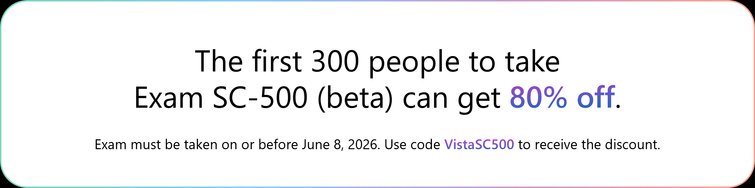
- Cost efficiency – The 80 % discount for the first 300 beta candidates translates to a $79 exam fee, encouraging rapid adoption. Early certification also positions teams to influence the final exam content, potentially shaping future assessment criteria to match internal security frameworks.
For professionals
- Career acceleration – Adding the associate badge to a resume signals competence in both cloud security and AI‑specific safeguards, a combination that is increasingly requested in job postings for security engineers, DevSecOps specialists, and compliance leads.
- Learning roadmap – The certification’s prerequisite knowledge (Azure administration, Entra ID, M365) dovetails with existing Microsoft Certified: Azure Administrator Associate and Microsoft 365 Security Administrator tracks, allowing a modular progression without redundant study.
Migration considerations
If your organization already employs Azure Security Center or Defender for Cloud, map the existing control sets to the exam’s competency matrix:
- Identity & Access – Review conditional access policies, Entra ID governance, and privileged identity management. Align with the exam’s “Manage identity, access, and governance” objective.
- Secure Storage & Databases – Verify encryption‑at‑rest configurations for Azure Blob, Cosmos DB, and Azure SQL. Ensure that data classification labels match the “Secure storage, databases, and networking” domain.
- Secure Compute – Audit VM‑scale set hardening, container security policies (ACI, AKS), and Azure Functions sandboxing. These map to the “Secure compute” requirement.
- AI Model Security – Enable model‑level access controls, data‑drift alerts, and secure endpoint deployment in Azure Machine Learning. This is a new focus area not covered by prior Microsoft security certifications.
- Posture Monitoring – Consolidate alerts from Azure Sentinel, Defender for Cloud, and Microsoft 365 Defender into a unified dashboard. Align with the “Monitor and manage security posture” competency.
By conducting this gap analysis, you can prioritize training, adjust policies, and schedule the beta exam for key team members before the general availability window in July 2026.
Next steps
- Register for the beta exam using code VistaSC500 to claim the 80 % discount (first 300 candidates only).
- Follow the official Exam SC‑500 (beta) page for study resources and exam logistics.
- Join the Microsoft Worldwide Learning SME Group on LinkedIn for beta alerts and to provide feedback on exam content.
- Track the upcoming AI Skills Navigator for additional learning paths that complement this certification.
Stay tuned for the certification’s general release in July 2026 and consider aligning your security roadmap with Microsoft’s evolving cloud‑AI security framework.
Comments
Please log in or register to join the discussion