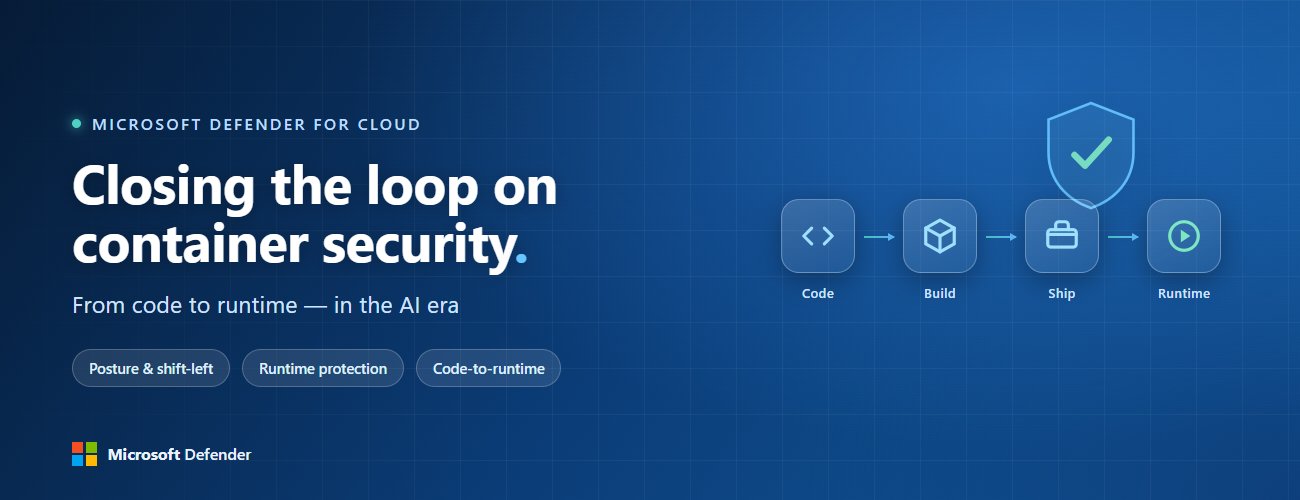
Microsoft Defender for Cloud now gives security teams a tighter container loop across code, registries, Kubernetes, serverless containers, and runtime defense as AI speeds up vulnerability attacks.
Microsoft expanded Defender for Cloud container security across posture management, CI/CD scanning, gated deployment, multicloud coverage, and runtime blocking, according to a June 16, 2026, Microsoft Community Hub post.
The timing fits the threat data. Verizon's 2026 Data Breach Investigations Report says 31% of breaches start with software vulnerabilities, ahead of stolen credentials. Verizon also says attackers now use generative AI across 15% of attack techniques, from gap finding to malware writing.
For cloud teams, the message lands in the build pipeline. A Dockerfile change can reach a running pod before lunch. A weak base image, exposed workload, or leaked secret gives an attacker a short path from code to runtime.
Microsoft changes the operating model
Microsoft now treats container findings as part of one evidence chain. Security teams can trace a running pod back through the image, registry, pipeline, repository, and pull request that introduced the risk.
That model gives teams a stronger hand than a scanner report. A vulnerability finding can point to the image owner, the namespace, the cluster, and the code path. Platform teams can route work to the right developer and avoid a backlog full of duplicate CVE tickets.
Microsoft also changed its recommendation model. Defender for Cloud now creates per-finding recommendations by software, image, and container. Microsoft will remove grouped recommendations July 30, 2026. Teams that use automation, exports, or ServiceNow integration should update those rules before that date.
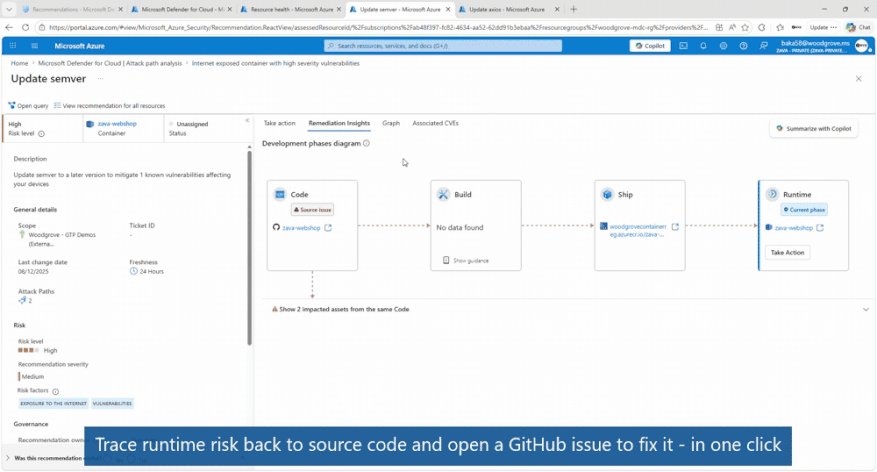
The code side now includes GitHub Advanced Security and the Defender for Cloud CLI. Developers can scan images from a laptop or CI/CD system, use consistent exit codes, and push results into Defender for Cloud for code-to-runtime context.
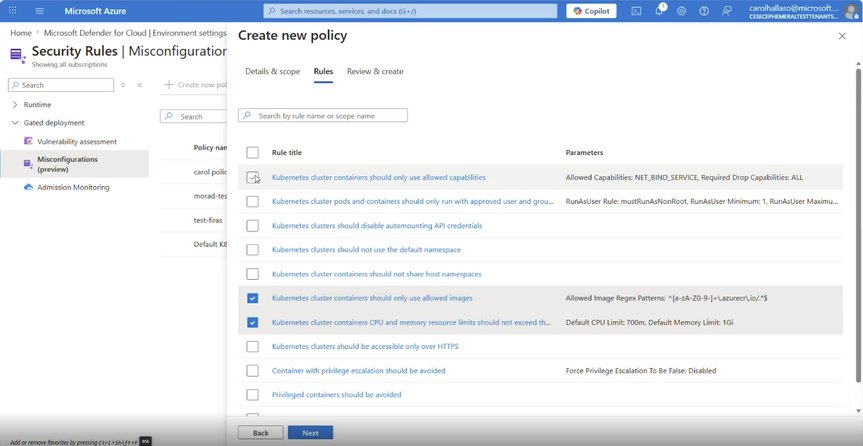
At deploy time, Microsoft uses gated deployment for Kubernetes images. Security teams can start in audit mode, tune rules, then move to deny mode. The feature supports AKS, EKS, and GKE, and it can use vulnerability results from Azure Container Registry, Amazon Elastic Container Registry, and Google Artifact Registry.
Azure, AWS, and Google Cloud coverage
Azure gets the broadest fit because Microsoft owns the platform, registry, and security console. AKS users can connect posture, registry scanning, admission control, and runtime sensor data in one Microsoft workflow. Azure Container Apps, Azure Container Instances, Azure Functions, and Web Apps also move more serverless estate into the posture graph.
AWS coverage matters for enterprises that run EKS and Fargate beside Azure. Defender for Cloud can scan ECR images, assess EKS workloads, support private EKS clusters, and cover AWS Lambda posture. EKS teams that use BottleRocket gain runtime support, which helps platform groups that standardize on hardened node images.
Google Cloud teams get GKE and Google Artifact Registry coverage, plus private GKE cluster support. That closes a gap for organizations that kept sensitive workloads behind private control planes and lacked a consistent way to join those clusters to enterprise risk views.
This comparison changes procurement. Teams that use one scanner for CI, another for registries, a separate admission controller, and another runtime tool should price Defender against that tool chain. The cost question should include license spend, pipeline maintenance, exception handling, and analyst time spent joining findings by hand.
Microsoft's edge comes from consolidation. Cloud-native specialists may still offer deeper controls in one layer, but Microsoft gives security leaders one graph across Azure, AWS, GCP, GitHub, registries, and Microsoft Defender XDR. That matters when a board asks which workloads expose customer data and which team owns the fix.
Runtime controls move from alerting to blocking
Runtime defense carries more weight because AI workloads now run in containers. Model-serving APIs, retrieval systems, and agent services often run on AKS, EKS, or GKE, with access to sensitive data stores and model assets.
Defender for Containers now includes antimalware detection and blocking. Security teams can set rules that alert, block, or ignore by cloud, cluster, namespace, pod, image, or label.
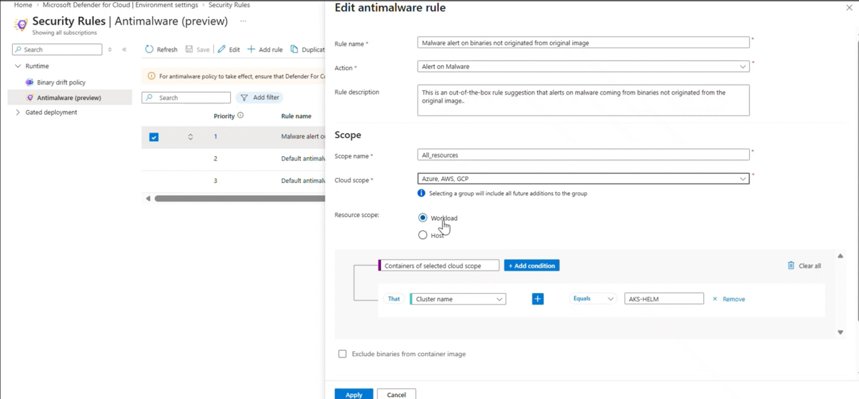
Microsoft also added binary drift detection and blocking. Developers build containers as immutable units. Defender compares runtime processes with the original image contents. A new binary inside the container can signal compromise, and policy can block that process before execution.
DNS-based threat detection adds another runtime signal. Security teams can catch command-and-control traffic, domain-generation algorithm activity, and DNS exfiltration from Kubernetes workloads.
Migration plan for platform teams
Start with ownership. Map your top container images to repositories, registries, teams, clusters, and namespaces. Defender's per-finding model pays off only when you can send a finding to the person who can fix it.
Next, connect GitHub Advanced Security and add the Defender for Cloud CLI to CI/CD for image scanning. Use build failure rules for critical findings after developers see scan output and remediation guidance in their workflow.
Then move gated deployment into a nonproduction cluster in audit mode. Measure which images fail, which teams own them, and which exemptions make sense. After that tuning, shift selected namespaces to deny mode and add misconfiguration gating.
Runtime rollout should start with high-value namespaces. Enable the Defender for Containers sensor, add private EKS and GKE clusters, then tune antimalware and binary drift policies. Use alert mode before block mode for workloads that build files at runtime or run approved sidecar processes.
Extend coverage to serverless compute after Kubernetes. Lambda, Functions, Web Apps, Container Apps, Azure Container Instances, and Fargate often host production code outside the Kubernetes team's view. Security leaders should put those services into the same posture review because attackers follow exposed code paths, not org charts.
Business impact
Microsoft's update gives cloud leaders a way to shrink the gap between a code finding and a runtime decision. The platform can find vulnerable code, identify the image, block deployment, and stop malware or drift after launch.
That loop also changes security operations. Analysts can work from one incident model in Defender XDR instead of stitching together CI logs, registry scans, cluster events, and endpoint alerts. Developers get fewer duplicate tickets because Defender ties findings to runtime exposure and ownership.
The strongest case sits with multicloud enterprises that already use Microsoft Defender, GitHub, Azure DevOps, AKS, EKS, and GKE. Those teams can reduce tool overlap and give security leaders a cleaner view of container risk.
AI raises the urgency. Attackers use automation to find vulnerable services faster. Defenders need controls that connect code, deployment, and runtime before an exposed container turns into a breach.
Comments
Please log in or register to join the discussion