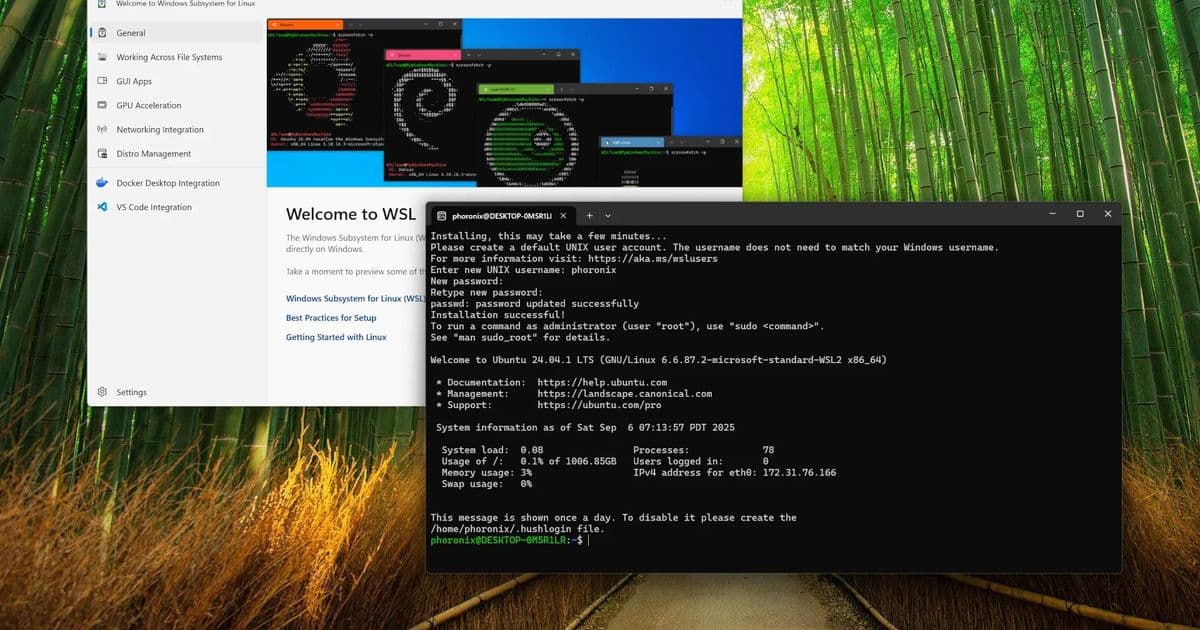
Microsoft has updated the Windows Subsystem for Linux 2 kernel to Linux 6.18 LTS, dropping legacy patches and adding ExFAT and F2FS filesystem support.
Microsoft has released an updated kernel for Windows Subsystem for Linux 2 (WSL2), upgrading from the Linux 6.6 LTS series to the newer Linux 6.18 LTS series. The new kernel, labeled linux-msft-wsl-6.18.20.1, brings several improvements and configuration changes that enhance compatibility and performance for Linux users on Windows.
The kernel upgrade represents a significant jump forward, as Linux 6.6 is now two LTS cycles old. This rebase allows Microsoft to drop several out-of-tree patches that were previously required for compatibility, including those related to VirtIO PMEM support. By moving to the current LTS series, Microsoft can maintain better alignment with upstream Linux development and reduce the maintenance burden of custom patches.
Filesystem Support Enhancements
One of the most notable additions in this kernel update is the enablement of ExFAT filesystem support. Given that ExFAT is a Microsoft-developed filesystem, it's somewhat surprising that this support was only added now to the WSL2 kernel. The inclusion of ExFAT support should improve interoperability between Windows and Linux environments within WSL2, particularly for users working with external storage devices formatted with this filesystem.
Additionally, support for F2FS (Flash-Friendly File System) has been enabled. F2FS is optimized for flash storage and is commonly used in mobile devices and embedded systems. This addition expands the range of filesystem options available to WSL2 users.
New Kernel Configuration Options
The updated kernel includes several new configuration options that enhance hardware compatibility and functionality:
- ANON_VMA_NAME: This option enables naming of anonymous VMA (Virtual Memory Area) structures, which can aid in debugging and memory management analysis.
- CAN support options: Controller Area Network (CAN) bus support has been enabled, which is particularly useful for automotive and industrial applications.
- Joystick interface support: This addition improves gaming and simulation capabilities within WSL2 environments.
- USB monitor support: Enhanced USB device monitoring capabilities have been added.
For ARM64 builds specifically, the kernel now only enables FAT support, which may reflect optimization choices for ARM architecture deployments.
Performance and Compatibility Benefits
By upgrading to Linux 6.18 LTS, WSL2 users gain access to the latest kernel improvements, security updates, and hardware support that have been developed over the past year. The Linux 6.18 series includes numerous performance optimizations, new hardware driver support, and security enhancements that were not present in the older 6.6 series.
The reduction in out-of-tree patches should also lead to a more stable and maintainable kernel configuration, as Microsoft can rely more heavily on upstream Linux developments rather than maintaining custom modifications.
Availability and Documentation
More detailed information about the kernel changes, including the complete list of configuration modifications and build details, is available in the project's GitHub repository. Users can update their WSL2 kernel through the standard Windows Update mechanism or by following the instructions provided in the WSL2 documentation.
The timing of this update is particularly relevant as more developers and enterprises rely on WSL2 for their Linux development workflows on Windows platforms. The enhanced filesystem support and hardware compatibility improvements should make WSL2 an even more compelling option for cross-platform development scenarios.
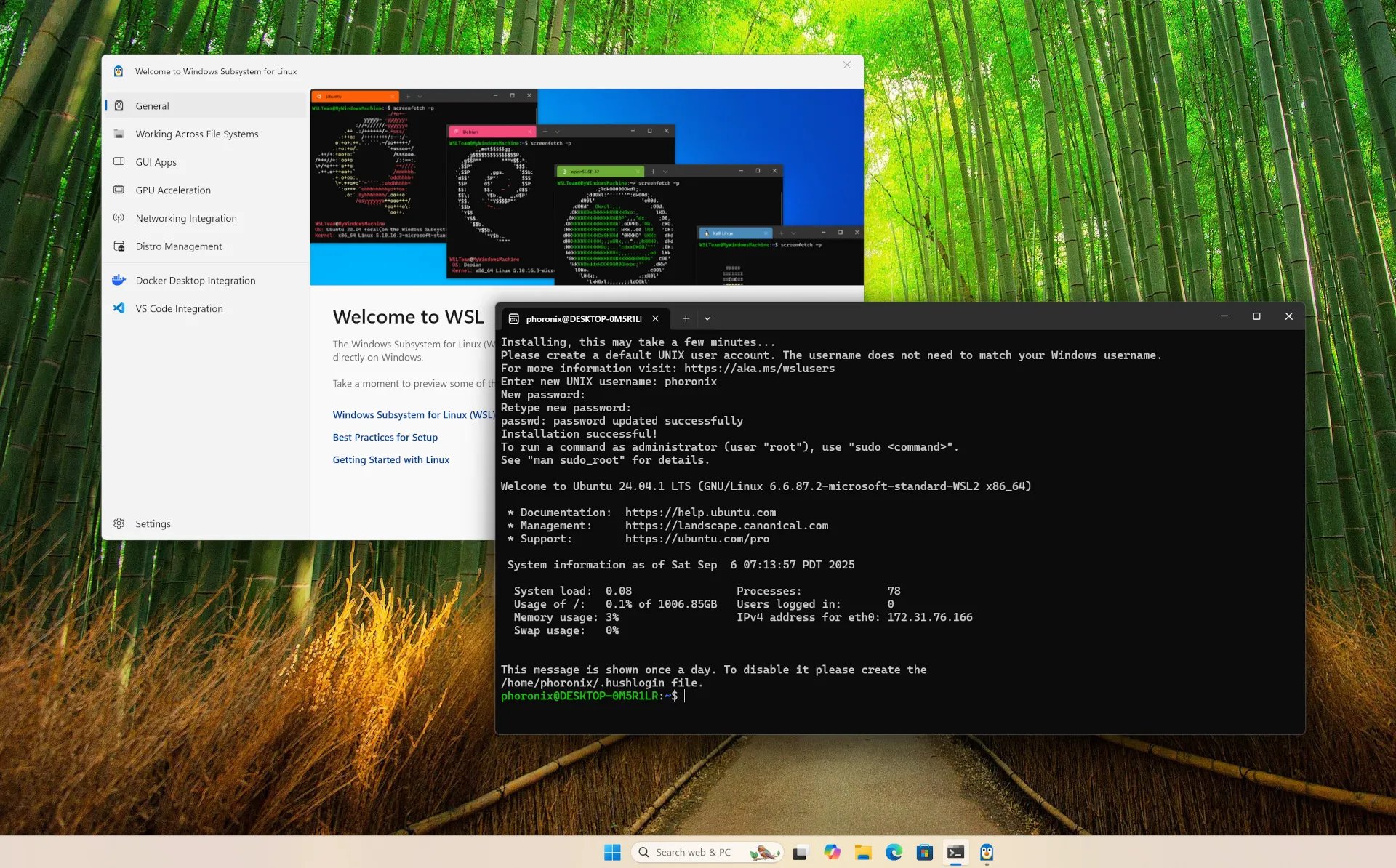
This kernel upgrade demonstrates Microsoft's continued investment in WSL2 as a core component of the Windows development ecosystem, ensuring that Linux users on Windows have access to modern kernel features and performance improvements.
Comments
Please log in or register to join the discussion