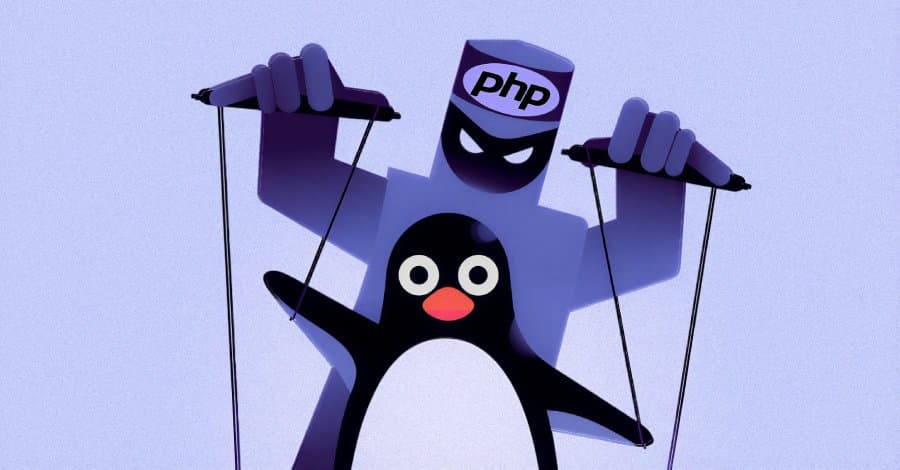
Microsoft Defender researchers reveal how threat actors are using HTTP cookies as stealthy control channels for PHP web shells on Linux servers, achieving persistent remote code execution through cron jobs and obfuscated loaders.
Microsoft's Defender Security Research Team has uncovered a sophisticated attack technique where threat actors are increasingly using HTTP cookies as a covert control channel for PHP-based web shells on Linux servers, enabling persistent remote code execution while evading traditional detection methods.
The Cookie-Controlled Execution Model
The attack leverages the fact that cookie values are readily available at runtime through PHP's $_COOKIE superglobal variable, allowing attackers to pass instructions without additional parsing. This approach offers significant stealth advantages:
- Dormancy during normal operations: The malicious code remains inactive during routine application execution
- Activation only with specific cookies: Web shell logic activates exclusively when threat actors supply predetermined cookie values
- Blending into legitimate traffic: Cookie-based communication reduces visibility and appears as normal web traffic
"Instead of exposing command execution through URL parameters or request bodies, these web shells rely on threat actor-supplied cookie values to gate execution, pass instructions, and activate malicious functionality," Microsoft explained.
Multiple Implementation Strategies
Microsoft identified three distinct implementation patterns:
1. Multi-Layer Obfuscated PHP Loader
A complex PHP loader employing multiple layers of obfuscation and runtime checks before parsing structured cookie input to execute an encoded secondary payload.
2. Structured Cookie Data Segmentation
A PHP script that segments structured cookie data to reconstruct operational components such as file handling and decoding functions, then conditionally writes a secondary payload to disk and executes it.
3. Single-Cookie Marker Trigger
A simpler PHP script using a single cookie value as a marker to trigger threat actor-controlled actions, including execution of supplied input and file upload capabilities.
The "Self-Healing" Persistence Mechanism
In at least one observed case, attackers obtained initial access through valid credentials or exploitation of known vulnerabilities to establish a cron job that periodically invokes a shell routine. This routine executes an obfuscated PHP loader, creating a "self-healing" architecture:
- The PHP loader is repeatedly recreated by scheduled tasks
- Even if removed during cleanup efforts, the cron job reinstates it
- This creates a reliable and persistent remote code execution channel
- The loader remains dormant during normal traffic, activating only upon receiving HTTP requests with specific cookie values
"By shifting execution control into cookies, the web shell can remain hidden in normal traffic, activating only during deliberate interactions," Microsoft noted. "By separating persistence through cron-based re-creation from execution control through cookie-gated activation, the threat actor reduced operational noise and limited observable indicators in routine application logs."
Common Attack Characteristics
All observed implementations share key traits:
- Obfuscation: Used to conceal sensitive functionality
- Cookie-based gating: Initiates malicious actions while maintaining minimal interactive footprint
- Legitimate execution paths: Leverages existing web server processes, control panel components, and cron infrastructure
- Reduced operational noise: Minimizes observable indicators in routine application logs
Defensive Recommendations
Microsoft recommends several countermeasures to protect against these cookie-controlled web shell attacks:
- Enforce multi-factor authentication for hosting control panels, SSH access, and administrative interfaces
- Monitor for unusual login activity and credential usage patterns
- Restrict execution of shell interpreters where possible
- Audit cron jobs and scheduled tasks across web servers regularly
- Check for suspicious file creation in web directories
- Limit hosting control panels' shell capabilities to reduce attack surface
"The consistent use of cookies as a control mechanism suggests reuse of established web shell tradecraft," Microsoft concluded. "Rather than relying on complex exploit chains, the threat actor leveraged legitimate execution paths already present in the environment to stage and preserve malicious code."
This technique represents a significant evolution in web shell deployment, demonstrating how attackers are adapting to evade detection by blending malicious activity with legitimate web traffic patterns and leveraging built-in system functionality for persistence.
Comments
Please log in or register to join the discussion