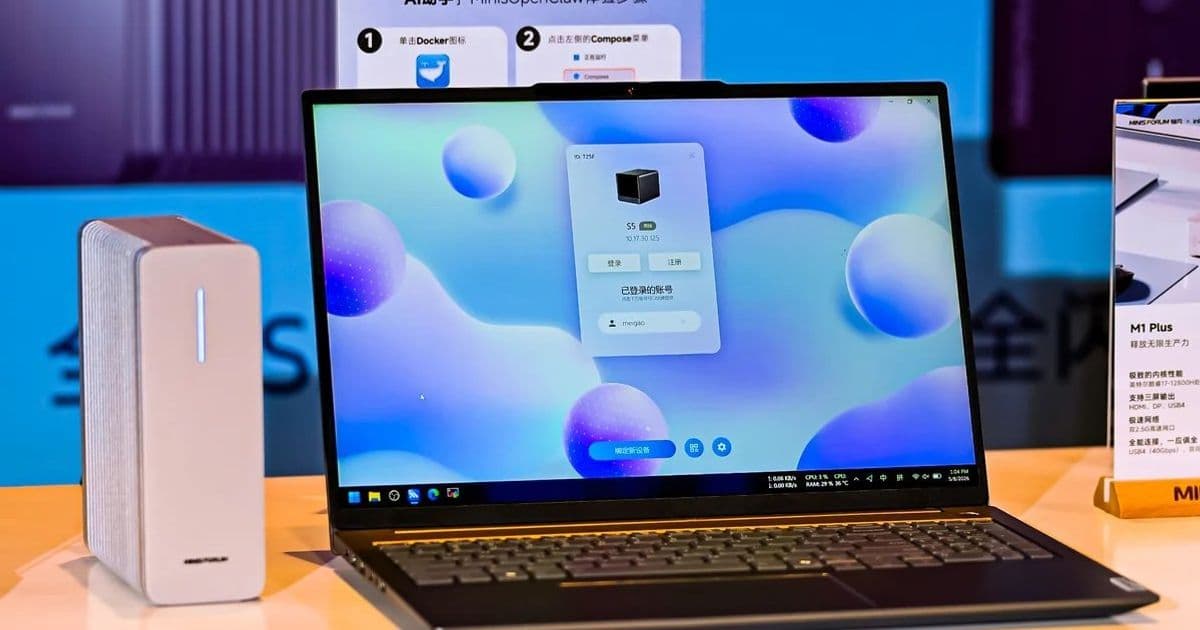
MINISFORUM adds two SSD‑only NAS devices – the compact S5 with five PCIe 4.0 ×1 slots and dual 10 GbE/2.5 GbE networking, and the higher‑end S7 that supports seven NVMe drives, a Panther Lake CPU, and 10 GbE SFP+ – giving developers a fast, quiet storage platform for AI workloads and media pipelines.
New MINISFORUM All‑Flash NAS models
MINISFORUM, known for its mini PCs, has moved deeper into the network‑attached storage market. The company announced two new SSD‑only boxes: the All‑Flash S5 and the All‑Flash S7. Both devices are built around Intel’s 12th‑generation Core Series 3 silicon (the S5 likely uses the Wildcat Lake SKU, while the S7 is expected to ship with a Panther Lake processor). They forego any 2.5‑inch bays, focusing instead on multiple M.2 2280 slots that deliver PCIe 4.0 bandwidth.
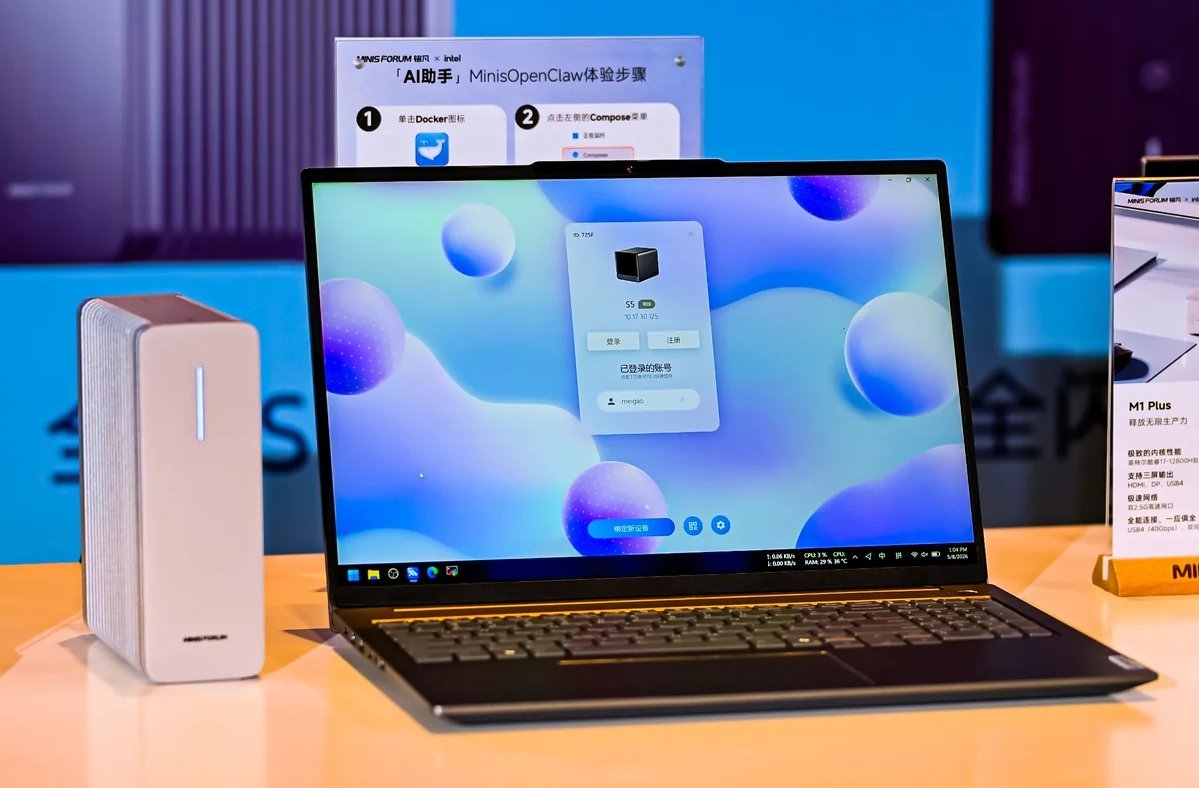
All‑Flash S5 – entry‑level but still powerful
- CPU: Intel Core Series 3 (Wildcat Lake) – 8 cores, 16 threads, up to 4.5 GHz boost.
- Storage: Five M.2 2280 slots, each wired to a PCIe 4.0 ×1 lane. The theoretical throughput per slot is 2 GB/s, meaning the aggregate bandwidth can approach 10 GB/s when all drives are active.
- Networking: 1 × 10 GbE RJ45, 1 × 2.5 GbE RJ45, plus two USB4 ports that can be used for external 40 Gbps links.
- Other I/O: 2 × USB 3.2 Type‑A, 1 × HDMI 2.1 (useful for local monitoring), and a standard AC power connector.
The S5’s compact chassis (roughly the size of a large router) makes it suitable for home labs, small‑office media servers, or edge AI nodes that need low latency storage without the vibration of spinning disks.
All‑Flash S7 – high‑end storage engine
- CPU: Intel Panther Lake – up to 12 cores, 24 threads, integrated AI acceleration via Intel Gaudi‑lite (when available).
- Storage: Seven M.2 2280 slots, each PCIe 4.0 ×1. The extra slots give developers room to build RAID‑0/1/5/10 arrays or to separate datasets for inference vs. training.
- Networking: 1 × 10 GbE SFP+ (fiber), 1 × 10 GbE RJ45, 1 × 2.5 GbE RJ45, and two USB4 ports (40 Gbps). This mix lets you connect to both copper and fiber backbones without additional adapters.
- Additional ports: Same USB 3.2 and HDMI set as the S5.
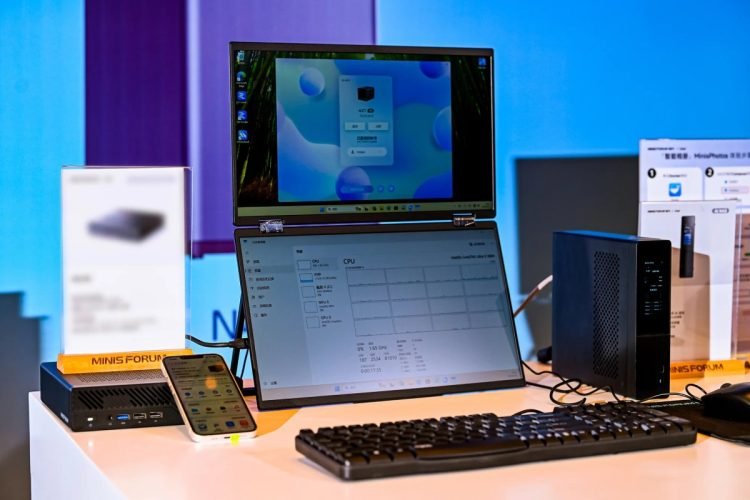
The S7’s design mirrors the MS‑03 mini PC chassis introduced earlier this year, but the internal layout is optimized for heat dissipation from up to seven NVMe drives. The inclusion of an SFP+ port signals that MINISFORUM expects the S7 to be used in data‑center‑edge or AI‑inference clusters where fiber uplinks are common.
Why the all‑flash approach matters for developers
Predictable latency for AI pipelines
When you run inference on models like the MinisOpenClaw AI agent (which MINISFORUM mentions), the storage layer often becomes the bottleneck. NVMe drives on PCIe 4.0 deliver sub‑100 µs read latency, which is an order of magnitude faster than SATA SSDs. For workloads that stream large image datasets for semantic search, that latency reduction translates into higher frames‑per‑second throughput.
Simplified software stack
Because the devices expose only NVMe drives, developers can rely on standard Linux block‑device paths (/dev/nvme0n1, etc.) and use tools such as mdadm, zfs, or btrfs without worrying about mixed‑media quirks. The built‑in Intel CPU also supports VT‑d and VT‑x, allowing you to run lightweight VMs or containers directly on the NAS for isolated inference services.
Cross‑platform SDK compatibility
Both models ship with a pre‑installed Ubuntu 22.04 LTS image, which includes the latest libnvme library and the Intel oneAPI toolkit. Mobile developers who need to test on‑device models can compile with the Android NDK or iOS Swift toolchains locally, then push the binaries to the NAS for batch processing. The USB4 ports also let you attach a Thunderbolt‑compatible MacBook for direct file transfer at 40 Gbps.
Migration path for existing MINISFORUM users
- Assess current storage needs – If you are using a previous N5 Pro with mixed SATA/NVMe drives, inventory the total capacity and performance requirements.
- Choose S5 or S7 – For up to 5 TB of fast storage and a modest budget, the S5 is sufficient. For 7+ drives, higher parallelism, or fiber connectivity, the S7 is the logical upgrade.
- Plan data migration – Use
rsyncover the 10 GbE link or the USB4 ports to copy data. Because the NAS runs a standard SSH server, you can script the transfer and verify checksums withsha256sum. - Update your deployment scripts – Replace any hard‑coded device names with UUIDs or labels to avoid breakage when drives are hot‑swapped. Update your CI/CD pipeline to point to the new NAS IP address (the default is
192.168.1.100). - Enable AI acceleration – Install the latest Intel® Distribution of OpenVINO™ Toolkit (
apt install openvino) and configure the device plugin to use the integrated AI cores on Panther Lake.
What to watch for
- Pricing – MINISFORUM has not released a price list yet. Expect the S5 to sit in the $800‑$1,200 range, while the S7 could approach $2,000 depending on the SSD configuration.
- Thermal management – Seven NVMe drives can push the internal temperature above 70 °C under sustained load. The chassis includes a dual‑fan setup; consider adding a small external heatsink if you plan to run 24/7.
- Firmware updates – MINISFORUM provides a web UI for BIOS and firmware flashing. Keep an eye on the support page for NVMe controller patches that improve power‑state transitions.
Bottom line
The All‑Flash S5 and S7 give developers a fast, quiet, and network‑ready storage platform that aligns well with modern AI and media workflows. By leveraging PCIe 4.0 NVMe lanes and high‑speed Ethernet/USB4, the devices remove many of the traditional bottlenecks associated with consumer‑grade NAS boxes. Once pricing is announced, teams can decide whether the S5’s five‑drive configuration meets their needs or if the S7’s seven‑drive, fiber‑ready design is the better long‑term investment.
For more details on the hardware specifications, see the official MINISFORUM product pages:
Related developer resources:
Comments
Please log in or register to join the discussion