
Chinese robotics firm Mirror Me unveils Bolt, the world's fastest humanoid robot capable of running at 22 mph, named after Olympic champion Usain Bolt.
China's robotics industry is experiencing explosive growth, following a similar trajectory to the country's strategic push into electric vehicles and battery technology a decade ago. Now, the same company that created the fastest quadruped robot dog has unveiled what it claims is the world's fastest humanoid robot, appropriately named Bolt after the legendary Olympic sprinter Usain Bolt.
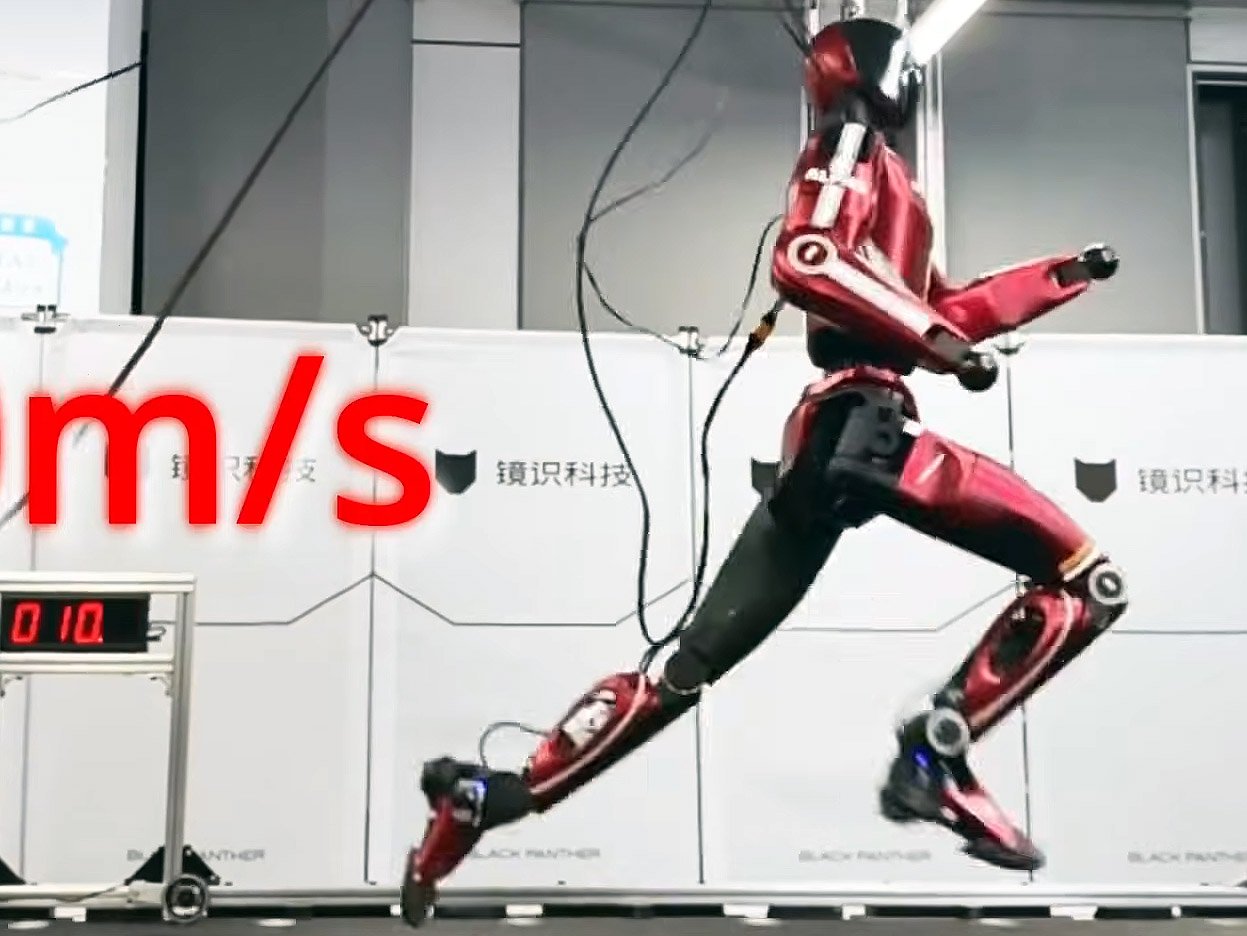
Mirror Me's Bolt robot has achieved a remarkable top speed of 10 meters per second, which translates to approximately 22 miles per hour. This achievement is particularly impressive when compared to human capabilities. While Usain Bolt himself reached a peak speed of 27.8 mph during the 2009 World Championships in Berlin, the average human top speed ranges between 13 and 15 mph. Mirror Me's humanoid is closing in on world-class sprinter performance levels.
The company has made speed a central focus of its robotics development strategy, aiming to differentiate itself in China's increasingly crowded robotics startup ecosystem. However, Bolt's quadruped sibling, the Black Panther II, still outpaces its bipedal counterpart with a top speed of 30 miles per hour.
What makes Bolt's achievement particularly noteworthy is the engineering challenge involved in creating a humanoid robot that can maintain balance and stability at high speeds. Unlike quadruped robots that have inherent stability advantages due to their four-legged design, bipedal robots must constantly adjust their center of gravity and maintain dynamic balance with each step. Mirror Me developed Bolt's running capabilities as a research focus to improve bipedal balance and handling at high speeds, essentially mimicking the biomechanics of human athletes.
The robot stands at human height and weighs approximately as much as an average person, making its speed achievement even more remarkable from an engineering perspective. The company describes creating the world's fastest humanoid robot as a beneficial byproduct of their research into improving bipedal locomotion rather than the primary goal.
This development represents another significant milestone in humanoid robotics, joining other recent advances in the field. As companies continue to push the boundaries of what's possible with bipedal robots, we're likely to see continued improvements in speed, agility, and overall performance that could eventually lead to practical applications in various industries.
For those interested in exploring robotics technology, the Unitree Go2 Pro AI robot dog is available on Amazon, offering a more accessible entry point into advanced robotics for enthusiasts and researchers alike.
Comments
Please log in or register to join the discussion