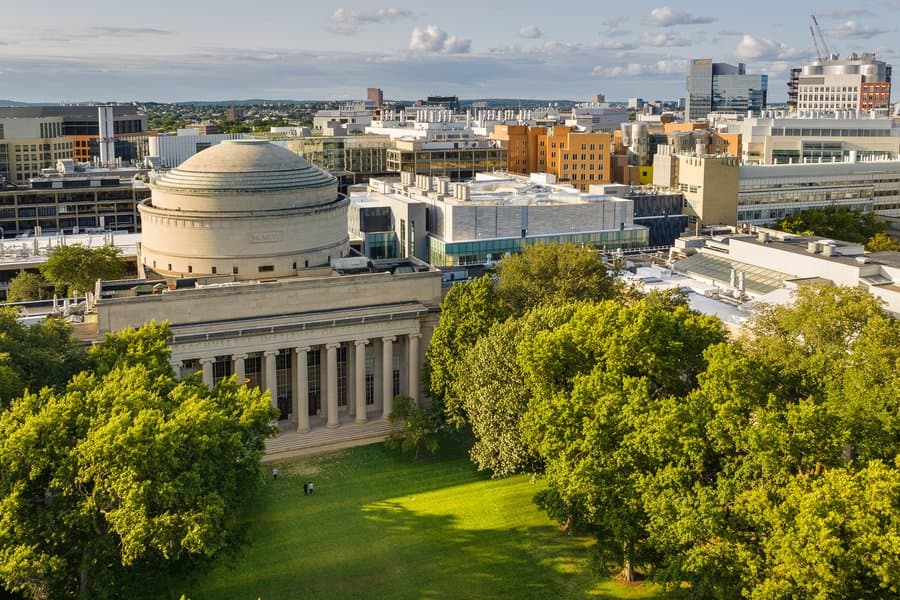
A $25 million state investment, matched with federal funds, will fund the construction of MIT’s Quantum Systems Laboratory (QSL) in Building 39. The shared‑use facility will combine quantum computers, sensors, and interconnects, giving researchers across the Commonwealth hands‑on access to hardware and specialized infrastructure needed to translate quantum science into life‑science, defense, and commercial breakthroughs.
 )
)
MIT’s new Quantum Systems Laboratory – a shared‑use toolbox for the Commonwealth
On May 28, 2026, Governor Maura Healey and MIT President Sally Kornbluth announced a $25 million investment from the Commonwealth of Massachusetts to create the Quantum Systems Laboratory (QSL) at MIT. The state money will match a portion of existing federal grants, allowing construction to begin this summer in Building 39 on the MIT campus.
Technical approach: co‑locating quantum computers, sensors, and interconnects
The QSL is designed as the first facility that brings together three core quantum subsystems under one roof:
- Quantum processors – superconducting and trapped‑ion qubit arrays from IBM, Google, and emerging startups will be installed in dilution refrigerators capable of reaching sub‑10 mK temperatures. These machines will be accessible through a scheduling portal that integrates with the open‑source Qiskit and Cirq stacks, letting researchers run algorithms without needing to own the hardware.
- Quantum sensors – ultra‑stable atomic clocks, NV‑center magnetometers, and optomechanical resonators will be housed in vibration‑isolated, temperature‑controlled chambers. The sensors are intended for precision navigation, biomedical imaging, and materials characterization.
- Quantum interconnects – photonic and microwave links that transfer quantum states between processors and sensors. The lab will experiment with cryogenic microwave‑to‑optical converters and low‑loss waveguide arrays, providing a testbed for distributed quantum computing and secure quantum networking.
To support these subsystems, the QSL will include:
- Cleanroom‑class labs (ISO 5) for device packaging and high‑frequency RF/THz electronics development. Researchers can fabricate custom control chips that operate at cryogenic temperatures, a bottleneck for scaling qubit arrays.
- Shielded test chambers with magnetic shielding (mu‑metal) and acoustic damping, essential for preserving quantum coherence.
- High‑bandwidth data acquisition infrastructure (10 Gbps fiber links, FPGA‑based real‑time controllers) that bridges the gap between quantum experiments and classical post‑processing.
All of these capabilities are managed through a unified resource‑allocation system similar to the one used by MIT.nano, allowing external university groups, startups, and defense labs to book time on the hardware.
Real‑world applicability: from labs to market
The QSL’s shared‑use model is aimed at accelerating three practical domains that are already sizable contributors to the Massachusetts economy:
- Life sciences – quantum sensors can detect magnetic fields from single proteins, enabling label‑free diagnostics and drug‑target validation. Early‑stage collaborations are planned with the Broad Institute to explore quantum‑enhanced NMR spectroscopy for metabolomics.
- National defense – quantum‑grade timing and navigation systems are critical for resilient GPS‑independent platforms. The lab will partner with the U.S. Navy’s Quantum Navigation Initiative to test entanglement‑based clock distribution across maritime networks.
- Quantum‑enabled startups – MIT’s START.nano accelerator has shown that shared facilities dramatically lower the barrier to entry for hardware ventures. By providing turnkey access to qubit processors and sensor suites, the QSL will help spin‑out companies move from simulation to hardware validation within months rather than years.
Beyond these sectors, the QSL will serve as an educational hub. Graduate students and postdocs will receive hands‑on training on quantum control electronics, a skill set that is currently scarce in industry. The facility is expected to generate 150 construction jobs and 75‑100 permanent technical positions, contributing directly to the Commonwealth’s workforce.
How the QSL fits into Massachusetts’ quantum ecosystem
The laboratory builds on two existing pillars:
- MIT.nano – a shared‑use nanofabrication center that has become a model for interdisciplinary hardware development. The QSL mirrors its governance and user‑fee structure, ensuring that the quantum tools are as accessible as the nanofabrication tools.
- Lincoln Laboratory’s SQUILL Foundry – a free‑access superconducting qubit fab. While SQUILL focuses on device fabrication, the QSL adds the operational layer: control electronics, sensor integration, and system‑level testing.
Together, these resources create a pipeline from device design (SQUILL) to system integration and application testing (QSL), positioning Massachusetts to retain talent and attract global quantum firms.
Outlook and challenges
The QSL’s ambition is clear, but several technical and programmatic hurdles remain:
- Coherence preservation – scaling qubit counts while maintaining error rates below the fault‑tolerance threshold (<1 %) requires continued advances in materials and cryogenic wiring.
- Interconnect losses – converting microwave qubit signals to optical photons without degrading quantum information is an active research area; the QSL’s photonic testbeds will be crucial for progress.
- Workforce development – training enough engineers who understand both quantum physics and high‑frequency electronics will demand new curricula and industry apprenticeships.
If these challenges are met, the Quantum Systems Laboratory could become a model for regional quantum hubs worldwide, translating fundamental research into tangible economic and security benefits for Massachusetts and the United States.
For more information about the Quantum Systems Laboratory and how to apply for access, visit the MIT Quantum Initiative page and the Massachusetts Office of Technology Development.
Comments
Please log in or register to join the discussion