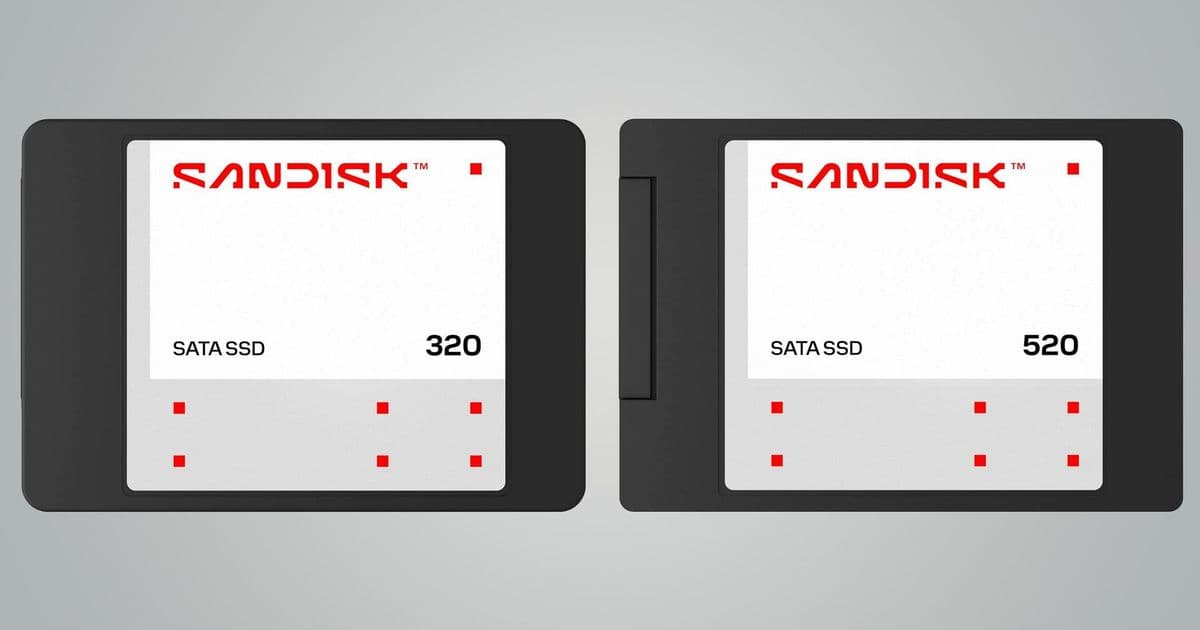
SanDisk is set to launch two new 2.5‑inch SATA SSD families – the 320 aimed at mainstream users and the 520 targeting prosumers. Both offer up to 560 MB/s sequential reads, 525 MB/s writes, and capacities from 250 GB to 4 TB, providing a lower‑cost alternative as NAND prices remain volatile.
SanDisk re‑enters the SATA market with 320 and 520 SSDs to ease the storage shortage
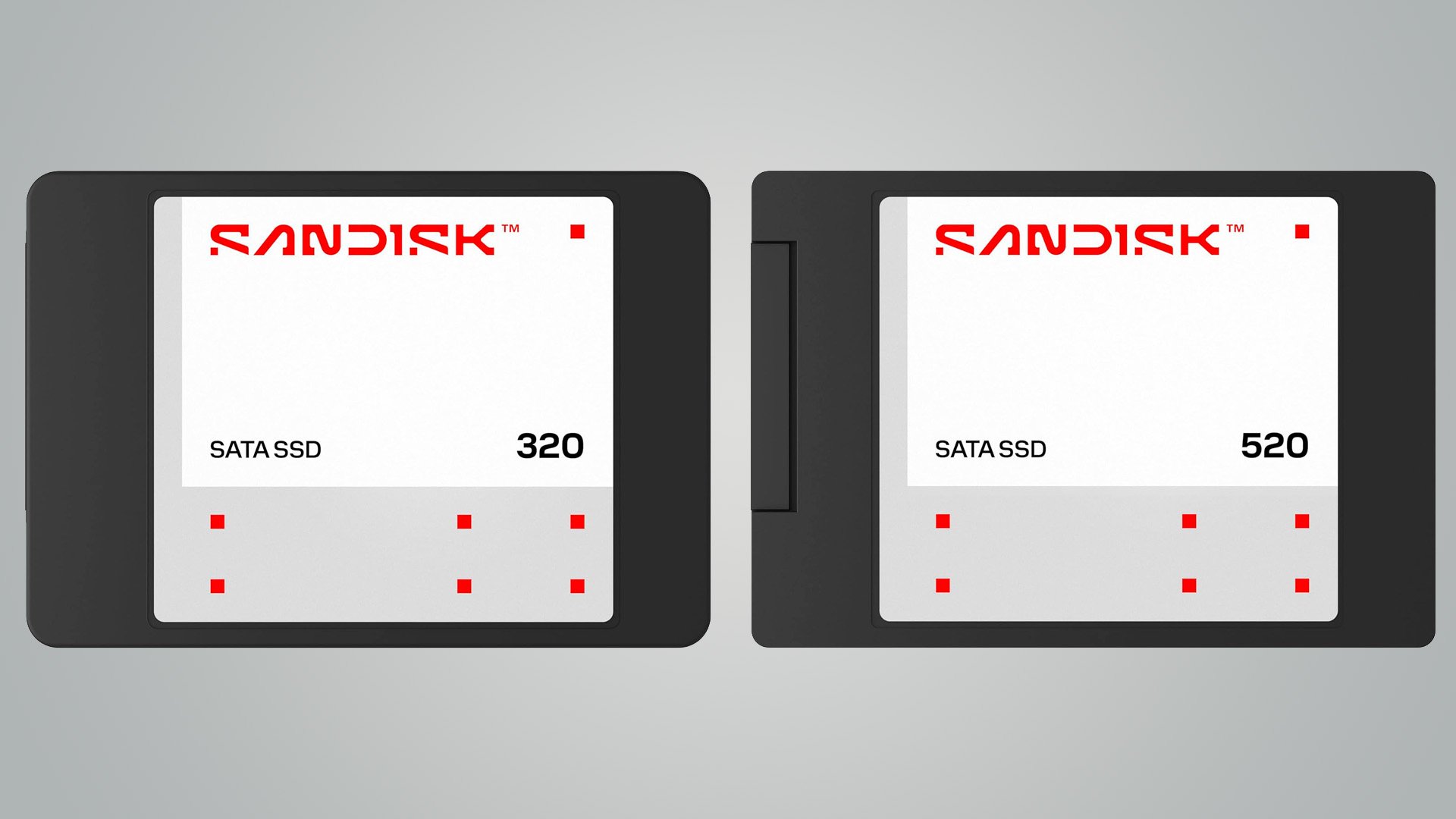
SanDisk has listed two new SATA SSDs on Amazon UK under the model names 320 and 520. The listings, first spotted by leaker momomo_us, include basic specifications, pricing hints, and expected arrival dates in early June 2026. While the exact launch date and pricing remain unconfirmed, the data points to a strategic move: offering affordable, high‑capacity SATA drives while the industry wrestles with a persistent NAND supply crunch.
Technical specifications
| Model | Capacity range | Sequential read | Sequential write | Form factor |
|---|---|---|---|---|
| SanDisk 320 | 250 GB – 2 TB | up to 545 MB/s | up to 525 MB/s | 2.5‑inch, 7 mm |
| SanDisk 520 | 500 GB – 4 TB | up to 560 MB/s (≈2.8 % faster) | up to 525 MB/s | 2.5‑inch, 7 mm |
Both drives use the standard SATA III interface (6 Gb/s), which caps the theoretical bandwidth at 600 MB/s. The read speeds reported (545 MB/s and 560 MB/s) sit just below that ceiling, indicating a well‑tuned controller but also confirming that the SATA bus, not the NAND, is the performance limiter.
Controller and NAND assumptions
SanDisk has not disclosed the controller SKU. Historically the company has partnered with Marvell, Silicon Motion, and formerly SandForce for SATA products. Given the modest performance envelope, a Silicon Motion SM2256‑type controller is a plausible guess—it offers low power draw and sufficient bandwidth for SATA‑III drives.
The NAND is listed as SanDisk’s own 3D flash. Current generation SATA SSDs typically employ 112‑ or 128‑layer TLC or QLC stacks. The 520’s 4 TB variant carries a 1,000 TBW endurance rating, which aligns with a 128‑layer TLC configuration. Expect the 320 line to use the same stack but with lower capacity chips, keeping per‑gigabyte cost down.
Market implications
Pricing context
SATA SSD prices have risen 10‑20 % over the past twelve months as NAND fab capacity is stretched thin. As of Q2 2026, a 250 GB SATA drive averages $42, a 500 GB model sits around $101, a 1 TB unit costs roughly $204, and the 4 TB tier peaks near $329. The SanDisk 320 and 520 are positioned to sit at the lower end of these brackets, offering a price‑to‑capacity ratio that undercuts many NVMe alternatives, especially for users who cannot exploit PCIe bandwidth.
Why SATA still matters
- Legacy system compatibility – Many office PCs, small‑business workstations, and entry‑level laptops still ship with SATA ports only. Replacing a mechanical HDD with a 2.5‑inch SSD yields a 4‑5× speed improvement for boot and application load times without a hardware upgrade.
- Form‑factor constraints – Ultrabooks and thin‑and‑light laptops often have a 7 mm height limit. The 2.5‑inch, 7 mm profile of the 320/520 fits these chassis, whereas the older 9.5 mm drives are being phased out.
- Supply‑chain resilience – NVMe drives rely on newer silicon nodes and higher‑speed DRAM buffers, which are currently more exposed to fab shortages. SATA SSDs, built on mature process nodes, can be produced with higher yields, helping to stabilize inventory.
Competitive outlook
Samsung’s recent 8 TB 870 Evo launch demonstrates that OEMs are still extending the life of SATA SSDs for high‑capacity niches. The 870 Evo remains a benchmark for reliability, but its price sits well above the projected cost of SanDisk’s 4 TB 520. If SanDisk can deliver comparable endurance at a lower price point, it may capture a segment of the prosumer market that values capacity over raw throughput.
Intel, Micron, and Western Digital have all hinted at expanding their SATA portfolios in 2026, but none have announced a product line that spans both mainstream and prosumer tiers as clearly as SanDisk’s 320/520 split. The dual‑track approach could force competitors to re‑evaluate their pricing structures, potentially softening the overall SATA market premium that has persisted since 2023.
Outlook and recommendations
- For budget‑constrained upgrades – Users with legacy desktops or laptops should monitor the 320 line for 250 GB‑2 TB options. The price/performance ratio is likely to be the most attractive in the next quarter.
- For content creators needing capacity – The 520’s 4 TB model, with a 1,000 TBW rating, offers a viable alternative to external HDD arrays when low latency is required.
- Enterprise storage planners – While SATA SSDs cannot replace NVMe in high‑throughput workloads, they can serve as tier‑2 cache or archival storage in mixed‑media arrays, especially when capacity‑per‑dollar is the primary metric.
Overall, SanDisk’s re‑entry into the SATA SSD segment appears timed to address a clear market gap: affordable, high‑capacity storage that sidesteps the current NAND bottleneck. As more manufacturers announce similar products, the next six months should see a modest price correction that benefits end‑users still tied to SATA infrastructure.
Comments
Please log in or register to join the discussion