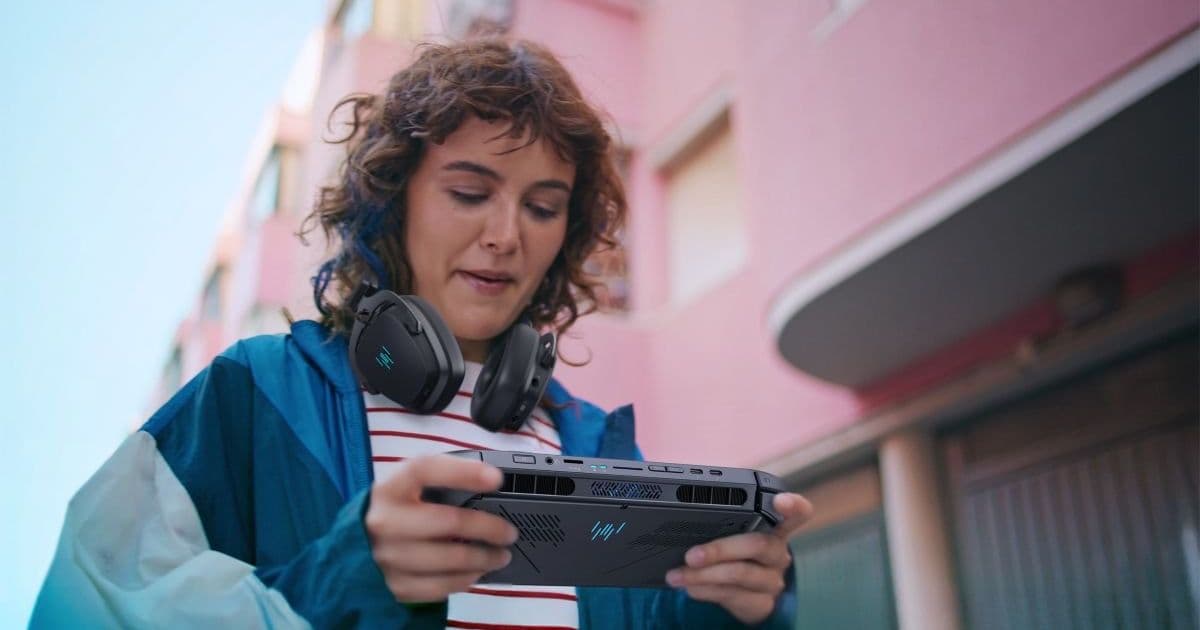
Acer’s new Predator Atlas 8 brings an 8‑inch 120 Hz IPS display, up to 24 GB LPDDR5x RAM, and Intel’s first Arc G‑Series processors to the handheld market. The device ships with dual‑fan cooling, Wi‑Fi 7, Thunder‑bolt 4, and a configurable PredatorSense app, and will be available in October.
Acer Predator Atlas 8 Handheld Gaming PC Arrives in October with Intel Arc G‑Series CPUs
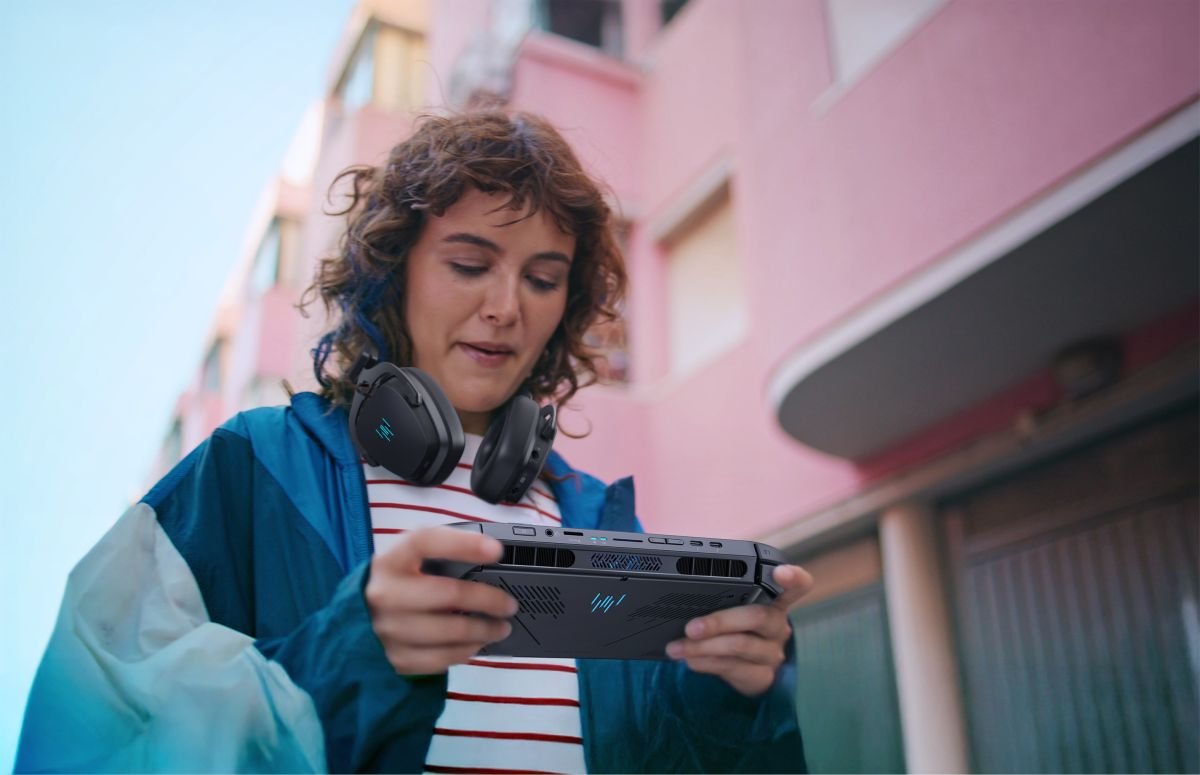
Acer has confirmed that the Predator Atlas 8 handheld gaming PC will launch in October. The device is notable for being one of the first portable computers to use Intel’s Arc G‑Series processors, which integrate a high‑performance Arc B‑series GPU directly onto the CPU die.
Platform update
| Specification | Details |
|---|---|
| Display | 8 inches, 1920 × 1200 IPS, up to 120 Hz variable refresh rate, Corning Gorilla Glass Victus |
| CPU / GPU | Intel Arc G3 (10‑core, Arc B370 iGPU) or Arc G3 Extreme (12‑core, Arc B390 iGPU) – same silicon as Core Ultra 3 “Panther Lake” chips |
| Memory | Up to 24 GB LPDDR5x‑7467 |
| Storage | Up to 1 TB PCIe 4.0 NVMe SSD |
| Battery | 60 Wh or 80 Wh options |
| Connectivity | Intel Killer Wi‑Fi 7, Bluetooth 5.4, 2× Thunderbolt 4, micro‑SD slot, 3.5 mm audio jack |
| Ports | 65 W power adapter, dual fans (metal + plastic) |
| Dimensions / Weight | 299 × 127.4 × 58.4 mm; 770 g (60 Wh) or 810 g (80 Wh) |
The handheld runs Windows 11 and ships with Acer’s PredatorSense utility, which lets users switch performance profiles, monitor temperatures, and control RGB lighting without leaving a game.
Developer impact
GPU capabilities
The Arc B390 iGPU offers up to 12 compute cores and hardware‑accelerated ray tracing. For developers targeting DirectX 12 Ultimate or Vulkan, the handheld can now run titles that previously required a discrete GPU. This opens a path for cross‑platform game ports that rely on Intel’s driver stack rather than AMD or Nvidia‑specific extensions.
Memory and storage
With up to 24 GB of LPDDR5x, the Atlas 8 comfortably exceeds the 8‑12 GB ceiling seen on most competing handhelds. Large open‑world games and asset‑heavy Unity or Unreal projects will have enough headroom to avoid frequent streaming stalls. The PCIe 4.0 SSD also reduces load times, which is a measurable quality‑of‑life improvement for both developers and players.
API compatibility
Because the device runs a full Windows 11 environment, developers can continue using familiar toolchains—Visual Studio, Unity, Unreal Engine, or Godot—without needing a custom Android or iOS build. However, the presence of Thunderbolt 4 means external GPUs can be attached for desktop‑level testing, giving a convenient way to compare performance on the same hardware.
Power management
The 60 Wh and 80 Wh batteries, combined with a 65 W charger, give roughly 2–3 hours of high‑load gaming. The dual‑fan design keeps the CPU/GPU under 90 °C during sustained workloads, which is critical for maintaining stable frame rates. Developers should still profile for power‑efficiency, especially if targeting the lower‑capacity battery variant.
Migration path for existing handheld titles
- Update graphics APIs – Ensure your game uses DirectX 12 or Vulkan with fallback paths for older GPUs. Intel’s driver documentation provides guidance on translating Nvidia/AMD specific calls to Arc‑compatible equivalents.
- Test with PredatorSense – Use the built‑in performance profiles (Eco, Balanced, Turbo) to verify that your game runs acceptably across the power envelope.
- Leverage Thunderbolt – Connect an external GPU during development to benchmark against higher‑end hardware. This helps you spot any bottlenecks that only appear on the integrated Arc iGPU.
- Optimize memory usage – Even with 24 GB available, handhelds still benefit from texture streaming and asset compression to keep the SSD workload low and extend battery life.
- Validate controller input – The Atlas 8 includes adjustable trigger feedback with both micro‑switch and hall‑effect modes. Test your input handling code for both analog and digital trigger responses.
What to watch for
- Driver updates – Intel is still polishing Arc drivers for the handheld form factor. Keep an eye on the Intel Arc driver release notes for performance patches.
- Pricing – Acer has not disclosed the final price. Expect a premium relative to AMD‑based handhelds because of the newer silicon and larger battery options.
- Software ecosystem – The PredatorSense app is the first of its kind on a handheld PC. Community scripts and third‑party overlays may appear, offering additional customization for power and lighting.
The Predator Atlas 8 promises to broaden the handheld market beyond AMD‑centric devices, giving developers a Windows‑based platform with a modern Intel GPU. If you are already building for Windows PCs, the migration effort should be minimal, while the added portability opens new distribution channels for indie titles and AAA ports alike.
For the latest specs and firmware updates, visit the official Acer Predator Atlas 8 page.
Comments
Please log in or register to join the discussion