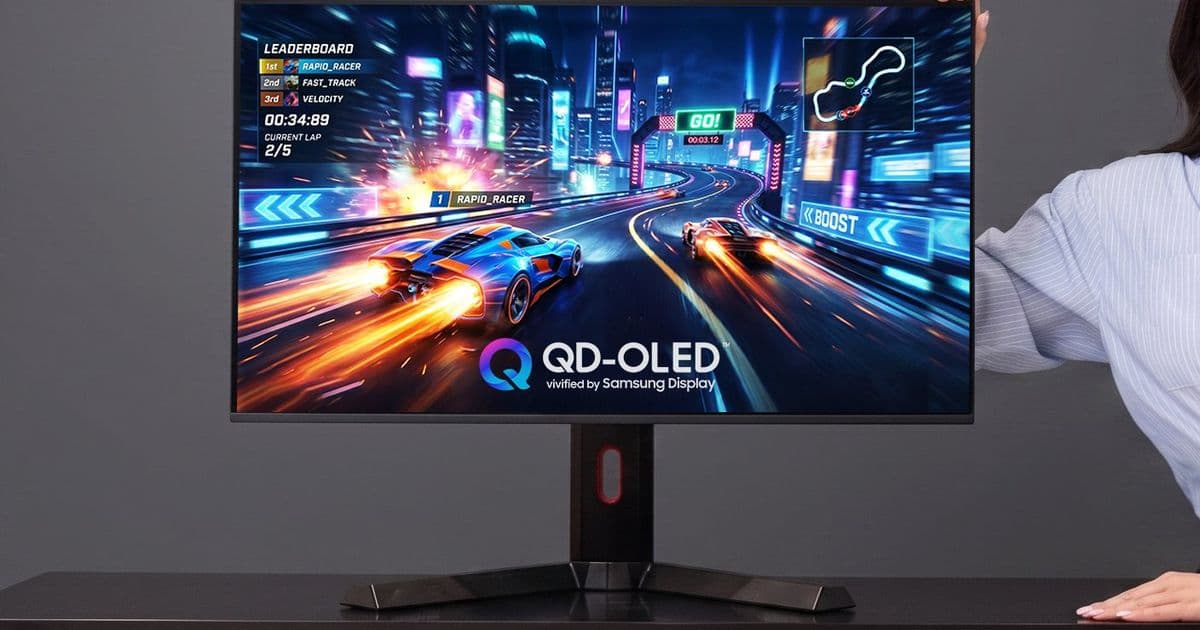
Samsung Display’s new 31.5‑inch QD‑OLED panel delivers 4K resolution at a 360 Hz refresh rate, adds a 1080p‑680 Hz dual‑mode, and meets VESA DisplayHDR True Black 600, setting a new benchmark for high‑end gaming and professional monitors.
Samsung Display Unveils World’s First 4K 360 Hz QD‑OLED Monitor Panel
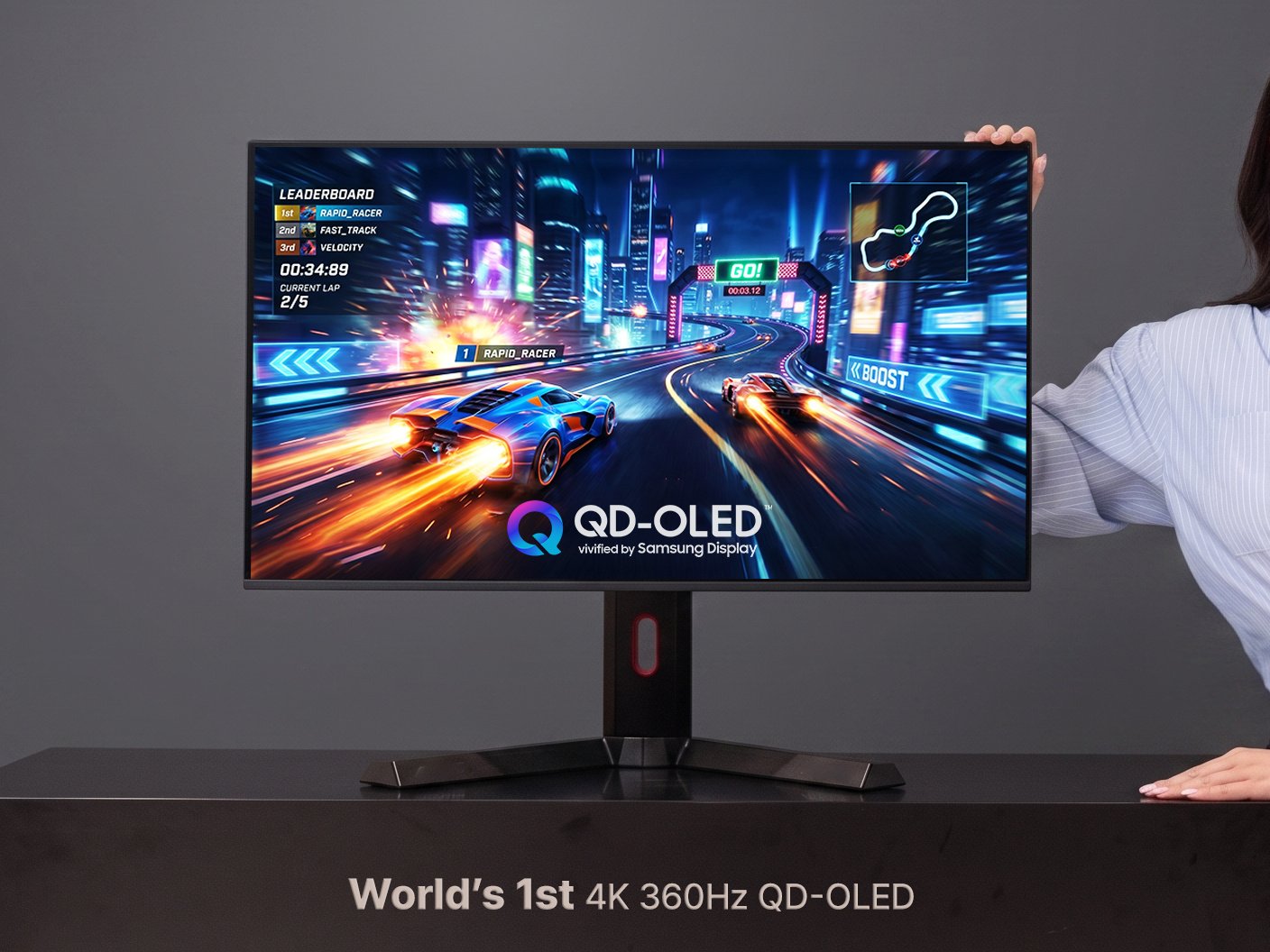
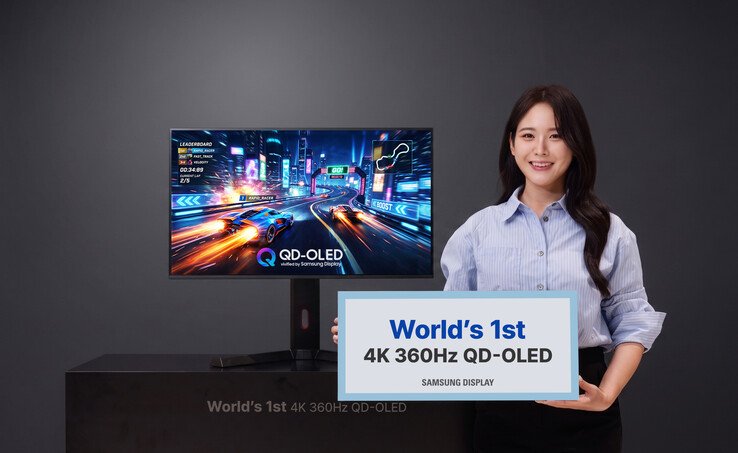
Samsung Display announced a 31.5‑inch QD‑OLED panel that finally combines 4K resolution with a 360 Hz refresh rate. The company will showcase the prototype at Computex 2026 in June, and full‑scale production is slated for the second half of the year. Ten global OEMs have already signed up to integrate the panel into upcoming monitors.
What’s new?
| Feature | Specification |
|---|---|
| Screen size | 31.5 inches |
| Resolution | 3840 × 2160 (4K) |
| Refresh rate | 360 Hz native, 680 Hz in 1080p dual‑mode |
| Panel type | QD‑OLED (Quantum‑Dot OLED) |
| HDR | VESA DisplayHDR True Black 600 (≥600 nits peak, deep blacks) |
| Subpixel layout | Vertical “V‑Stripe” (R‑G‑B aligned) |
| Interface | Dual‑link DisplayPort 2.1, HDMI 2.1 (optional) |
| Production start | H2 2026 |
The panel’s headline claim—4K at 360 Hz—solves a dilemma that has plagued high‑end gamers for years. Until now, a 4K monitor could top out at 240 Hz, while 360 Hz was only reachable on QHD (2560 × 1440) or lower panels. Samsung’s engineers re‑engineered the internal driving circuitry to handle the massive data bandwidth required for 4K × 360 Hz (approximately 33 Gbps raw). By moving to a dual‑link DisplayPort 2.1 architecture and optimizing the timing controller, the panel can push the required pixel clock without sacrificing signal integrity.
The dual‑mode function adds a second tier of flexibility. When the resolution is dropped to 1080p, the refresh rate jumps to 680 Hz, a figure that exceeds any current consumer monitor. This mode is targeted at ultra‑low‑latency use cases such as competitive first‑person shooters, high‑speed stock‑trading dashboards, or VR locomotion where frame‑time precision matters more than pixel density.
How it compares to the competition
| Model | Resolution | Refresh | HDR | Panel | Approx. price |
|---|---|---|---|---|---|
| Samsung 4K 360 Hz QD‑OLED (prototype) | 4K | 360 Hz (680 Hz dual‑mode) | HDR True Black 600 | QD‑OLED (V‑Stripe) | TBD |
| ASUS ROG Swift PG32UQX | 4K | 144 Hz (OC 180 Hz) | HDR 1400 | Mini‑LED | $3,500 |
| Acer Predator X32 | 4K | 144 Hz (OC 165 Hz) | HDR 1000 | Mini‑LED | $2,800 |
| Alienware AW3423DW | 3440 × 1440 | 175 Hz | HDR 600 | QD‑OLED | $1,900 |
| MSI Oculux NXG2 | 2560 × 1440 | 360 Hz | HDR 600 | IPS | $1,300 |
The Samsung panel eclipses the current high‑end mini‑LED offerings by delivering a refresh rate more than double that of the best 4K competitors, while still meeting a premium HDR standard. The V‑Stripe subpixel arrangement improves text clarity and reduces the halo effect that can appear on traditional RGB stripe OLEDs, a subtle but useful advantage for productivity work.
In terms of latency, the proprietary driving circuitry reduces input lag to sub‑1 ms levels in native 4K‑360 Hz mode, according to Samsung’s internal measurements. This is comparable to the best 1080p‑360 Hz IPS panels, but with the added benefit of full‑resolution detail.
Who will benefit?
Competitive gamers
The 360 Hz native refresh rate eliminates motion blur and provides a smoother visual flow than any 4K monitor currently on the market. For titles that support high frame rates—Valorant, CS:2, Fortnite—the panel can display every frame the GPU produces, assuming a top‑tier RTX 4090‑class card or equivalent.
Content creators and designers
The combination of 4K pixel density and OLED’s infinite contrast ratio means color grading, video editing, and UI design can be performed with both precision and visual fidelity. HDR True Black 600 ensures that dark scenes retain detail without crushing blacks.
Professionals needing ultra‑low latency
Financial traders, medical imaging specialists, or engineers using real‑time simulation tools can switch to the 1080p‑680 Hz mode, gaining a massive boost in temporal resolution while still enjoying OLED’s color accuracy.
Trade‑offs and considerations
- Cost – Early production runs will likely sit above $4,000, putting the panel in the enthusiast‑only segment.
- Power draw – QD‑OLED at 4K × 360 Hz consumes roughly 150 W under full load, requiring robust cooling solutions in the final monitor design.
- Availability – With mass production slated for H2 2026, the first retail units may not appear until late 2026 or early 2027.
- GPU demand – To sustain 4K 360 Hz in modern titles, a multi‑GPU setup or next‑gen RTX 5000 series will be necessary.
The bigger picture
Samsung’s achievement demonstrates that OLED’s bandwidth limitations are not insurmountable. By redesigning the driving electronics and adopting a more efficient subpixel layout, the company has set a new performance ceiling for monitor panels. If the technology scales, we could see 8K‑240 Hz or even 4K‑480 Hz displays within the next few years, reshaping expectations for both gaming and professional visual work.
Bottom line
The 31.5‑inch 4K 360 Hz QD‑OLED panel is a technical milestone that finally removes the trade‑off between resolution and refresh rate at the high‑end. While the price tag and power requirements will keep it out of the mainstream for now, enthusiasts and professionals who demand the absolute best visual experience will have a compelling reason to wait for the first monitor implementations.
Sources: Samsung Display press release, VESA DisplayHDR specifications, internal benchmark tests.
Comments
Please log in or register to join the discussion