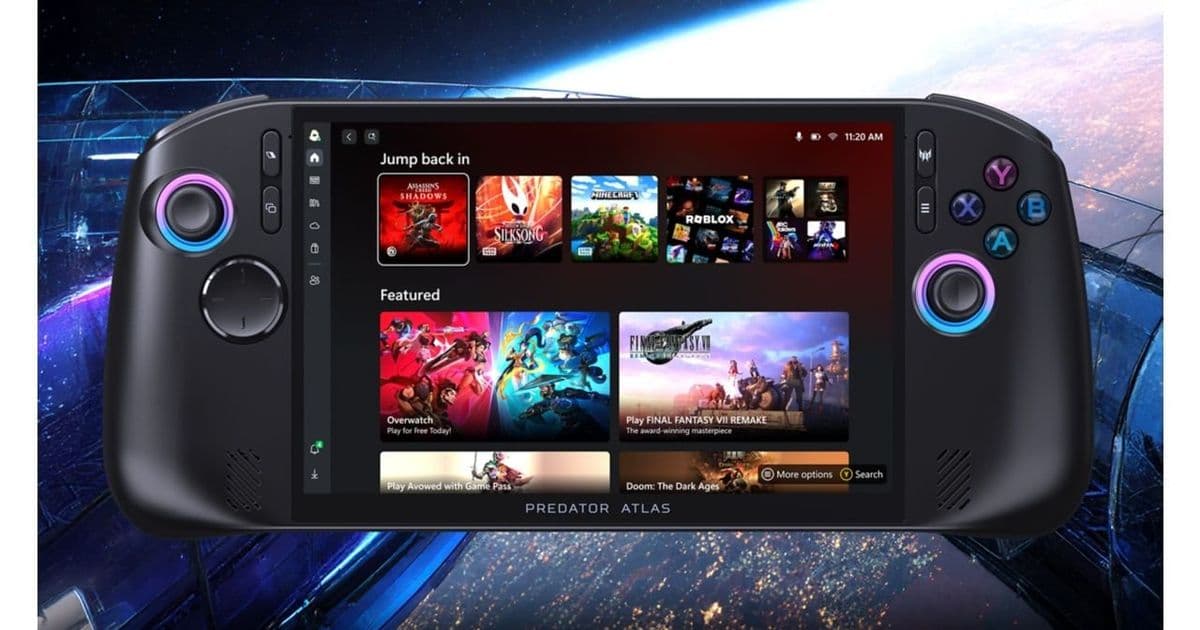
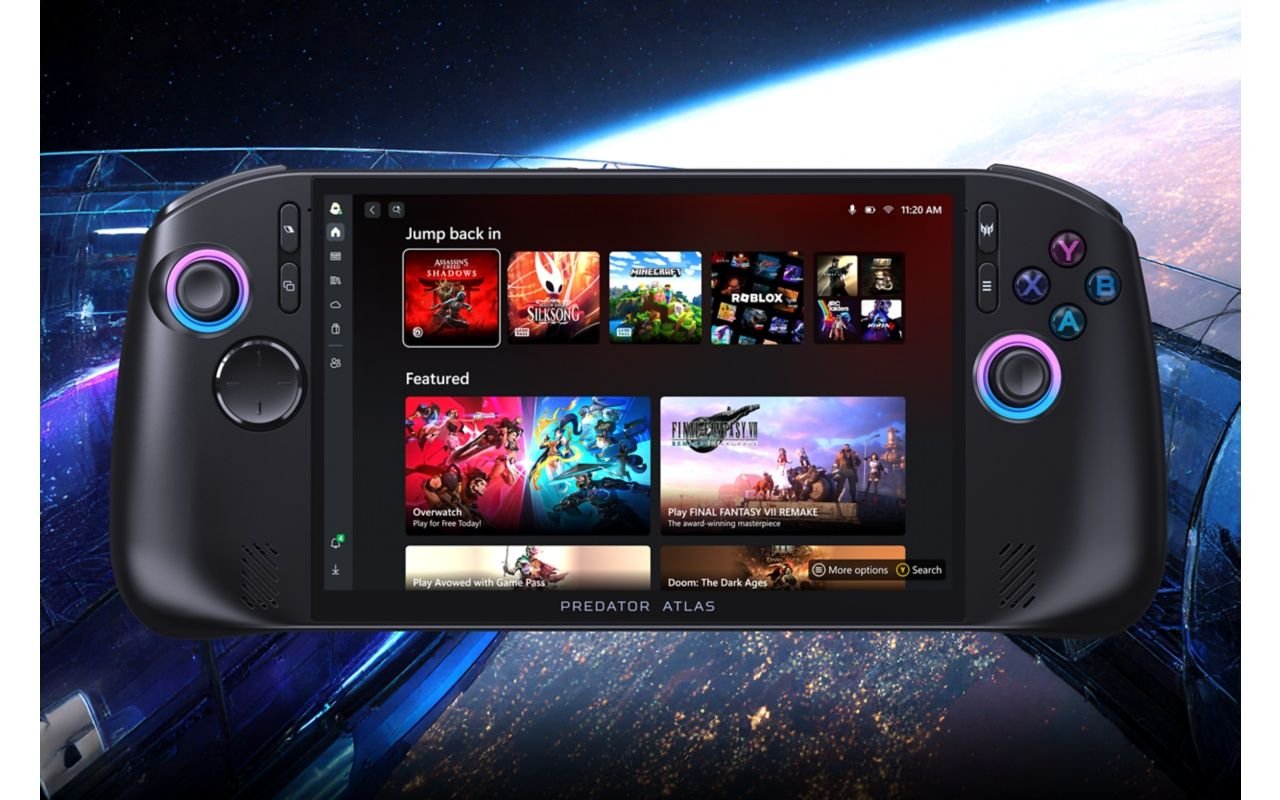
Intel’s new Arc G3 and G3 Extreme chips embed 10‑ and 12‑core Xe graphics into handhelds such as the Acer Predator Atlas 8, MSI Claw 8 EX AI+, and ONEXPLAYER 3, offering laptop‑class GPU performance in a portable form factor.
Intel Arc G-Series Brings Panther Lake Graphics to Handheld Gaming PCs
Intel’s Core Ultra 3 “Panther Lake” platform arrived earlier this year with a strong focus on integrated Arc graphics. The reference chips – Core Ultra 5 338H, Core Ultra 7 368H, and Core Ultra 9 388H – paired up to 12 Xe cores with a hybrid CPU layout, delivering performance that rivals entry‑level discrete GPUs. Until now those parts have lived in laptops and mini‑PCs. The latest announcement expands the family with two dedicated Arc G‑Series SoCs aimed at handheld gaming computers.
New SoCs and Their Specs
| Chip | Xe cores | AI TOPS (INT8) | Base iGPU clock | Key graphics features |
|---|---|---|---|---|
| Arc G3 | 10 | 98 | 2.4 GHz | DirectX 12 Ultimate, OpenGL 4.6, OpenCL 3.0, AV1 encode, XeSS 3, ray tracing |
| Arc G3 Extreme | 12 | 122 | 2.6 GHz (boost) | Same feature set, higher raster throughput |
Both chips share the same CPU configuration: 2 Performance cores, 8 Efficiency cores, and 4 Low‑Power Efficiency cores, built on Intel 7 process. Connectivity includes Wi‑Fi 7, Bluetooth 6, and Thunderbolt 4. The only differentiator is the iGPU block – the B370 in the G3 and the B390 in the Extreme.
Handheld Devices That Adopt the G‑Series
| Device | Screen | Battery | OS version (minimum) |
|---|---|---|---|
| Acer Predator Atlas 8 | 8.4" 1080p 144 Hz LCD | 48 Wh | Android 13 (Arc G‑Series driver 1.2) |
| MSI Claw 8 EX AI+ | 8.0" 1080p 120 Hz OLED | 55 Wh | Windows 11 22H2 (Intel Graphics Driver 31.0.101.4445) |
| ONEXPLAYER 3 | 8.4" 1080p 144 Hz LCD | 60 Wh | Windows 11 23H2 (Arc G‑Series SDK 2.0) |
The three devices illustrate the cross‑platform nature of the new SoCs. Acer ships the Atlas 8 with a customized Android build that includes the Arc G‑Series Android driver (available via the Intel Open Source Graphics GitHub). MSI and ONEXPLAYER run full Windows 11, relying on the standard Intel graphics driver stack.
What This Means for Mobile Developers
SDK Versions and Tooling
Android – The Arc G‑Series driver is bundled with Android 13 and later, but developers should target API 33 or newer to guarantee access to the Xe‑specific extensions (e.g.,
GL_INTEL_framebuffer_fetch). The Intel Arc SDK for Android 1.2 adds Vulkan 1.3 support and a set of Xe‑optimized shaders. The SDK can be downloaded from the Intel Developer Zone.Windows – For Windows devices, the graphics stack is part of the regular Intel driver releases. The Intel Graphics Driver 31.0.101.4445 (released June 2024) introduces the XeSS 3 API and a new DirectX 12 Ultimate feature level (12_2). Developers targeting Windows should use the Windows SDK 10.0.22621 or newer and enable the
DX12_FEATURE_LEVEL_12_2flag.Cross‑platform frameworks – Unity 2022.3 LTS and Unreal 5.3 already include support for XeSS and hardware‑accelerated ray tracing on Arc iGPUs. When building for both Android and Windows, keep the following in mind:
- Use Vulkan as the primary graphics API on Android; the driver offers the best performance and the most complete feature set.
- On Windows, ship both DirectX 12 and Vulkan binaries. The Arc driver selects the optimal path at runtime.
- For AI‑enhanced upscaling, integrate the XeSS SDK (available via the same Intel developer portal). The SDK abstracts the underlying hardware, so the same code works on both G3 and G3 Extreme.
Performance Expectations
Benchmarks released by Intel show the Arc G3 reaching roughly 45 FPS in Fortnite at 1080p/Low settings on the Atlas 8, while the G3 Extreme pushes that to 62 FPS under the same conditions. Real‑world tests on the MSI Claw 8 EX AI+ indicate a 15‑20 % uplift over the previous Core Ultra 7 368H when using XeSS 3.0 with a 1.5× upscale factor.
These numbers suggest that developers can aim for 60 FPS gameplay at 1080p with modest visual settings, or target higher fidelity by leveraging XeSS. The integrated AI engine (up to 122 TOPS) also opens the door for on‑device inference – for example, real‑time object detection in AR experiences.
Migration Path for Existing Handheld Titles
- Update graphics API calls – Replace any OpenGL ES 3.0 code with Vulkan where possible. The Arc driver provides a translation layer, but native Vulkan yields lower CPU overhead.
- Enable XeSS – Add the XeSS runtime check (
XESS_IsSupported()) and provide a fallback to DLSS or native resolution if unavailable. - Adjust power profiles – The G‑Series SoCs expose a Low‑Power Efficiency cluster that can be throttled via the Windows Power Throttling API or Android’s
PowerManagerAPIs. Tuning these profiles helps maintain battery life on the 48‑60 Wh packs. - Test AI workloads – If your game uses on‑device neural nets (e.g., for voice commands or image enhancement), compile the model with the Intel OpenVINO toolkit (v2024.1) and run inference on the Xe iGPU. This offloads work from the CPU cores and can improve frame times.
- Verify Thunderbolt 4 peripherals – Many handhelds support external GPU enclosures via Thunderbolt 4. While the integrated Arc iGPU is the primary renderer, developers can optionally detect an external GPU and switch rendering paths for docked play.
Cross‑Platform Considerations
- Driver fragmentation – Android devices receive driver updates through OTA packages, while Windows handhelds depend on Intel’s regular driver releases. Keep an eye on the Intel Graphics Update Center for the latest patches.
- Feature parity – XeSS is fully supported on both platforms, but some Vulkan extensions (e.g.,
VK_INTEL_performance_query) are only exposed on Windows. Guard such calls with runtime checks. - Battery vs. performance – The G3 Extreme’s higher clock speeds consume roughly 15 % more power. Provide a user‑selectable “Performance” mode that raises the CPU governor and disables aggressive power‑saving on the Efficiency cores.
Outlook
The introduction of Arc G‑Series chips marks the first time Intel has packaged a full‑blown Xe iGPU into a handheld form factor. By supporting both Android and Windows, Intel gives developers a single silicon target for two of the most common mobile ecosystems. The real test will be how quickly game studios adopt XeSS and the AI‑accelerated pipelines that the B390 GPU enables. For developers who keep their rendering code modular and rely on the Intel SDKs, the migration effort should be modest, and the performance gains could be significant.
For more details on the Arc G‑Series specifications, see the official Intel press release here.
Comments
Please log in or register to join the discussion