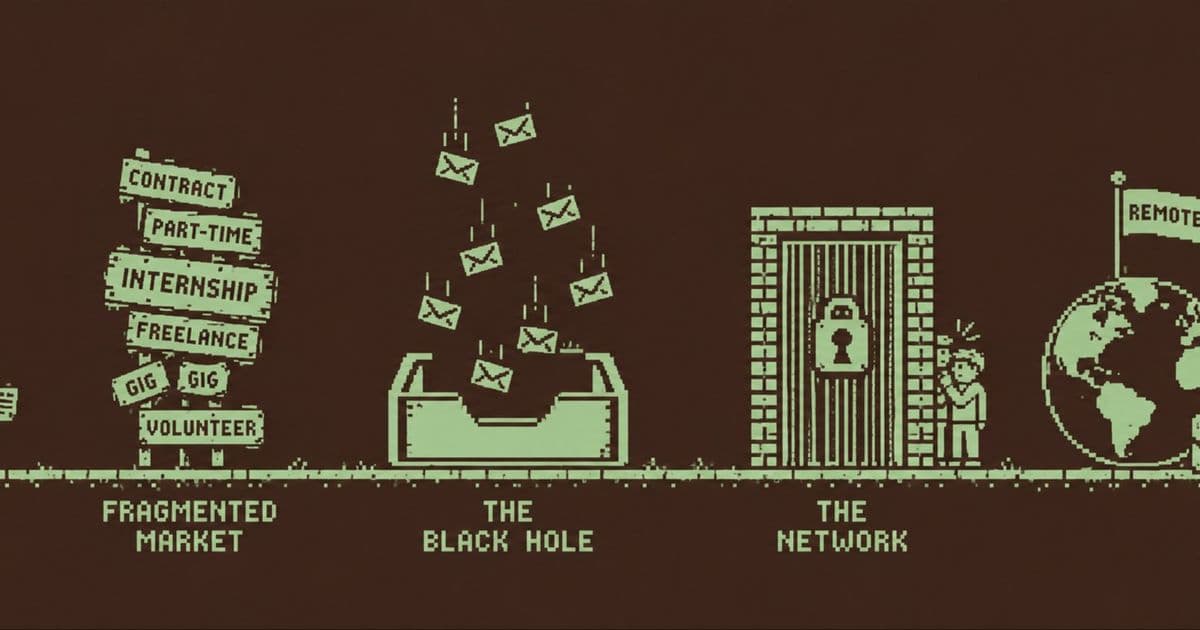
Remote hiring looks like a limitless pool, but fragmented job boards, massive application volumes, and hidden referral networks make it harder to break in. The article breaks down three structural walls and offers practical steps for job seekers to navigate them.
The Remote Hiring Paradox: Why the Most Open Job Market Feels Closed
When a well‑known remote‑first company laid off about a hundred engineers across a dozen countries, the aftermath was surprising. Roughly twenty of those engineers ended up at the same handful of firms, even though the new roles spanned different continents and responsibilities. The pattern raised a simple question: how does remote hiring really work?
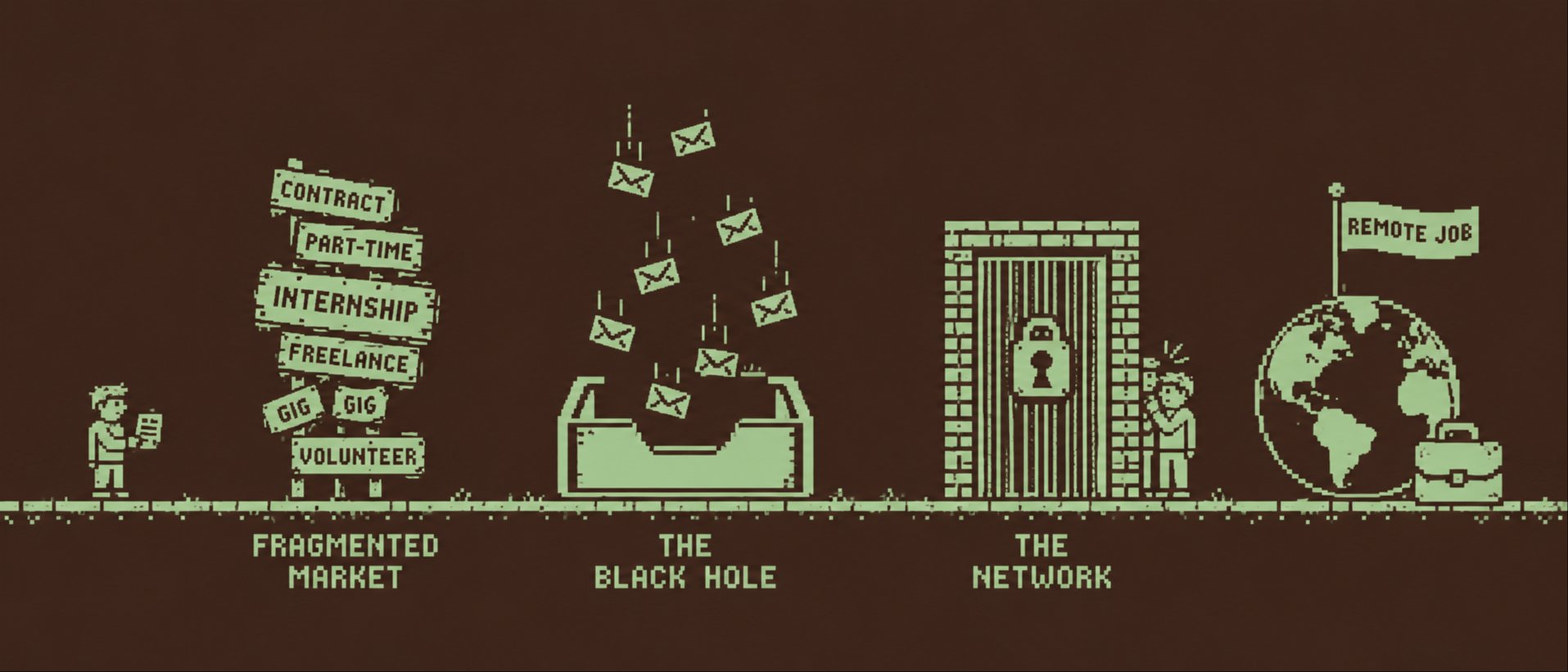
1. A fragmented market
During the pandemic, companies rushed to post on a few premium boards such as We Work Remotely. Candidates had leverage because the supply of remote roles exceeded demand. Today the balance has tipped. Return‑to‑office mandates have reduced the number of truly remote openings, while a swarm of new aggregators promises to surface every opportunity.
A recent analysis that sampled 14 remote‑job boards found that any two boards share only 5 %–13 % of listings. In other words, each board is its own pond rather than a shared lake. Most job seekers fish in just one pond, missing the majority of available positions.
What this means: Relying on a single board is akin to searching a library with only one shelf open. To broaden the net, consider a mix of well‑known sites like Working Nomads and less‑publicized ones such as Curaiz or the remote‑job section of Levels.fyi.
2. The application black hole
The promise of a global talent pool also creates an inbox overload. Deel’s global head of talent disclosed that in 2024 the company sifted through 1.5 million applications to fill 2,500 positions – a conversion rate under 0.2 %. Even at that scale, only about half of hires came from inbound applications. The rest were sourced (≈25 %) or referred (≈20 %).
When a recruiter receives thousands of resumes, the odds of a cold application getting noticed drop dramatically. Automated filters, keyword matching, and sheer volume turn many submissions into digital dust.
What this means: Treat the application as just one entry point. Building a profile that recruiters can discover without you having to push a resume is increasingly important.
3. The hidden network layer
The clustering observed after the layoff wasn’t a coordinated hiring plan; it was the natural outcome of a referral network. One former colleague landed at a remote‑first firm, liked the culture, and began referring peers. Those referrals sparked more referrals, creating a cascade.
In remote environments, where teams collaborate across time zones for months, a personal endorsement carries weight that a generic résumé cannot. The system rewards visibility within the right circles, echoing the way meritocracy can be skewed by unequal access to networks.
What this means: Your professional network is a critical asset. A single internal referral can outweigh dozens of cold applications.
Practical steps for job seekers
- Cast a wider net – Use at least three distinct job boards. The study mentioned earlier highlights a few that consistently surface unique listings: Working Nomads, Curaiz, and Levels.fyi.
- Make yourself discoverable – Keep your LinkedIn profile up to date, contribute to open‑source projects, write technical blogs, and participate in community Slack or Discord channels relevant to your field. These signals increase the chance that a recruiter’s sourcing tools will surface your name.
- Activate your network – Reach out to former teammates, mentors, or alumni who now work at remote‑first companies. A brief, personalized message explaining your interest can open a referral conversation.
- Show tangible output – Public repositories on GitHub, a portfolio site, or published articles act as proof of ability that transcends geographic distance.
- Follow up strategically – If you’ve applied through a board, try to find a contact at the hiring company and share your application link. A human touch can pull your resume out of the abyss.
The bigger picture
Remote work was heralded as the great equalizer, but the reality is more nuanced. A global applicant pool expands competition, making trust harder to establish. Consequently, referrals and sourcing have become the primary gateways to hiring, leaving the traditional résumé less effective.
Understanding these three walls—market fragmentation, application overload, and network dependence—helps job seekers stop blaming themselves for low response rates and start adapting to the actual mechanics of remote hiring.
Eugene Aleksandrov is a product manager and former backend engineer who tracks talent trends in distributed teams. Follow him on Twitter.
Comments
Please log in or register to join the discussion