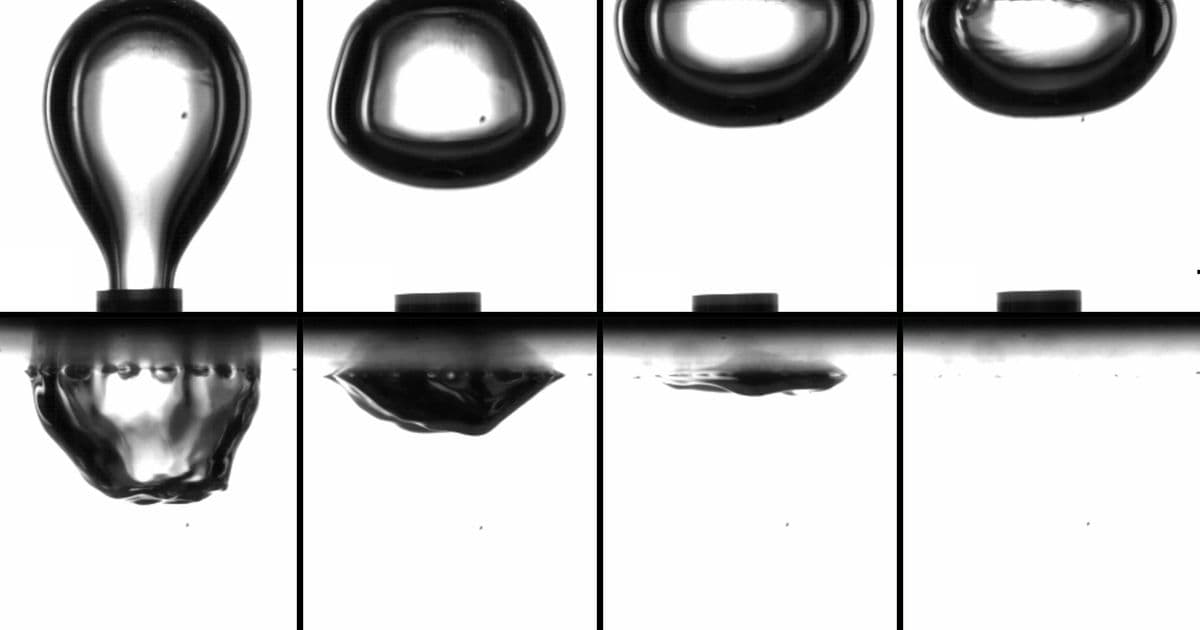
MIT researchers have uncovered the physics behind aerophilic membranes that can remove bubbles from industrial systems 1,000 times faster than current methods, potentially revolutionizing bioreactors, chemical production, and other bubble-plagued industries.
MIT researchers have solved a long-standing industrial challenge by uncovering the physics behind bubble-removing membranes that could dramatically improve efficiency across multiple sectors. The breakthrough, led by Professor Kripa Varanasi and his team, reveals how to optimize membrane materials to evacuate gas bubbles in the fastest possible manner, potentially accelerating processes in bioreactors, chemical production, and beyond.
Bubbles may seem harmless, but in industrial plants worldwide, they cause significant disruptions. They clog filters, interfere with chemical reactions, reduce throughput in biomanufacturing, and can even trigger overheating in electronics and nuclear power plants. Traditional methods to combat bubbles—including mechanical shearing, chemical defoamers, and ultrasound—often prove inadequate or problematic in sensitive environments like bioreactors, where chemical agents can be toxic to cells and mechanical agitation can damage delicate biological materials.
The Science Behind Bubble Removal
The MIT team focused on "aerophilic" membranes—materials that attract air—and discovered that bubble removal speed depends on three distinct physical limits:
- Viscous limit of gas in low-viscosity, low-permeability setups
- Viscous resistance of liquid in high-permeability, high-viscosity regimes
- Inertial limit of liquid when the surrounding fluid resists rapid movement
The researchers created a series of tiny porous silicon membranes with holes ranging from 10 to 200 microns, coating them with hydrophobic silica nanoparticles. Through systematic experimentation, they found that while larger holes initially increased bubble removal speed, they eventually hit a physical ceiling regardless of membrane size.
Practical Applications and Results
Using their findings, the team developed a graph that allows engineers to plot their system's characteristics—such as gas and liquid viscosity—and determine the optimal membrane configuration for their specific application. This tool enables rapid optimization without extensive trial and error.
In practical demonstrations, the researchers achieved a 1,000-fold acceleration in bubble removal within a bioreactor, a critical component in pharmaceutical manufacturing, food and beverage production, cosmetics, and chemical processing. The membranes work by repelling water while attracting gas, creating an efficient pathway for bubble evacuation.
Industry Impact
Varanasi notes that health care companies, chemical manufacturers, and even breweries have already expressed interest in the technology. The membranes can be readily retrofitted into existing systems, offering immediate benefits without requiring complete equipment overhauls.
Beyond industrial applications, the research provides fundamental insights into bubble dynamics that could inform the design of natural systems and even liquid-liquid separation processes. Potential applications include removing oil spills from water or improving hydrogen extraction from water-splitting electrodes.
The Bigger Picture
"Though small, bubbles quietly dictate the performance limits of many advanced technologies," Varanasi explains. "Our results provide a way to eliminate that bottleneck and unlock entirely new levels of performance across industries."
The work, supported by MIT Lincoln Laboratory and conducted using MIT.nano facilities, represents a significant advance in understanding how to control one of nature's most persistent phenomena. By transforming bubble removal from an art into a science, the MIT team has provided industries with a powerful new tool to enhance efficiency, reduce waste, and push the boundaries of what's possible in manufacturing and processing.
For engineers and manufacturers struggling with bubble-related inefficiencies, the research offers both immediate solutions and a framework for future innovation. As biomanufacturing and other advanced industries continue to scale up, the ability to rapidly and effectively remove bubbles could prove crucial in maintaining quality, safety, and economic viability.
The findings demonstrate how fundamental physics research can yield practical solutions to industrial challenges, bridging the gap between theoretical understanding and real-world application. With the new design map and optimized membrane materials, industries can now approach bubble management with unprecedented precision and effectiveness.
Comments
Please log in or register to join the discussion