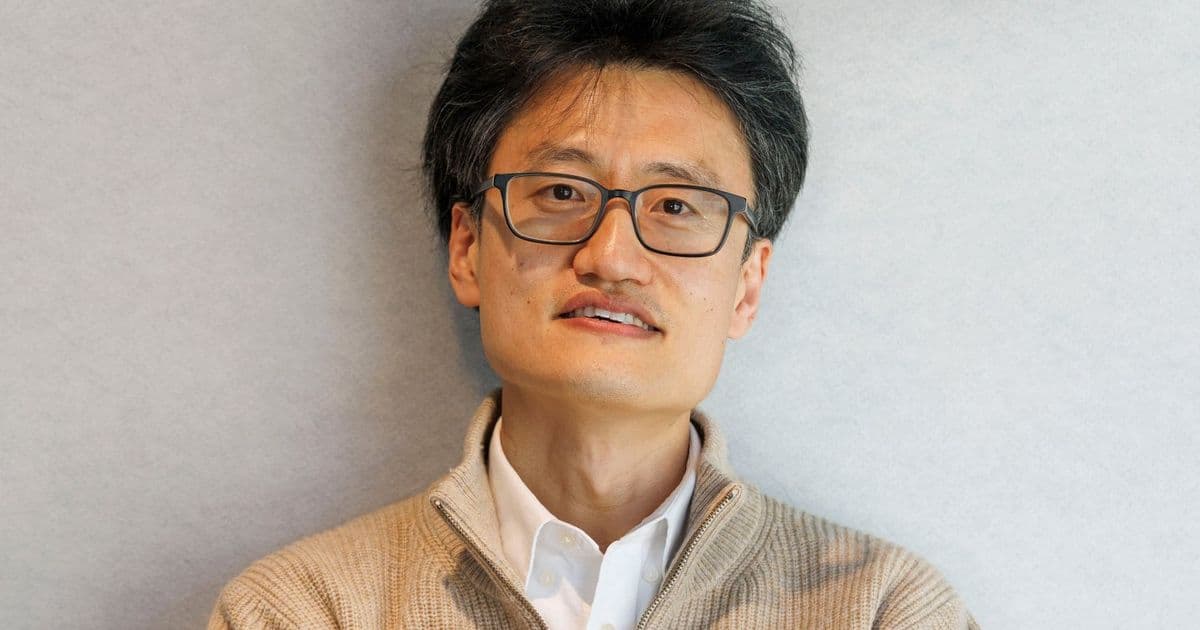
Jinhua Zhao, a transportation scholar who has built autonomous vehicle deployment strategies for Singapore and the Middle East, takes over MIT's Department of Urban Studies and Planning on July 1. His appointment signals a bet that the gap between fast-moving mobility technology and slow-moving institutions is now the central problem in urban planning.
MIT has appointed Jinhua Zhao as head of its Department of Urban Studies and Planning (DUSP), effective July 1. Zhao, who holds the Class of 1941 Professorship of Cities and Transportation, earned three degrees at MIT before joining its faculty, and his selection puts someone deeply engaged with autonomous systems and applied AI at the head of one of the country's most influential planning programs. He succeeds Christopher Zegras, who led the department since 2020.
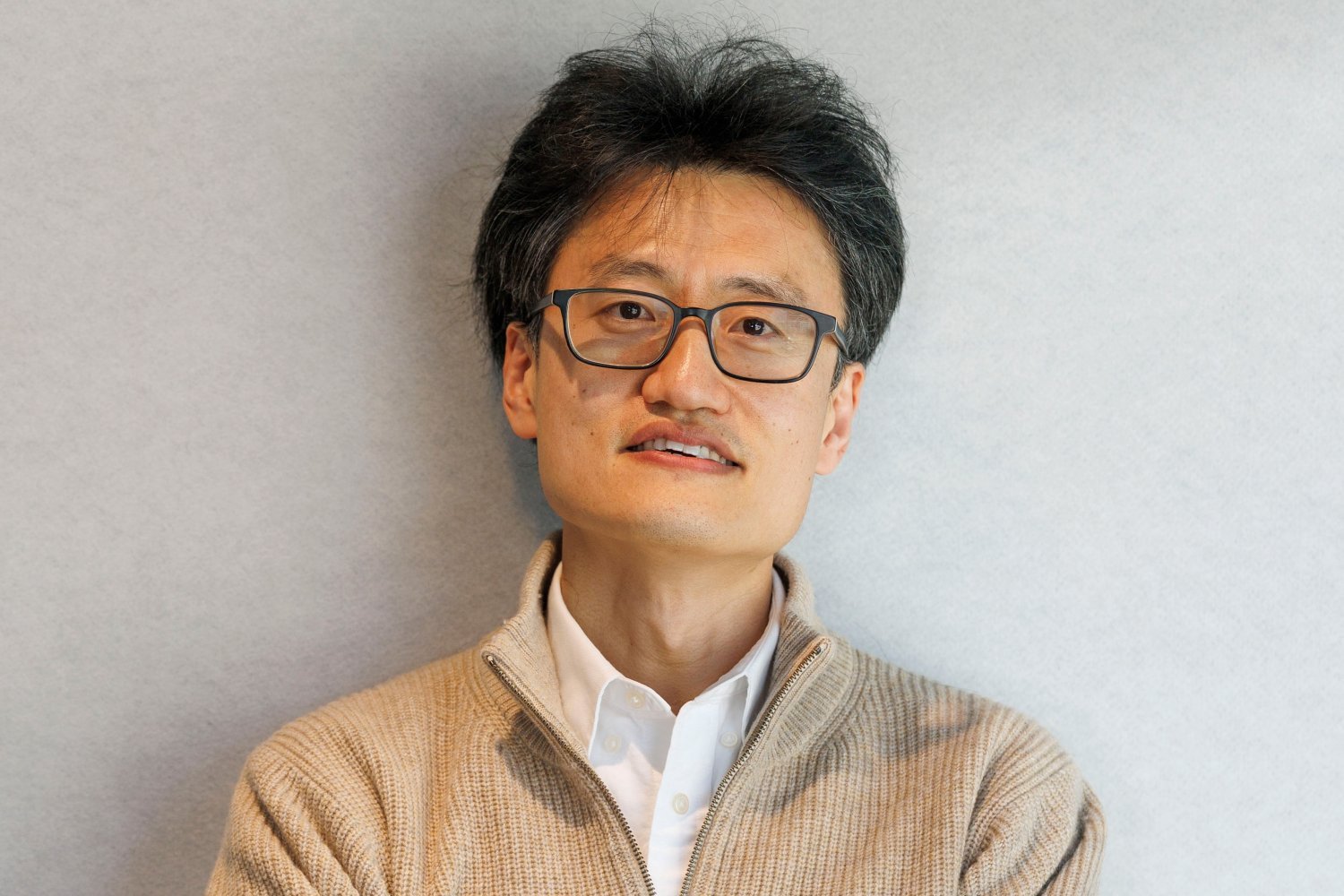
The announcement matters beyond the usual academic reshuffle because of what Zhao actually works on. He is not primarily a land-use theorist or a housing economist. His research sits at the junction of behavioral science, transportation technology, and the deployment of autonomous vehicles in real cities. That orientation tells you something about where MIT thinks the hard questions in urban planning are heading.
From research to operating systems
Zhao directs the JTL Urban Mobility Lab, which pairs behavioral modeling with transportation technology to study how people actually move and how policy can shape those choices. The work is unusual in that it has repeatedly crossed from publication into operational practice. Zhao and his team have shaped policy for Transport for London, the Mass Transit Railway in Hong Kong, and Japan Railways, and his research has reached major U.S. transit agencies including Boston's MBTA, the Chicago Transit Authority, and Washington's Metropolitan Area Transit Authority.
The technical substance here is worth understanding. Modern transit planning increasingly runs on the same machinery as robotics and AI systems: large behavioral datasets, predictive models of demand, and simulation of how a fleet or a network responds to a change. When a transit authority decides whether to add a bus line or reprice a fare, the underlying question is a prediction problem. How will travelers reallocate across modes? Zhao's lab builds the models that try to answer that, drawing on discrete choice modeling, a method that estimates the probability a person picks one option over another given its attributes and the alternatives available.

Where this connects to autonomous systems is in deployment strategy. Zhao has developed AV deployment plans in Singapore and the Middle East, and has advised industry on the future of autonomous and digital mobility. Deploying autonomous vehicles into a city is not mainly a perception or control problem at that scale; the vehicles' sensors and planners are the vendor's concern. The planning problem is integration. Where do AVs help, where do they cannibalize transit ridership, how do they interact with existing infrastructure, and what institutional rules govern them. These are systems-level questions, and they are exactly the kind that fall between engineering and policy.
The institutional gap
Zhao frames his own work around a tension that anyone building autonomous systems for public deployment will recognize. "Every city I've worked with faces the same tension: The technology is moving faster than the institutions designed to govern it," he says. "My work has been about closing that gap."
That gap is real and underappreciated in technical circles. An autonomous shuttle can be validated on closed courses and demonstrated in pilots, but a city government deciding whether to permit it operates on procurement cycles, liability frameworks, and labor agreements that were not written with robots in mind. The bottleneck is rarely the algorithm. It is whether the agency making the decision can access and act on what researchers already know. Zhao puts it bluntly: "The question is no longer what we know. It is whether the people who need it most, municipal governments, transport agencies, federal ministries, can access it when they make decisions on transportation."
That conviction produced the MIT Mobility Initiative, which Zhao founded to connect transportation researchers across the Institute with practitioners worldwide. He also hosts the weekly MIT Mobility Forum over Zoom, open to the public. It started as a small internal list and now draws more than 200 practitioners, policymakers, and researchers each week. The format is a deliberate response to the access problem he describes: a standing channel between the people producing knowledge and the people who have to make decisions with it.
AI, augmentation, and the limits
Zhao is also a lead principal investigator with MIT's Mens, Manus, and Machina initiative, which works at the intersection of artificial intelligence, the future of work, and human learning. The stated goal is to design cities, institutions, and economies so that AI augments people rather than displacing them. That framing is a useful corrective to the more breathless claims about autonomy in transportation.
The practical limitation is that autonomous systems reshape labor and access in ways that planning models do not automatically capture. An AV fleet that improves a commute can also eliminate driving jobs and reroute service away from neighborhoods that are less profitable to serve. Whether automation augments or displaces depends on the rules around it, not the technology itself. A researcher with industry awareness understands that the same fleet, governed differently, produces very different social outcomes. That is the design space Zhao's appointment puts at the center of DUSP's agenda.
What changes
For DUSP, the practical shift is one of emphasis. Zhao wants the department's research to reach the planners, officials, and engineers making decisions now: a transit authority working through AV integration, a city government rethinking aging infrastructure, a transport ministry navigating the policy implications of AI. "We know a great deal about how cities grow, how people move, and how that will change," he says. "The question is whether the people responsible for making these changes can access what we know, when they need it."
For the broader field of autonomous systems, the appointment is a small signal that the discipline's hard problems are migrating from the vehicle to the city around it. The sensors and planners on an autonomous vehicle are maturing. The governance, integration, and behavioral questions are not, and those are precisely the problems a planning department led by a mobility technologist is positioned to take on. More on Zhao's work is available through the Department of Urban Studies and Planning and the original MIT News announcement.
Comments
Please log in or register to join the discussion