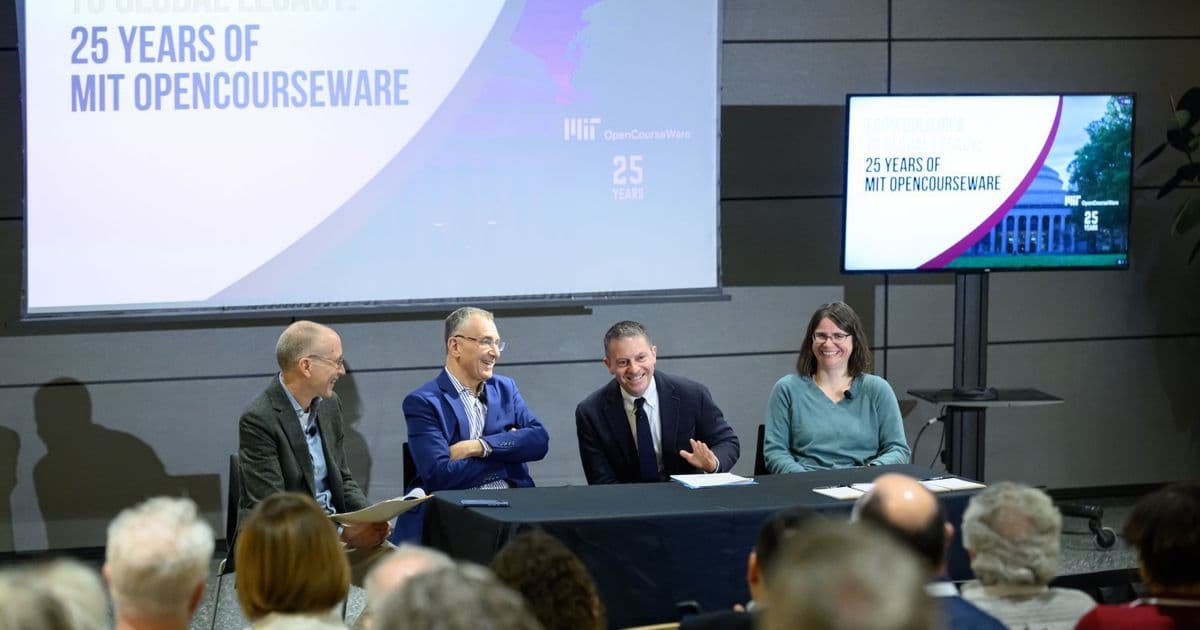
MIT’s decision to publish its curriculum for free in 2001 has grown into a global education movement, touching more than half a billion users, inspiring similar initiatives, and now powering AI‑driven services like MIT Learn.
MIT OpenCourseWare’s 25‑Year Bet on Openness Has Reached 500 Million Learners
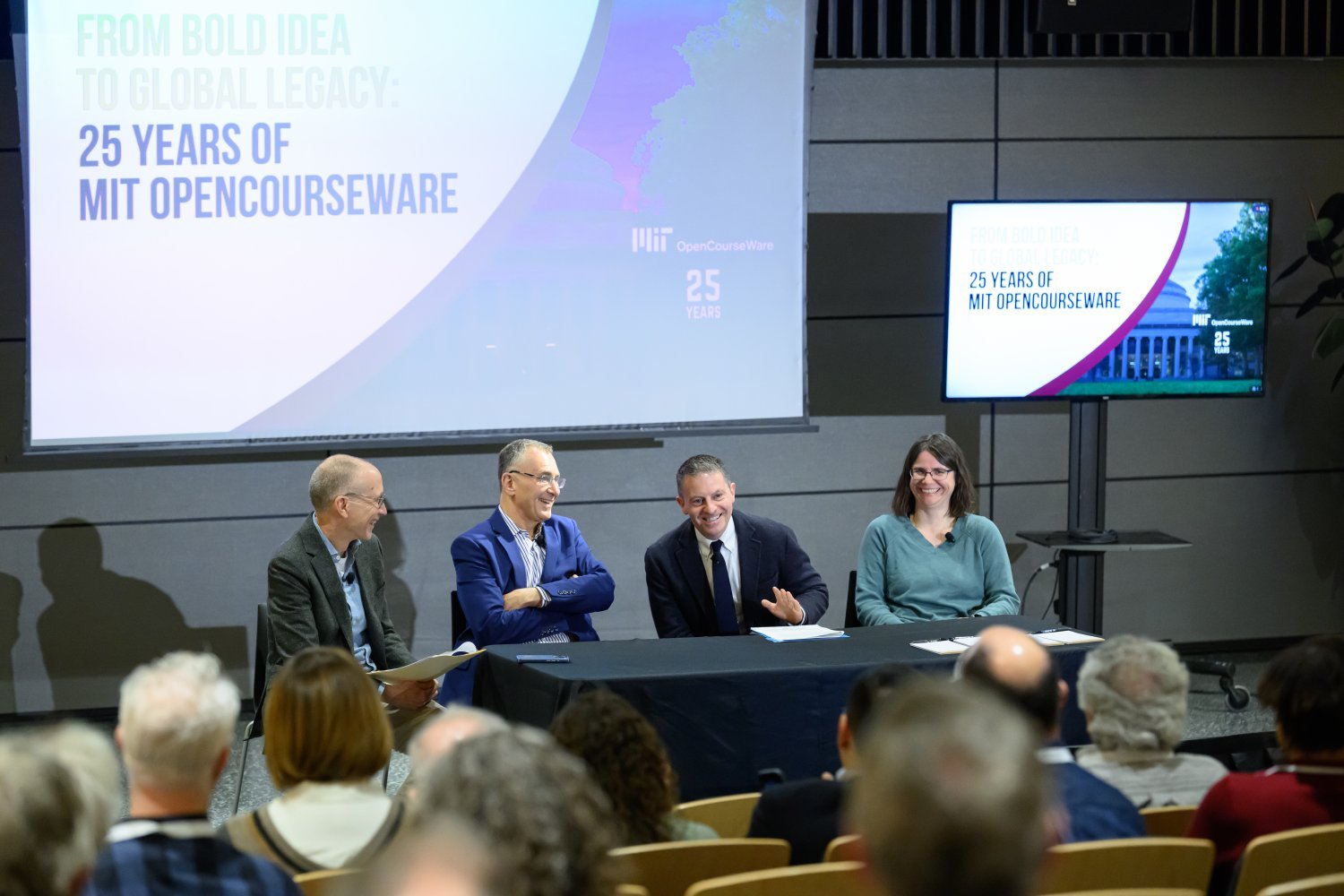
In 2001 MIT announced that anyone could browse its lecture notes, problem sets and video recordings without a password. Twenty‑five years later that experiment has become a cornerstone of the open‑education ecosystem, with over 500 million unique visitors having accessed material from more than 2,500 courses.
From a Campus Initiative to a Global Movement
The original project, MIT OpenCourseWare (OCW), was launched under the banner “open doors without a key.” The goal was simple: make the Institute’s teaching artifacts freely downloadable, reusable and remixable. The impact was immediate – educators at Worcester State University, the University of Lagos, and countless community colleges reported that OCW gave them a ready‑made curriculum scaffold to adapt for local students.
Because the content was released under a permissive Creative Commons license, third‑party platforms quickly built on it. The OE Global community, for instance, aggregates open‑course catalogs from more than 150 universities, providing a searchable index that mirrors OCW’s structure. The OCW Mirror Site Program ships hard‑drive copies of the archive to institutions with limited bandwidth, extending reach to remote schools in sub‑Saharan Africa and parts of the Pacific.
Technical Foundations that Keep the Archive Running
Content Management and Distribution
OCW’s backend relies on a combination of Git‑based version control and static site generation. Each course lives in a repository that stores PDFs, LaTeX source files, and video assets. When a faculty member updates a syllabus, the change propagates automatically to the public site after a CI pipeline runs a validation suite (checking for broken links, missing metadata, and format compliance). This approach keeps the archive consistent, reproducible, and easy to mirror.
Video Delivery
Lecture videos are hosted on the MIT YouTube channel, which now exceeds 6 million subscribers. The channel uses YouTube’s adaptive streaming to serve high‑definition content where bandwidth permits, while automatically falling back to lower‑resolution streams for constrained connections. For institutions that need offline access, the Mirror Site Program includes MP4 bundles that can be burned to external drives.
Search and Discovery
The public OCW website runs an Elasticsearch cluster that indexes full‑text of PDFs, subtitles, and metadata. This enables faceted search by department, course level, and keyword. Recent experiments integrate OpenAI embeddings to surface semantically similar courses, a feature that will soon be exposed through the new MIT Learn portal.
Real‑World Applications and Success Stories
- High‑school student Hinata Yamahara in Australia used the urban‑planning modules to prepare for the FAA Private Pilot Knowledge Test, passing on his first attempt.
- Professor Elizabeth Siler at Worcester State University incorporates MIT’s introductory economics lectures into a flipped‑classroom model, reporting a 12 % increase in exam scores.
- Victor Odumuyiwa, University of Lagos, adapted MIT’s computer‑science assignments to teach software‑engineering principles to students who later secured internships at multinational firms.
These anecdotes illustrate a broader pattern: open resources lower the barrier to specialized knowledge, allowing learners in low‑resource settings to acquire skills that were previously confined to elite campuses.
Limitations and Ongoing Challenges
- Curriculum Currency – While many courses are updated regularly, some legacy material lags behind current research. MIT mitigates this by flagging “archival” status on older syllabi, but the onus remains on instructors to verify relevance.
- Assessment Integrity – Free access to problem sets and exams raises concerns about academic honesty when institutions adopt OCW materials for credit‑bearing courses. Some universities pair OCW content with proprietary proctoring tools to address this.
- Scalability of Support – The new AI assistant AskTIM (available through MIT Learn) can answer factual queries about course topics, but it does not replace human tutoring for nuanced problem solving. Ongoing research aims to blend large‑language‑model guidance with expert‑reviewed explanations.
The Next Chapter: AI‑Enabled Open Learning
Building on the OCW foundation, MIT Open Learning launched MIT Learn, an AI‑driven hub that aggregates non‑degree offerings, micro‑credentials, and short courses. Key features include:
- AskTIM – a conversational agent that recommends courses based on a learner’s background and goals, and can provide step‑by‑step hints for selected exercises.
- Modular Learning Paths – self‑paced tracks that combine MIT lecture videos with interactive labs hosted on JupyterHub environments, allowing learners to experiment with code in real time.
- Personalized Analytics – dashboards that track progress, suggest remedial content, and benchmark performance against global cohorts.
The ambition is to reach 1 billion learners by 2035, a scaling target that will require continued investment in infrastructure, multilingual translation pipelines, and partnerships with local education providers.
Why Openness Still Matters
OpenCourseWare demonstrates that knowledge as a public good can generate measurable social impact without compromising the Institute’s research mission. The model has inspired similar initiatives at Harvard, Stanford, and dozens of universities worldwide, creating a network of freely available scholarly content that fuels lifelong learning, workforce development, and cross‑border collaboration.
As MIT President Sally Kornbluth noted at the 25th‑anniversary symposium, the original bet on generosity “has paid off 500 million times over.” The next decade will test whether AI can amplify that payoff while preserving the core values of accessibility, remixability, and academic rigor.
Related resources
- Official OCW site: https://ocw.mit.edu
- MIT Learn platform (beta): https://learn.mit.edu
- OpenCourseWare GitHub organization (course repos): https://github.com/mitocw
- AskTIM demo video: https://www.youtube.com/watch?v=example
Image credits: MIT News
Comments
Please log in or register to join the discussion