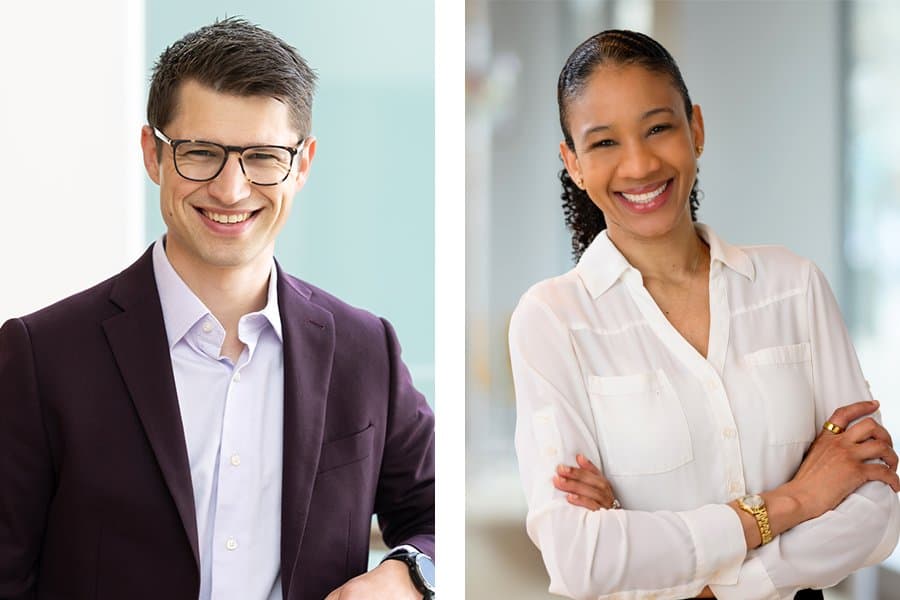
Computational neuroscientist Sven Dorkenwald and cell biologist Whitney Henry receive the prestigious Searle Scholars award, bringing $450,000 each to advance high‑risk research in connectomics and ferroptosis‑based cancer therapy.
MIT Researchers Sven Dorkenwald and Whitney Henry Among 2026 Searle Scholars
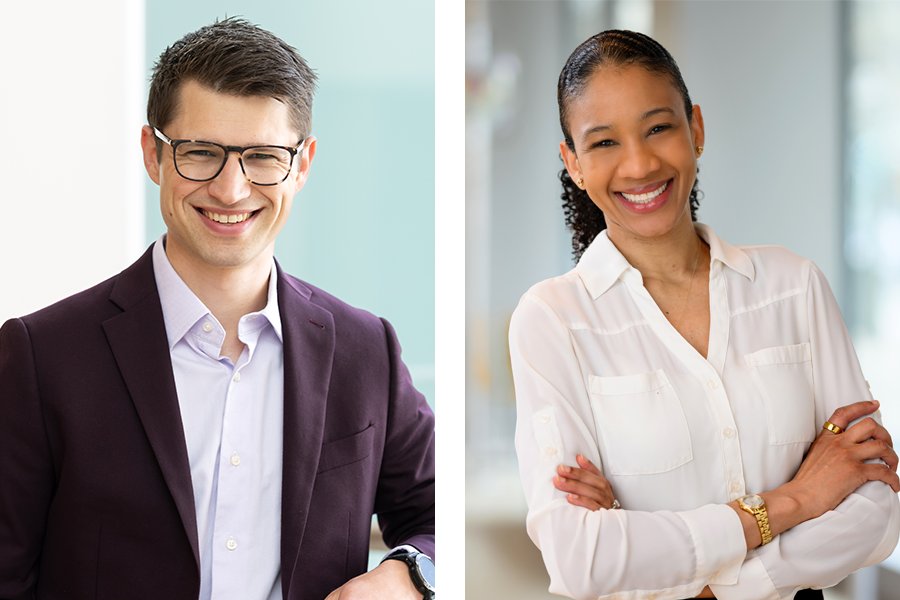
The Searle Scholars Program, administered by the Kinship Foundation and funded through the Searle Funds at The Chicago Community Trust, has announced its 2026 cohort. Among the fifteen early‑career scientists selected are MIT assistant professors Sven Dorkenwald and Whitney Henry, whose work sits at the intersection of AI, neuroscience, and cancer biology. The award provides each scholar with $450,000 of flexible funding over three years, enabling high‑risk, high‑reward projects that often lie beyond the scope of conventional grant mechanisms.
Computational Neuroscience Meets Large‑Scale Connectomics
Technical approach
Sven Dorkenwald’s laboratory focuses on the connectome—the complete map of synaptic connections within a brain. Building on his PhD work with Sebastian Seung and Mala Murthy at Princeton, Dorkenwald combines electron‑microscopy imaging pipelines with deep‑learning segmentation models to reconstruct neuronal circuits at synapse resolution. His team has contributed to the fruit‑fly whole‑brain connectome and to partial reconstructions of mouse visual cortex, leveraging tools such as the Neuroglancer viewer and the FlyWire platform.
Key technical components include:
- Convolutional neural networks (CNNs) trained on manually annotated EM slices to identify membranes, mitochondria, and synaptic clefts.
- Graph‑based algorithms that translate voxel‑level segmentations into neuron‑level adjacency matrices.
- Scalable cloud infrastructure (AWS and Google Cloud) that distributes terabytes of image data across hundreds of compute nodes, reducing processing time from months to weeks.
Real‑world applicability
By turning raw EM data into searchable graphs, Dorkenwald’s methods enable researchers to ask questions about circuit motifs, information flow, and developmental wiring rules that were previously inaccessible. For example, his group identified a recurrent microcircuit in the Drosophila mushroom body that appears to implement a form of sparse coding, a principle that could inspire more efficient neuromorphic hardware.
The open‑source nature of his pipelines—available on the FlyWire GitHub repository and documented in the Nature Methods paper accompanying the fruit‑fly connectome—means that other labs can adopt the workflow for non‑model organisms, accelerating the broader field of connectomics.
Ferroptosis‑Driven Cancer Therapeutics
Technical approach
Whitney Henry’s research tackles ferroptosis, an iron‑dependent, lipid‑peroxidation‑driven form of cell death. Her lab integrates functional genomics, metabolomics, and bioengineering to map the molecular determinants that render metastatic cancer cells vulnerable to ferroptosis.
Key techniques include:
- CRISPR‑Cas9 screens across dozens of breast‑cancer cell lines to pinpoint genes that modulate lipid‑peroxide detoxification.
- Mass‑spectrometry‑based lipidomics that quantifies peroxidized phospholipids in real time, revealing metabolic bottlenecks.
- Engineered organoid platforms that couple patient‑derived tumor fragments with microfluidic perfusion, allowing precise control of iron availability and antioxidant gradients.
- In vivo mouse models where inducible expression of GPX4 inhibitors is combined with nanoparticle‑mediated iron delivery, testing therapeutic windows for selective tumor eradication.
Real‑world applicability
Henry’s work has already yielded two candidate drug targets—SLC7A11 and FSP1—that, when inhibited, sensitize aggressive triple‑negative breast cancers to ferroptosis in preclinical models. The translational pipeline is moving toward a Phase I collaboration with a biotech startup focused on iron‑oxide nanoparticle carriers, aiming to deliver ferroptosis inducers directly to metastatic niches while sparing normal tissue.
Beyond oncology, the methodological framework—high‑throughput CRISPR screens coupled with lipidomics—offers a template for studying other iron‑related pathologies, such as neurodegeneration and ischemia‑reperfusion injury.
Alumni Honorees and Broader Impact
The 2026 cohort also includes MIT alumni Irene Kaplow ’10, now an assistant professor at Carnegie Mellon University, whose computational work deciphers transcriptional responses to dietary shifts, and Jared Mayers PhD ’15, an assistant professor at the Fred Hutchinson Cancer Center, who develops reverse‑translational models to expose metabolic weak points in bacterial pathogens. Their selections underscore the program’s emphasis on interdisciplinary science that bridges computation, biology, and engineering.
What the Funding Means for Early‑Career Researchers
The flexible nature of the Searle award allows scholars to allocate resources where they are needed most—whether that is hiring postdoctoral talent, purchasing cloud compute credits, or building custom instrumentation. For Dorkenwald, the grant will fund the next generation of AI‑driven segmentation models that aim to achieve human‑level accuracy on noisy EM datasets. For Henry, it will support the scale‑up of organoid‑based drug screens and the synthesis of next‑generation ferroptosis inducers.
Looking Ahead
Both Dorkenwald and Henry emphasize that the award is not just a financial boost but a community endorsement. “The Searle Scholars cohort provides a network of peers tackling bold questions across biomedicine,” Henry says. Dorkenwald adds that the interdisciplinary conversations within the cohort will help refine his roadmap for linking connectomic structure to behavior.
The 2026 Searle Scholars illustrate how AI‑enhanced data analysis and molecular engineering are reshaping fundamental questions in neuroscience and cancer biology. As their projects progress, the tools and insights they generate will likely permeate a range of applications—from more energy‑efficient neural networks to targeted cancer therapies that exploit the cell’s own iron metabolism.
For more information on the Searle Scholars Program, visit the official website.
Comments
Please log in or register to join the discussion