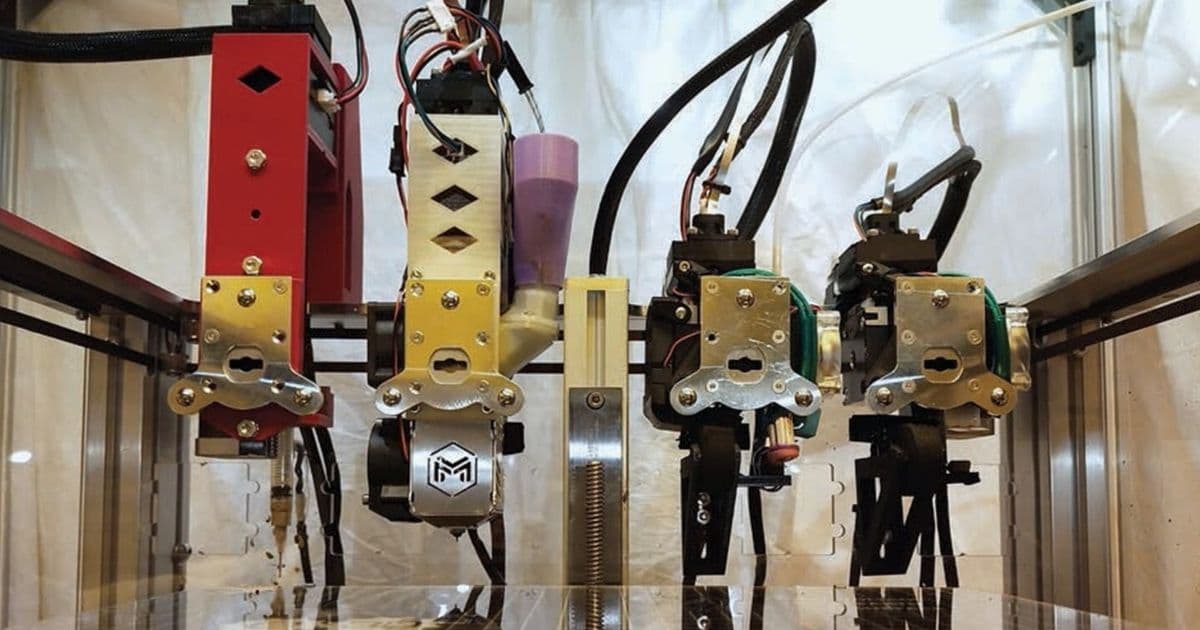
MIT researchers have demonstrated a four-extruder 3D printer capable of manufacturing complete linear motors in a single process for 50 cents each, potentially disrupting traditional supply chains.
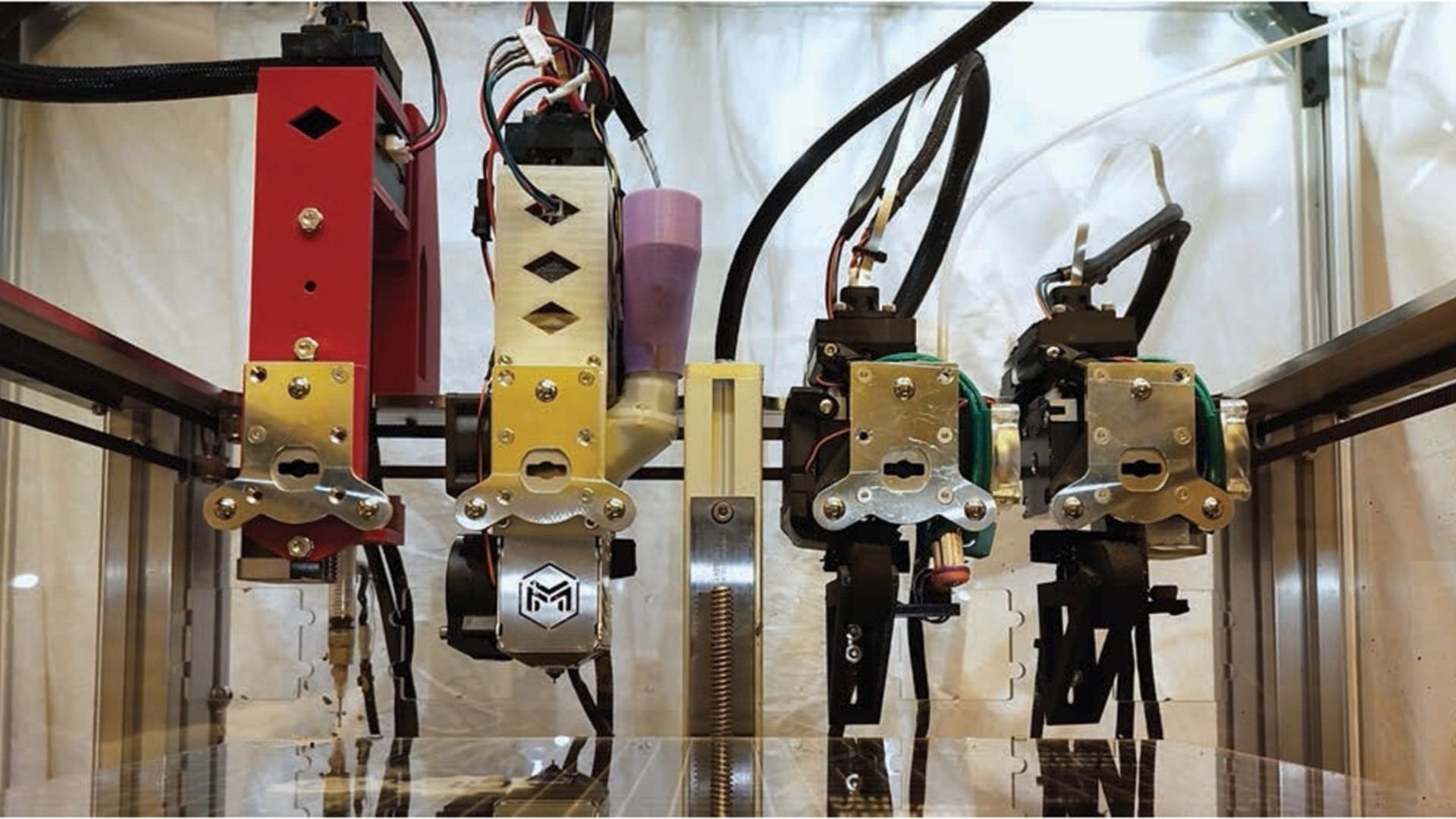
Researchers at the Massachusetts Institute of Technology have achieved a manufacturing breakthrough with a custom multi-material 3D printer that outputs complete functional electric motors in under three hours. Published in Virtual and Physical Prototyping, the system integrates four distinct extrusion mechanisms—filament, pellet, ink, and heater—to simultaneously deposit five specialized materials: dielectric insulation, electrical conductors, soft magnetic cores, hard magnetic components, and flexible structural elements.
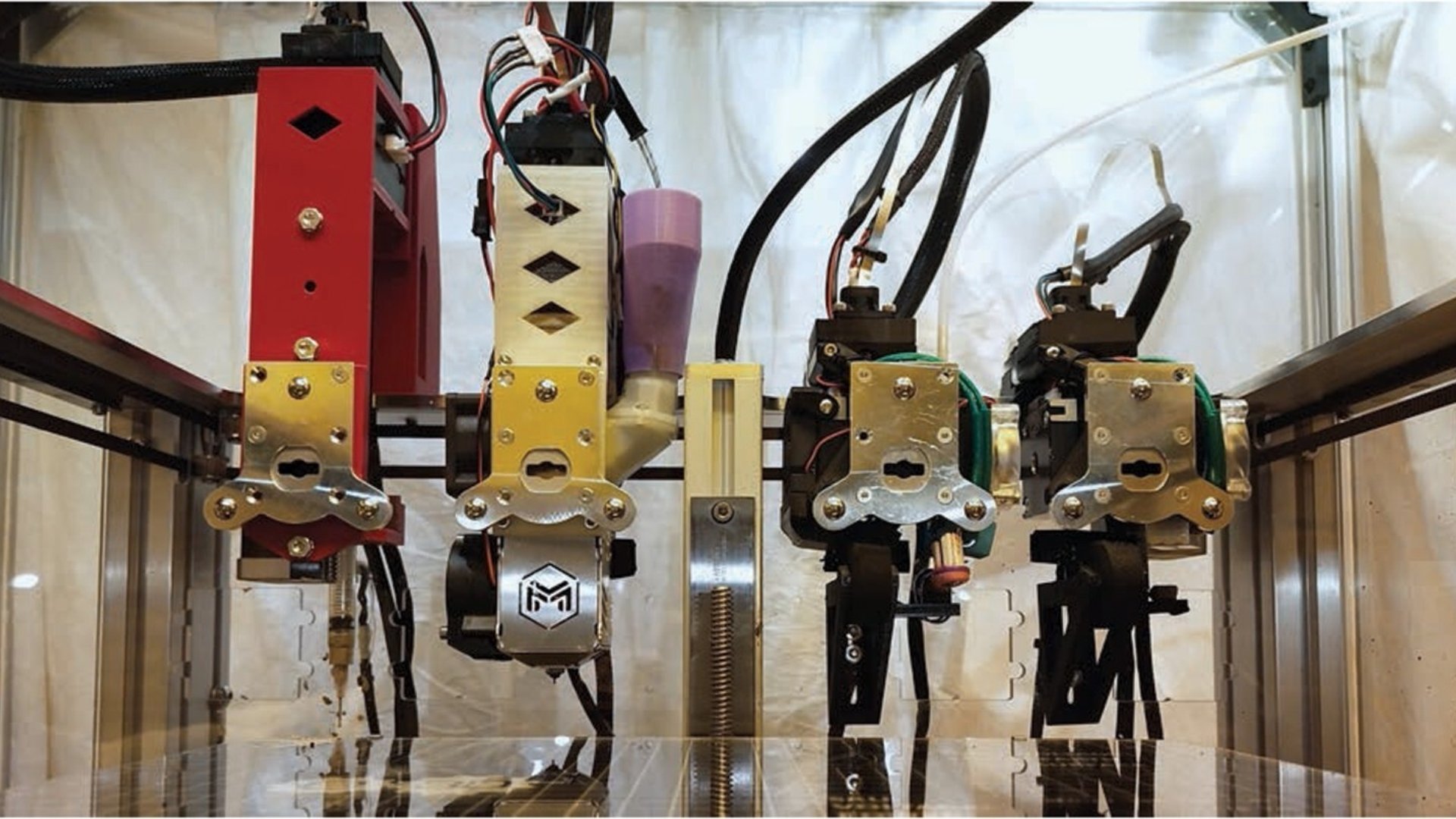
The printer addresses a fundamental limitation in conventional additive manufacturing. Standard extrusion systems typically handle only two materials, requiring complex post-processing for functional electronics. By contrast, MIT's integrated approach achieves 94% geometric accuracy compared to CAD models and outputs motors requiring only final magnetization—a 15-second process using a pulsed magnetic field. Performance testing shows equivalent or superior torque density (1.7 N·m/kg) and efficiency (67%) versus commercially available equivalents manufactured through traditional multi-stage processes.
Material costs per motor total just $0.50, representing a 98% reduction compared to prototype development via conventional methods. Where traditional prototyping requires custom tooling and takes 3-26 weeks, this system delivers functional units in a single production cycle. The implications extend beyond prototyping: motors printed with this method demonstrate 500+ hours of operational lifespan under continuous load testing.
This technology fundamentally alters semiconductor and electronics supply chain dynamics. By enabling onsite production of complex electromechanical systems, it eliminates dependency on global logistics networks vulnerable to disruption. For low-volume specialized components—particularly replacement parts for legacy industrial equipment—lead times collapse from months to hours. Each printable motor requires just 38MB of design data, making digital distribution practical even in bandwidth-limited environments.
MIT's Dr. Luis Fernando Velásquez-García confirms scalability potential: "Our throughput metrics show viable production volumes for specialized industrial applications. We've validated printing 20 motors consecutively without degradation in tolerances (±0.25mm dimensional stability)." The team projects expanding material libraries to include high-temperature superconductors and silicon carbide composites within 18 months, potentially enabling direct printing of power electronics at commercial scale.
This demonstration establishes multi-modal extrusion as a viable alternative to $2.3 trillion global manufacturing infrastructure. For semiconductor-adjacent industries requiring specialized actuators—from precision robotics to medical devices—it shifts production economics from capital-intensive tooling to digital design repositories, potentially reducing entry barriers for hardware innovation by orders of magnitude.
Comments
Please log in or register to join the discussion