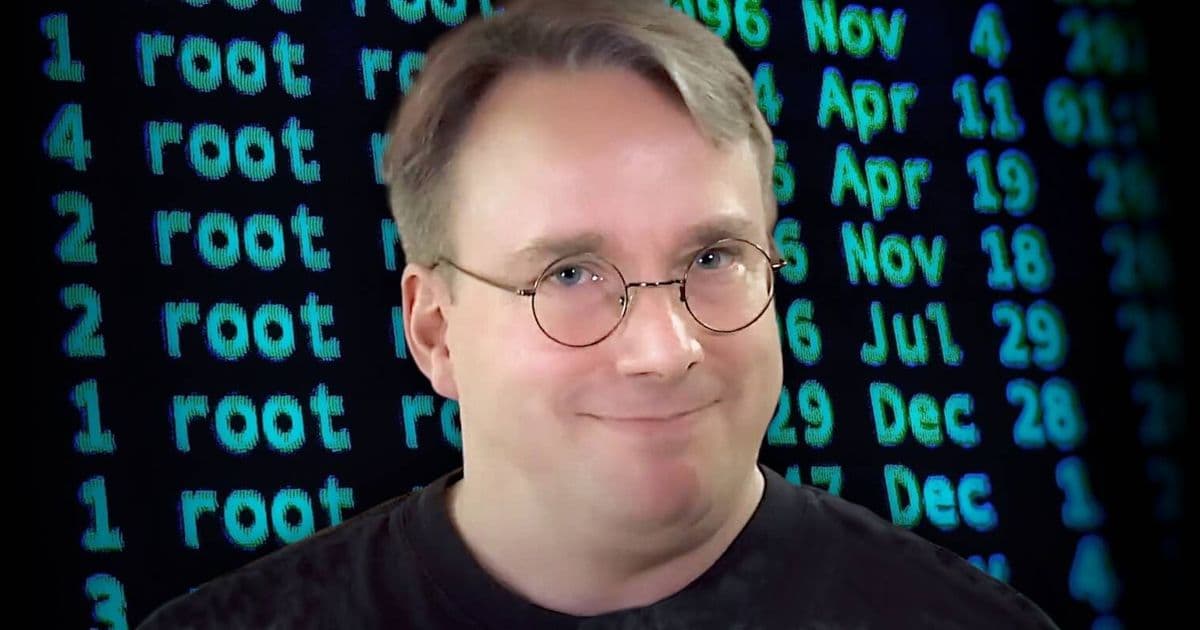
Linus Torvalds humorously contemplates his eventual successor while releasing Linux kernel 7.0 rc1, as the community prepares for post-Torvalds leadership.
Linus Torvalds, the creator and longtime maintainer of the Linux kernel, has once again demonstrated his characteristic self-deprecating humor while marking the release of Linux kernel 7.0 rc1. In his announcement post, Torvalds joked about his eventual successor, suggesting that by the time Linux reaches version 19.x, "somebody more competent in charge who isn't afraid of numbers past the teens" will be leading the project.
This lighthearted comment comes against the backdrop of serious succession planning within the Linux community. The kernel development team has been working on establishing a continuity plan for the post-Torvalds era, recognizing that the project's future stability depends on having clear leadership structures in place when the time comes for Torvalds to step down.
The Meaningless Major Version Number
Torvalds took the opportunity to clarify that the jump to version 7.0 carries no special significance beyond his personal preference for keeping version numbers manageable. "We haven't done releases based on features (or on 'stable vs unstable') for a long, long time now," he explained. "So that new major number does not mean that we have some big new exciting feature, or that we're somehow leaving old interfaces behind. It's the usual 'solid progress' marker, nothing more."
He also reiterated his practice of ending each series of kernels at x.19 before the next release becomes y.0, a process that takes about 3.5 years. This systematic approach means that even if Torvalds maintains his current pace, Linux wouldn't reach version 19.x for at least 40 years.
What's New in Kernel 7.0 RC1
Beyond the numerological musings, the first release candidate for Linux 7.0 includes several significant technical improvements:
- Rust Support: A patch that cements Rust support in the kernel, marking continued progress in integrating the memory-safe language into core kernel development
- Cache Management: Code that clears caches more quickly, potentially improving system performance
- Live Patching: Enablement of non-disruptive kernel updates, allowing systems to be updated without requiring reboots
- Hardware Support: Updates catching up with recent features in AMD and Intel silicon
- Architecture Improvements: Performance enhancements under RISC-V and LoongArch architectures
- Nostalgic Cleanup: The removal of a modem driver for 1990s-era ThinkPads, when they were still IBM products
The Succession Question
The succession discussion isn't just theoretical. The Linux community has been actively developing a succession plan, recognizing that Torvalds' eventual departure will be a significant moment for the open-source world. The plan aims to ensure continuity and stability for what has become one of the most critical pieces of software infrastructure globally.
Torvalds' comment about someone "more competent" taking over is particularly interesting given his unique position in the software world. His direct, sometimes blunt communication style has been both celebrated and criticized, but there's no denying his effectiveness in maintaining Linux's technical direction and community cohesion for over three decades.
A Smooth Development Cycle
Despite the major version number change, Torvalds described the merge window leading up to this release as "fairly smooth." He defined smooth merge windows as those where he doesn't have to bisect boot failures on any of his machines. "Admittedly this time around that was because I caught one failure case early before I actually booted into it, but hey, that still technically counts as 'smooth' to me," he wrote.
His characteristic humor continued in his call for testing, where he first urged penguinistas to "drop everything, run to your computers, and test-build and test-boot a shiny new kernel," before immediately backing down: "Just kidding. A leisurely stroll after you've finished chewing is fine."
The Bigger Picture
The Linux kernel's evolution from a hobbyist project to a cornerstone of global computing infrastructure is remarkable. What began as Torvalds' personal project in 1991 has grown into a collaborative effort involving thousands of developers worldwide, powering everything from smartphones to supercomputers to the majority of web servers.
The succession planning reflects the maturity of the Linux project. Unlike many open-source projects that struggle when their founders move on, the Linux community appears to be proactively addressing the inevitable transition. This forward-thinking approach suggests that Linux will continue to thrive regardless of when Torvalds decides to step back from his role.
As the kernel development community moves forward with version 7.0, the focus remains on technical excellence and stability rather than arbitrary version numbers. Whether the eventual successor to Torvalds will indeed be someone "more competent" who isn't afraid of large numbers remains to be seen, but the groundwork for a smooth transition appears to be in place.
The release of kernel 7.0 rc1 represents another step in Linux's ongoing evolution, with the project continuing to balance innovation with the stability that has made it the dominant operating system kernel in so many domains. As Torvalds himself might say, it's just another "solid progress" marker on a journey that shows no signs of slowing down.
Comments
Please log in or register to join the discussion