
A major gift from the Siegel Family Endowment has renamed the MIT Quest for Intelligence to the MIT Siegel Family Quest for Intelligence (SQI), bolstering its interdisciplinary mission to understand biological and artificial intelligence through the tight coupling of scientific inquiry and engineering rigor.
The MIT Schwarzman College of Computing has announced a significant evolution for one of its flagship research units. The MIT Quest for Intelligence is now officially the MIT Siegel Family Quest for Intelligence (SQI), following a major gift from the Siegel Family Endowment. This renaming reflects not just a financial infusion, but a deepening commitment to a research philosophy that views the understanding of human intelligence as a prerequisite for building truly capable artificial systems.

The SQI Mission: Bridging Neuroscience and Engineering
SQI operates as a unique nexus within MIT, bringing together researchers from the Department of Brain and Cognitive Sciences, the Department of Electrical Engineering and Computer Science, and beyond. The unit’s core hypothesis is that progress in artificial intelligence will accelerate only when we achieve a deeper scientific understanding of natural intelligence.
"We are studying intelligence scientifically and generically, in the hope that by studying neuroscience and behavior in humans and animals, and also studying what we can build as intelligent engineering artifacts, we'll be able to understand the fundamental underlying principles of intelligence," explains Leslie Pack Kaelbling, SQI Director of Research and Panasonic Professor in MIT's Department of Electrical Engineering and Computer Science.
This dual approach—studying the brain to inform AI, and building AI to test theories of the brain—defines SQI's structure. The organization organizes its work around "missions," which are long-term, collaborative projects tackling foundational questions. These missions are supported by "platforms": specialized systems and software designed to enable new research and provide standardized benchmarking interfaces.
Jim DiCarlo, SQI Director and the Peter de Florez Professor of Neuroscience, emphasizes the scale of the challenge: "We in SQI believe that understanding human intelligence is one of the greatest open questions in science — right up there with the origin of the universe and our place in it, and the origin of life. The question of human intelligence has two parts: how it works, and where it comes from. If we understand those, we will see payoffs well beyond our current imaginings."
A Philanthropic Vision Rooted in Robotics and Data Science
The donor behind the rename, David Siegel, has a history with MIT and AI that predates the current boom. Siegel, who earned his SM and PhD from MIT in the 1990s, worked in the AI Lab under robotics pioneer Tomás Lozano-Pérez. His focus on sensing and grasping gave him an early appreciation for the difficulty of replicating physical intelligence. He later co-founded the quantitative hedge fund Two Sigma, applying AI and data science to financial markets.

For Siegel, the motivation for supporting SQI is not commercial application, but fundamental inquiry. "The human brain may very well be the most complex physical system in the universe, yet most people haven't shown much interest in how it works," Siegel says. "People take the mind for granted... I don’t care whether there are commercial applications for this quest; instead, we should pursue research like that done at the MIT Siegel Family Quest for Intelligence to advance our understanding of ourselves."
His involvement is long-standing. Siegel was an early donor to the Center for Brains, Minds, and Machines (CBMM), an NSF-funded collaboration that helped lay the groundwork for SQI's current research. In 2024, he founded Open Athena, a nonprofit designed to bridge the gap between academic AI research and practical application, further demonstrating his commitment to the ecosystem of intelligence research.
The Interdisciplinary Edge
SQI's position within the Schwarzman College of Computing is strategic. It sits at the intersection of biology, cognitive science, and computer science. This location allows it to facilitate collaborations that might not otherwise happen.
"We're part of the Schwarzman College of Computing, at the nexus between the people interested in biology and various forms of intelligence and the people interested in AI," DiCarlo notes. "We're working with partners at other universities, in nonprofits, and in industry — we can't do it alone."
This collaborative model is essential because SQI explicitly defines itself not as an AI effort, but as a human intelligence effort using engineering tools. This distinction is crucial. While many AI labs focus on scaling up existing techniques to achieve better performance on specific benchmarks, SQI aims to understand the mechanisms that allow biological systems to learn, reason, and adapt with such efficiency and generality.
The insights gained from this approach flow in two directions. Understanding human learning can inform better educational tools and interventions for neurological conditions. Simultaneously, understanding the brain's efficiency can lead to AI architectures that are more robust, require less data, and integrate more naturally into human environments.

New Horizons: The Social Intelligence Mission
With the new funding, SQI is expanding its scope. A new "Social Intelligence Mission" is planned for launch in the coming months. This mission will likely focus on how biological systems understand and interact with other agents—a capability that remains elusive for current AI systems.
Nick Roy, SQI Director of Systems Engineering and Professor of Aeronautics and Astronautics, highlights the importance of rigorous evaluation in this expansion. "We're extremely good at picking tasks that kind of align with what our models can already do, we need to get better at choosing tasks and benchmarks that also elicit something about natural intelligence," he says.
This push for better benchmarks is a response to a common critique of modern AI: that progress on narrow, artificial tasks does not necessarily equate to a general understanding of intelligence. SQI aims to develop tasks and platforms that test for the underlying principles of cognition, not just surface-level performance.
A Long-Term Commitment
The recent "The Next Horizon: Quest’s Future" event, held in November 2025, brought together the SQI community, donors, and MIT leadership to celebrate the renamed center and discuss future directions. The presence of David Siegel and representatives from the Siegel Family Endowment underscored the sustained nature of the partnership.
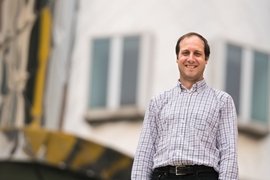
MIT President Sally Kornbluth articulated the significance of this support: "Of all the donors and supporters whose generosity fueled the Quest for Intelligence, no one has been more important from the beginning than David Siegel... David’s recent gift, which renames the Quest for Intelligence and also supports the Schwarzman College of Computing, will be even more powerful in shaping the future of this initiative and of the field itself."
As SQI moves forward, its model—combining deep scientific inquiry with engineering rigor, supported by a vision that values fundamental understanding over immediate commercialization—offers a distinct path in the global pursuit of artificial intelligence. The work produced by its missions, from new models of neural computation to platforms for testing social reasoning, will be closely watched by researchers across disciplines who share the goal of solving the puzzle of intelligence.
For those interested in the specific research and ongoing projects, more information is available on the MIT Siegel Family Quest for Intelligence website. Recordings from the recent "Next Horizon" event are also available on the SQI YouTube channel.
Comments
Please log in or register to join the discussion