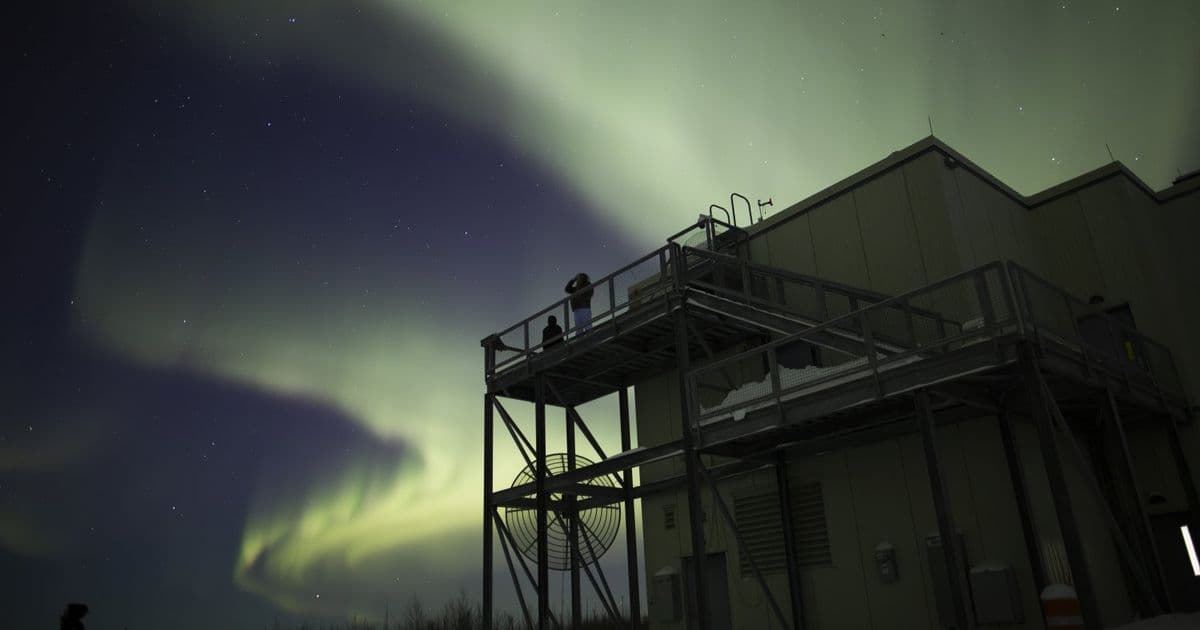
Graduate researchers from MIT’s Plasma Science and Fusion Center deployed low‑cost all‑sky cameras, magnetometers and muon detectors across a 100‑mile area of Fairbanks, Alaska, capturing three‑dimensional auroral structures during a major solar storm. The student‑run Geophysical Plasma Observation Expedition demonstrates a fast, hands‑on research cycle and yields data that can improve space‑weather models.
MIT Students Use Distributed All‑Sky Cameras to Map Aurora Plasma in Alaska
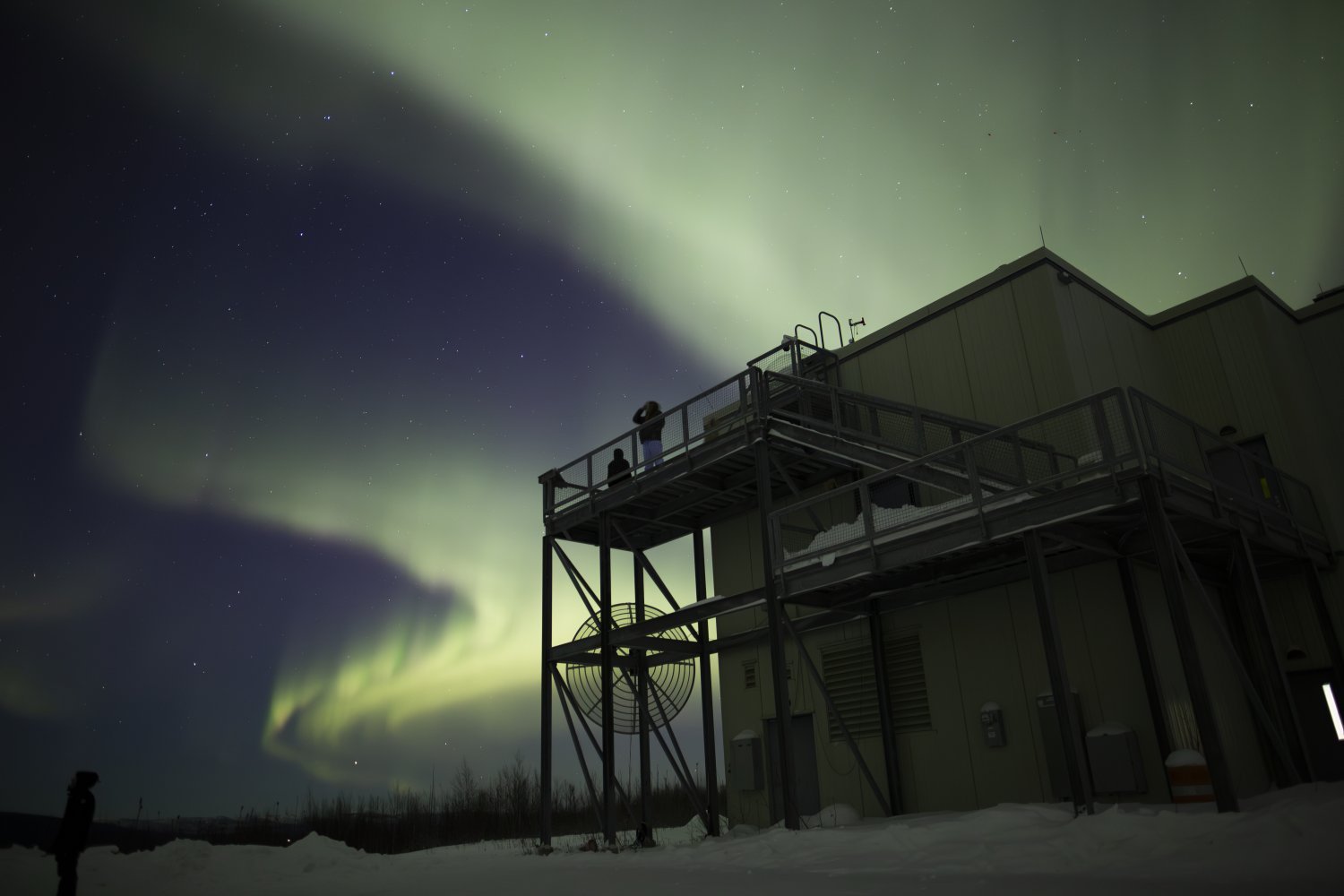
During the week of May 15‑22, 2026, a cohort of MIT graduate students descended on Fairbanks, Alaska, to turn the night sky into a living laboratory. Their mission – the third Geophysical Plasma Observation Expedition (GPOE) – was to capture the aurora borealis with a network of inexpensive all‑sky cameras, magnetometers and muon detectors spread over a 100‑mile radius. By correlating visual auroral forms with magnetic field perturbations and high‑energy particle counts, the team hopes to reconstruct auroral structures in three dimensions and feed those results into space‑weather forecasting models.
Research Initiative and Technical Approach
The GPOE began in 2023 as a single‑camera pilot and has since evolved into a multi‑instrument, multi‑site campaign. This year’s expedition featured:
- All‑sky camera pods – 13 units built from off‑the‑shelf lenses, Raspberry Pi Zero 2 W computers, and custom‑etched printed‑circuit boards for power regulation. The design, released on the MIT PSFC GitHub repository, costs under $200 per unit and includes a heated enclosure to keep the electronics above –20 °F.
- Fluxgate magnetometers – compact three‑axis sensors (e.g., the QMC‑G from Quark‑Magnetics) co‑located with each camera, sampling at 10 Hz to resolve rapid geomagnetic fluctuations.
- Muon detectors – plastic scintillator panels coupled to silicon photomultipliers, providing a proxy for high‑energy particle precipitation that can accompany auroral substorms.
The deployment strategy relied on distributed sensing: camera pods were placed at pre‑selected sites ranging from the Poker Flat Research Range to remote tundra locations accessed by cross‑country skis. Each site logged synchronized timestamps via GPS disciplined clocks, allowing post‑processing algorithms to stitch together overlapping fields of view. Researchers then applied a tomographic inversion technique, similar to that used in medical imaging, to infer the three‑dimensional emissivity of the auroral plasma.
Real‑World Applicability and Early Findings
The expedition coincided with the strongest solar storm of the past two decades, producing vivid, spiral‑shaped auroral arcs that were captured simultaneously from multiple stations. Preliminary analysis revealed:
- Rapid spatial drift – bright arcs moved laterally at up to 1 km s⁻¹, a speed that matches predictions from magnetohydrodynamic (MHD) models of field‑aligned currents.
- Pulsating aurora signatures – the muon detectors recorded bursts of high‑energy particles that lined up with the on‑off flickering of thin auroral curtains, offering a rare dataset linking particle precipitation to visual emissions.
- Magnetic perturbation correlation – magnetometer data showed clear dipolarization events within seconds of the visual brightening, confirming the tight coupling between ionospheric currents and the observed light structures.
These observations are directly relevant to space‑weather forecasting. Accurate three‑dimensional reconstructions of auroral arcs improve the inputs for global MHD simulations that predict how solar wind disturbances will impact satellite drag, HF communication, and power‑grid stability. Moreover, the low‑cost sensor suite is being adopted by community‑science groups, such as the AuroraWatch network in the United Kingdom, extending the geographic coverage of real‑time auroral monitoring.
Educational Impact and Future Directions
Beyond the scientific output, the expedition provided a compressed research cycle rarely seen in graduate programs. Students handled everything from instrument design and logistics (including nightly treks in –25 °F weather) to data reduction and conference presentation within a single semester. This hands‑on model has already inspired curriculum changes at MIT, with a new elective titled Field Plasma Diagnostics slated for the 2026‑27 academic year.
Looking ahead, the GPOE team plans to:
- Deploy permanent, solar‑powered stations to enable year‑round monitoring.
- Integrate machine‑learning classifiers that automatically identify substorm onsets from the all‑sky image stream.
- Expand the outreach component, building on the 2024 collaboration with the MIT Museum and Nord Anglia schools, to involve high‑school students in hardware assembly and data analysis.
The expedition underscores a broader trend in plasma research: leveraging inexpensive, distributed instrumentation to capture large‑scale space phenomena that were once only observable from orbit. As the network of ground‑based sensors grows, the line between laboratory plasma experiments and natural space‑plasma observations continues to blur, offering richer datasets for both fundamental science and practical applications.
For a visual recap of the expedition, watch the short video posted by MIT’s Plasma Science and Fusion Center.

Comments
Please log in or register to join the discussion