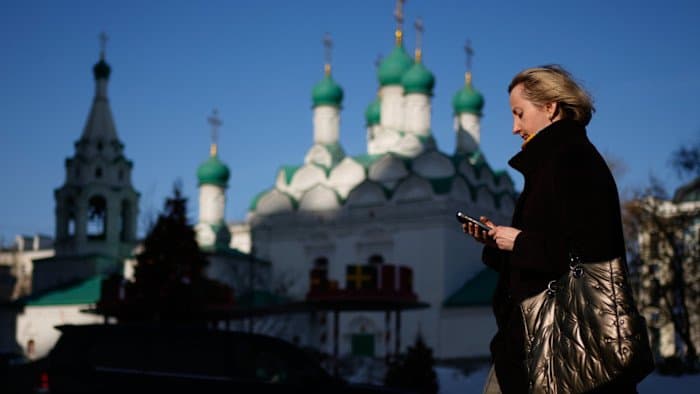
Roskomnadzor data shows daily traffic down ~20% since March 5 vs. previous month
Mobile internet blackouts have hit Moscow as the Kremlin intensifies its campaign to tighten control over online communications, with Roskomnadzor data showing daily traffic down approximately 20% since March 5 compared to the previous month.
According to Roskomnadzor, Russia's federal service for supervision of communications, information technology, and mass media, the outages mark a new phase in the government's campaign against internet freedom. The data reveals a significant drop in mobile internet usage across the Russian capital, with the most severe disruptions occurring during evening hours when traffic typically peaks.
The blackouts appear to be part of a broader strategy to limit access to independent news sources and social media platforms that have been critical of the government's policies. Mobile carriers operating in Moscow have reported technical difficulties, though analysts suggest these are likely orchestrated disruptions rather than genuine infrastructure problems.
This development follows months of increasing restrictions on internet freedom in Russia, including the blocking of foreign social media platforms and the implementation of a "sovereign internet" law that allows the government to disconnect from the global internet if deemed necessary for national security.
The timing of these outages coincides with heightened political tensions and upcoming national events, leading observers to speculate that the government is preparing for potential unrest or attempting to control the narrative around sensitive issues.
International human rights organizations have condemned the blackouts as a violation of freedom of expression and access to information. The United Nations has called on Russia to restore full internet access and uphold digital rights.
Technical experts note that while the government has invested heavily in internet censorship infrastructure, the scale and coordination of these recent blackouts suggest a more aggressive approach to controlling online communications. The impact extends beyond social media and news sites to include messaging apps, streaming services, and other platforms that rely on stable internet connectivity.
Russian citizens have reported using virtual private networks (VPNs) and other circumvention tools to access blocked content, though the effectiveness of these methods during the current blackouts remains unclear. The government has also been cracking down on VPN services and other tools that allow users to bypass restrictions.
Economic analysts warn that prolonged internet disruptions could have significant consequences for Russia's digital economy, which has been growing rapidly in recent years. Many businesses rely on stable internet connections for operations, and the current situation could lead to productivity losses and reduced economic activity.
The blackouts in Moscow represent one of the most severe internet freedom violations in recent Russian history and highlight the government's willingness to use technical means to control information flow. As the situation develops, the international community will be watching closely to see how the Russian government responds to criticism and whether the disruptions continue or expand to other regions.
The Roskomnadzor data provides concrete evidence of the scale of the disruption, with the 20% drop in daily traffic representing millions of users affected by the outages. This level of coordinated disruption requires significant technical capability and coordination among various government agencies and internet service providers.
As Russia continues to navigate its relationship with the global internet, these blackouts serve as a stark reminder of the challenges facing digital rights and freedom of expression in an increasingly connected world. The situation in Moscow may be a harbinger of what other countries with authoritarian tendencies could implement as they seek to control online discourse and limit access to information that challenges official narratives.
Comments
Please log in or register to join the discussion