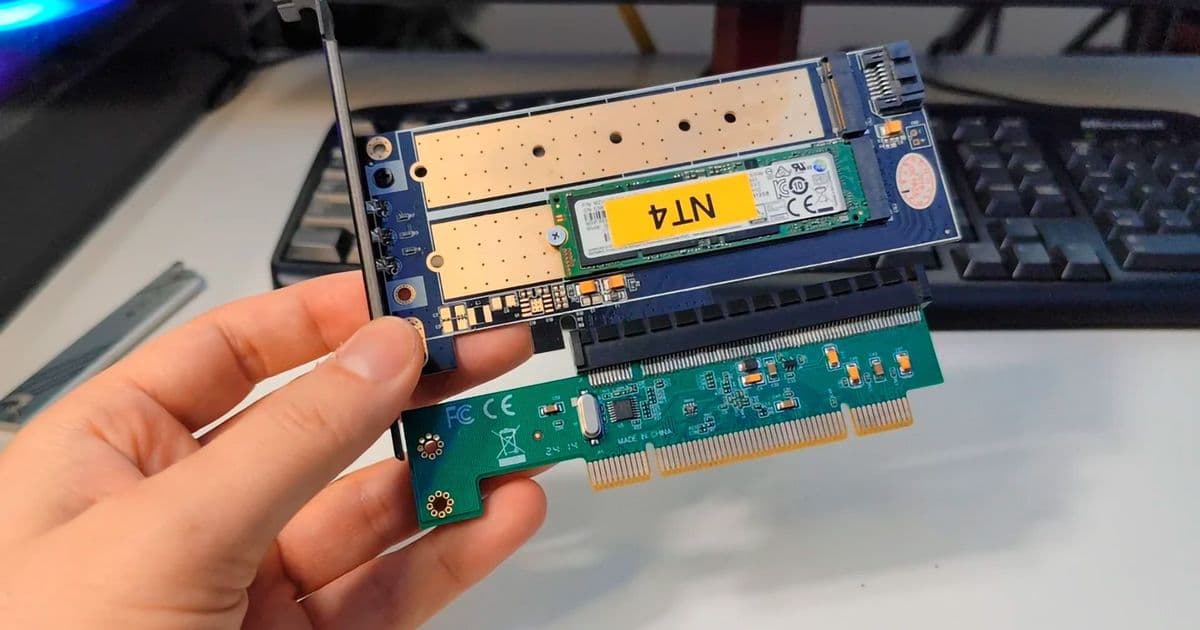
A Redditor's experiment connecting a modern M.2 PCIe 3.0 SSD to a 1992 PCI slot reveals surprising performance, achieving 208 MB/s sequential reads that would have been revolutionary three decades ago.
A curious Redditor has bridged a 20-year technological gap by connecting a modern M.2 PCIe 3.0 NVMe SSD to a vintage PCI slot from 1992, creating a fascinating experiment that showcases just how far storage technology has evolved.
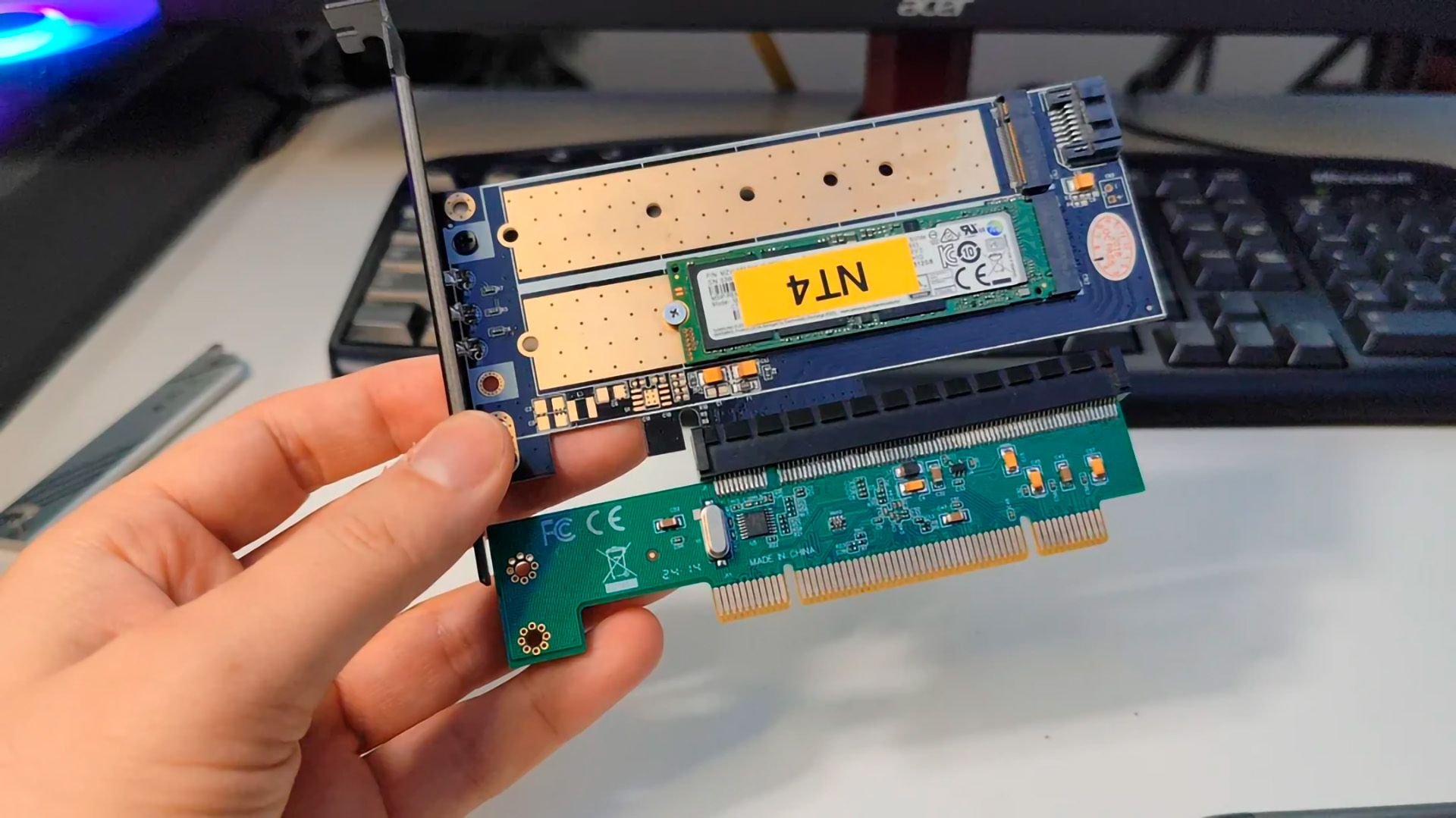
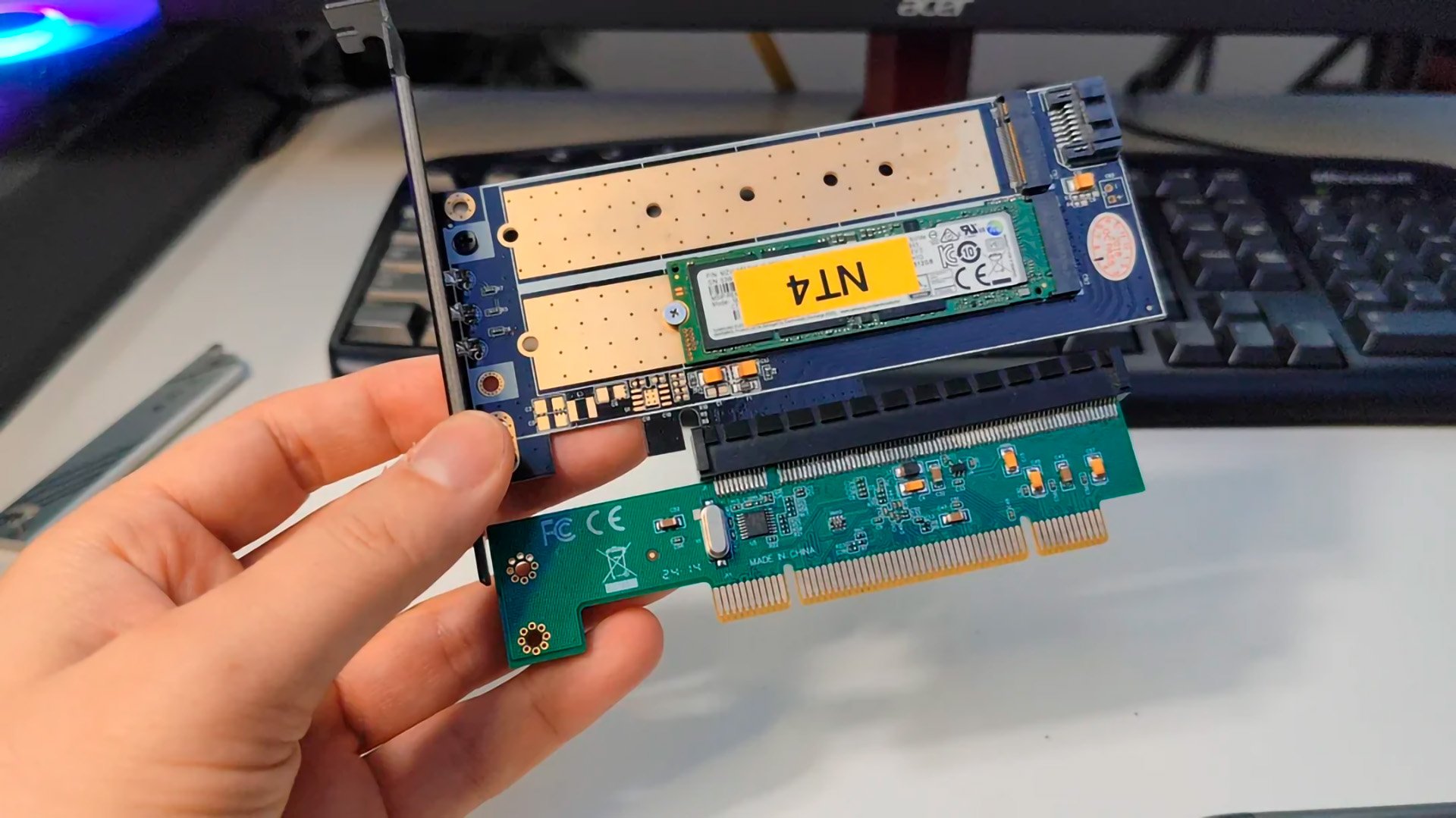
The setup involved using an M.2-to-PCIe AIC (Add-in Card) adapter to house the NVMe drive, then connecting that to a PCIe-to-PCI adapter, which finally plugged into the motherboard's PCI slot. While PCIe and PCI have different physical and electrical characteristics, they're logically compatible, making this cross-generational connection possible without special drivers.
The results were surprisingly impressive for such an archaic interface. CrystalDiskMark benchmarks showed sequential read speeds of 208 MB/s and write speeds of 58 MB/s. While these figures pale in comparison to modern PCIe 3.0 SSDs that can reach around 3,500 MB/s, they represent a remarkable achievement given the severe bandwidth limitations of the PCI interface.
The Redditor confirmed their PCI slot was running at 66 MHz, which is typical for consumer motherboards of that era. This configuration provides a maximum theoretical bandwidth of 266 MB/s for a 32-bit interface. The fact that the NVMe drive achieved over 200 MB/s in sequential reads demonstrates how efficiently the adapter bridged the technological divide.
To put this in perspective, a standard 32-bit PCI slot at 33 MHz maxes out at just 133 MB/s, while the 64-bit enterprise variants can reach 533 MB/s at 66 MHz. The experiment essentially bottlenecked the M.2 interface by feeding it far fewer lanes than it was designed for, yet still achieved performance that would have been considered revolutionary in the 1990s.
This quirky experiment offers more than just technical curiosity. For retro computing enthusiasts, it presents a potential method to breathe new life into legacy hardware. The satisfaction of getting hardware from different eras to work together creates an inexplicable appeal that goes beyond pure performance metrics.
The experiment also serves as a tangible demonstration of technological progress. The PCI slot, introduced in 1992, and the NVMe specification, released in 2011, represent two completely different eras of computing. Yet through clever adapter use, they can communicate effectively, with the modern SSD achieving speeds that would have been worth "dying for" back in the '90s when hard drives communicated over IDE or SATA interfaces.

This kind of cross-generational hardware experimentation highlights the enduring compatibility built into computing standards and offers a unique perspective on how far we've come in storage technology. While most users wouldn't consider such a setup practical, it provides valuable insight into the evolution of data transfer speeds and the remarkable efficiency of modern storage solutions even when severely bottlenecked.
Comments
Please log in or register to join the discussion