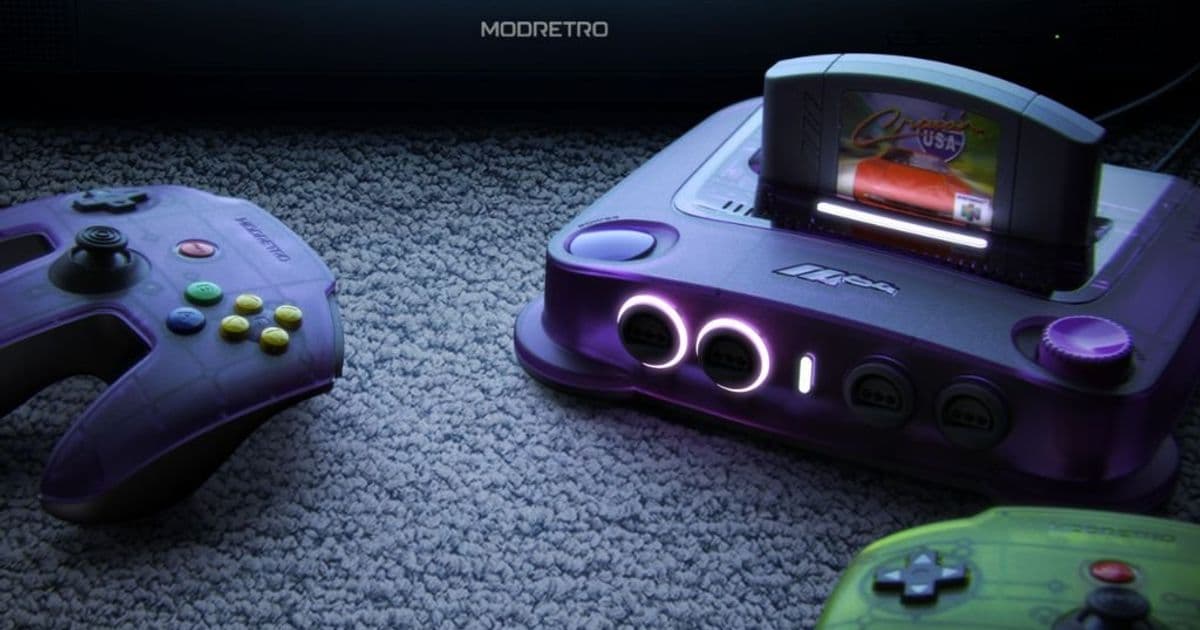
ModRetro introduces the M64, an FPGA-powered Nintendo 64 console that promises unprecedented accuracy by replicating the original hardware rather than emulating it in software.
What's New
The ModRetro M64 represents a significant evolution in retro gaming hardware, leveraging AMD's Artix UltraScale+ FPGA technology to create what the company claims is the most accurate Nintendo 64 recreation available. Unlike software emulators that approximate the N64's behavior, the M64 implements the console's logic chip directly in hardware, potentially achieving cycle-accurate performance that could resolve long-standing emulation issues.
At the heart of the M64 lies AMD's Artix UltraScale+ FPGA, built on a 16nm process that delivers high performance without requiring active cooling. This hardware-first approach aims to preserve the authentic experience of playing Nintendo 64 games, addressing timing issues, input lag, and other inaccuracies that have plagued emulators for decades.
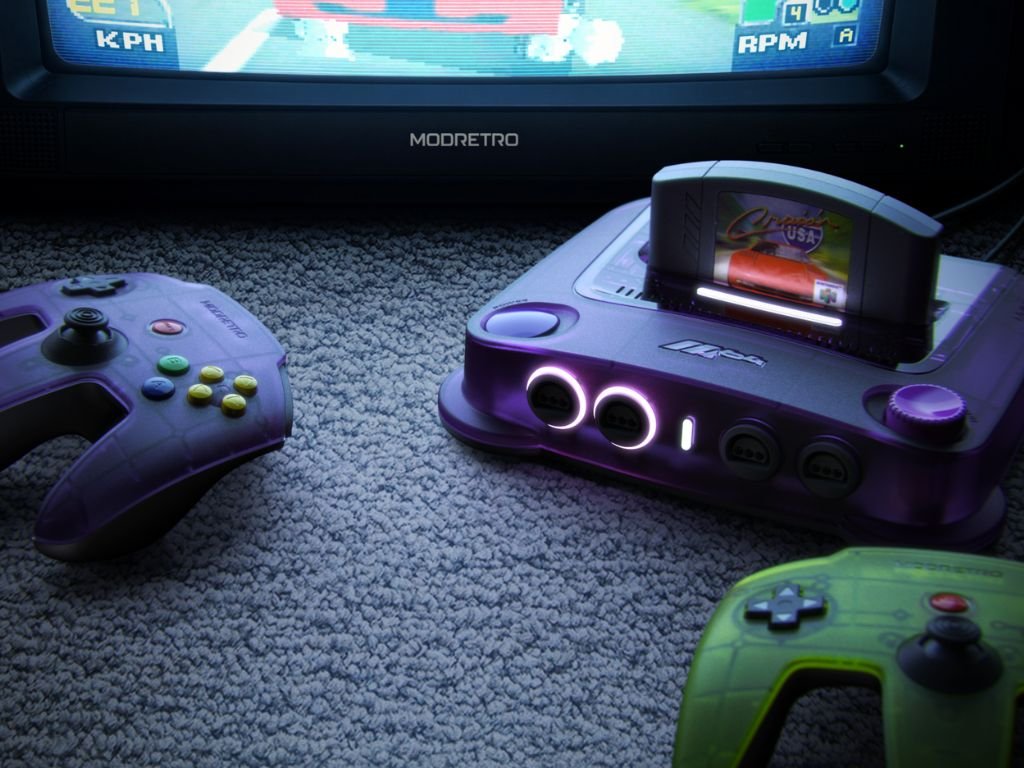
The M64 will launch alongside a dedicated Pro Controller featuring Bluetooth connectivity and swappable analog sticks, addressing one of the common complaints about original N64 controllers. The console will be available starting July 28, 2026, with early backers securing units for $199, while the retail price stands at $230. The Pro Controller is priced separately at $90.
ModRetro is also collaborating with developers to bring new games to the platform, including Extreme-G: Turbo Fusion, Xeno Crisis, Xibalba 64, and Buck Bumble, expanding the N64 library beyond its original classics.
How It Compares
The M64 enters a crowded market of N64 solutions, including original consoles, software emulators, and previous FPGA implementations. What sets the M64 apart is its commitment to hardware-level accuracy rather than software approximation.
Traditional software emulators like Mupen64Plus or Project64 rely on the host system's CPU to interpret and execute N64 code, introducing potential timing inaccuracies and requiring regular updates as new games reveal previously unknown behaviors. The M64's FPGA approach, by contrast, implements the N64's Reality Coprocessor (RCP) directly in hardware, potentially eliminating these issues.
Compared to other FPGA retro consoles like the Analogue NT Mini or MiSTer, the M64 focuses specifically on the N64 rather than offering a multi-system solution. This specialization allows ModRetro to optimize the implementation for Nintendo's unique architecture, particularly its complex memory system and custom graphics capabilities.
The AMD Artix UltraScale+ FPGA represents a significant upgrade over the FPGAs used in many previous retro consoles. Its 16nm manufacturing process enables higher clock speeds and better power efficiency than older 28nm or 40nm alternatives, without the need for active cooling. This combination of performance and thermals makes it suitable for a standalone console rather than requiring a larger enclosure with fans.
In terms of connectivity, the M64 offers a modern approach while maintaining compatibility with original accessories. The inclusion of Bluetooth for the Pro controller addresses one of the most common complaints about N64 gaming in modern setups, while maintaining support for original cartridges and controllers.
Who It's For
The ModRetro M64 targets several distinct audiences within the retro gaming community. For enthusiasts who prioritize authenticity above all else, the M64 represents the closest possible experience to original hardware without using decades-old consoles that may suffer from component degradation.
Collectors and preservationists will appreciate the M64's potential to provide a stable, long-term platform for playing N64 games without the degradation issues that affect original consoles. The FPGA's reliability and ModRetro's commitment to accuracy make it an attractive option for those who want to experience games as they were originally intended.
For competitive N64 players, particularly in communities focused on games like Super Smash Bros. or Mario Kart, the M64's potential for cycle-accurate timing could provide the consistent performance needed for serious competition. The elimination of input lag and timing inaccuracies could level the playing field across different hardware setups.
Modern gamers discovering the N64 library for the first time will benefit from the convenience of a plug-and-play solution that doesn't require the technical knowledge needed to set up emulators properly. The inclusion of Bluetooth support and the promise of new game releases also makes the platform more accessible to contemporary audiences.
Developers creating new N64 games, like those announced for the launch lineup, will find the M64 an ideal platform for testing their creations with the exact performance characteristics of original hardware, ensuring compatibility and optimal gameplay experiences.
The M64 also serves as a showcase for AMD's FPGA technology in consumer applications, demonstrating how adaptive computing can solve problems that traditional approaches struggle with. For tech enthusiasts interested in the intersection of retro gaming and modern hardware, the M64 represents an interesting case study in preservation through innovation.
As Torin Herndon, ModRetro's CEO, noted, the FPGA selection was "by far the most critical decision" in the M64's design process. The choice of AMD's Artix UltraScale+ FPGA reflects a balance between performance, power efficiency, and cost that makes the M64 accessible to a broad audience while maintaining the technical capabilities needed for accurate hardware replication.
With its July 28, 2026 release date approaching, the ModRetro M64 stands to become a significant player in the retro gaming hardware market, offering a compelling alternative to both original consoles and software emulators for Nintendo 64 enthusiasts.
Comments
Please log in or register to join the discussion