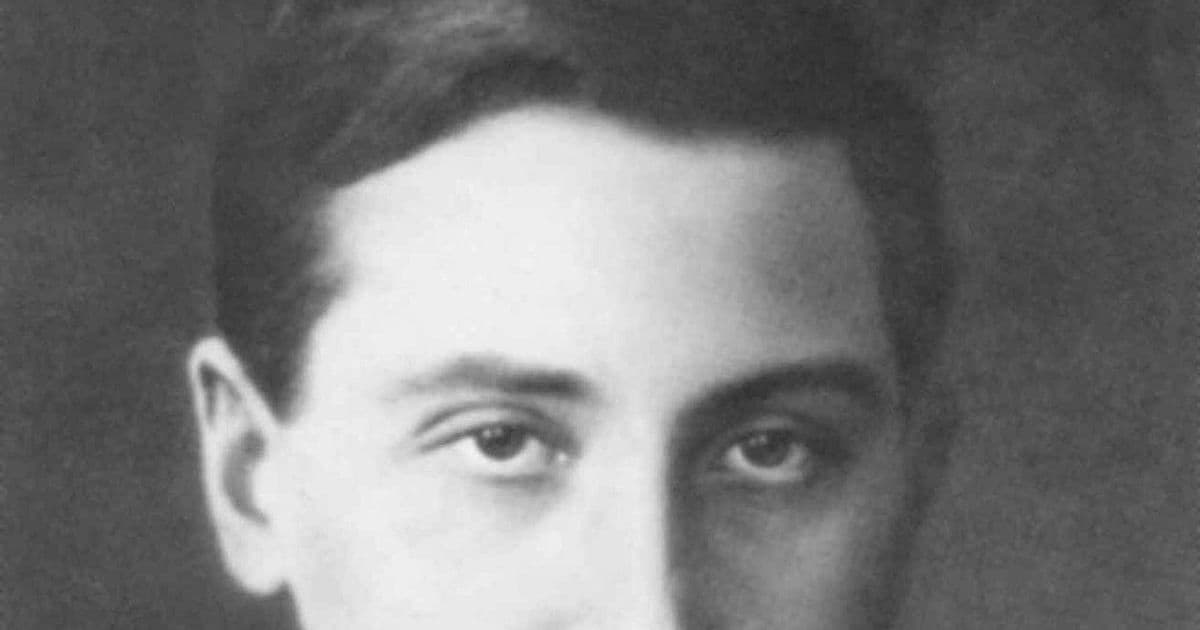
The tragic story of Oleg Losev, a Soviet technician who discovered LED technology and solid-state radio in the 1920s, only to die in obscurity and starvation during the Siege of Leningrad, while the world caught up to his genius decades later.
The history of technology is filled with stories of visionaries who saw the future before it arrived. Some are celebrated as pioneers, while others fade into obscurity, their contributions rediscovered only by accident. Oleg Losev belongs to the latter category—a man who invented key technologies of the 20th century while working as a technician in a Soviet radio lab, only to die in starvation at 38, his work unrecognized for decades.
A Forgotten Pioneer
In early 1922, at just 18 years old, Losev was working with carborundum crystal detectors used in early radio receivers when he noticed something peculiar. When passing a direct current through the junction, the crystal produced a faint, cold light. While Henry Round had observed a similar phenomenon in 1907 and moved on, Losev stayed with his discovery. He meticulously isolated the effect, ruled out heat and chemical reactions, and correctly identified it as a quantum mechanical process—the inverse of the photoelectric effect.
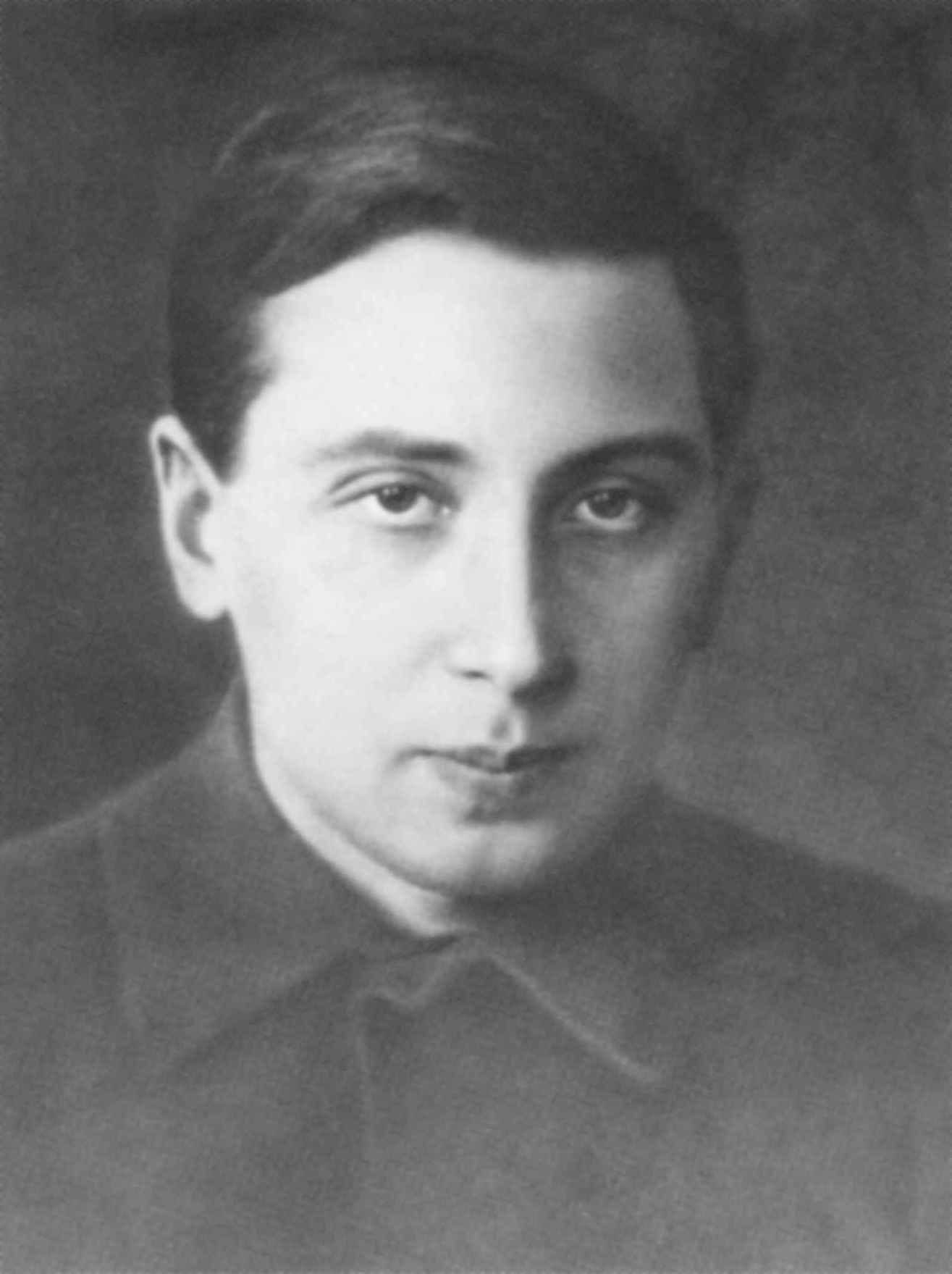
He called it a "light relay" and patented the device. More remarkably, he predicted it would eventually replace incandescent bulbs in high-speed optical communications. We now know this device as the light-emitting diode (LED). It took until April 2007, in the journal Nature Photonics, for the academic world to formally credit him as the discoverer. Even in a 1951 Physical Review paper that cited his work, his name was misspelled as "Lossew."
Beyond the LED
While the LED was remarkable, it was not Losev's most significant contribution. His more profound discovery was negative resistance in zincite crystals. By carefully pressing a fine wire against a crystal at precisely the right point and applying a DC bias, he found that the material would amplify radio signals. This defied Ohm's Law—current decreased as voltage increased—creating a phenomenon that could make the crystal oscillate and amplify.
By 1924, Losev had built fully functional solid-state radios using these principles. Hugo Gernsback, editor of Radio News and the man who coined the term "scientifiction" (giving science fiction its name), devoted a feature to the device and declared: "It is now possible to do anything and everything with a crystal that can be done with a vacuum tube." He named it the Crystodyne.
The Crystodyne, however, proved too finicky for practical scaling. After a decade of research, Losev abandoned the work. The concept of negative resistance in diodes was independently rediscovered only in 1957 with the development of the tunnel diode by Leo Esaki.
Systemic Obstacles
Losev's story cannot be separated from the Soviet system in which he worked. Born to a retired Tsarist Army captain, his class background blocked every formal academic path. Despite his groundbreaking work, he never held a position higher than technician until receiving a doctorate in 1938—four years before his death, too late to change anything.
The Ioffe Physical-Technical Institute granted him the doctorate only by waiving the thesis requirement entirely—a rare acknowledgment that his published work rendered the formality moot. By that time, he had authored 43 papers and received 16 author's certificates for his discoveries.
The Final Tragedy
When the Siege of Leningrad began in 1941, Losev refused to abandon his equipment. He died of starvation on January 22, 1942, at the age of 38. Shortly before his death, he had mailed a manuscript describing a new three-electrode semiconductor device to Physical Review. The paper was lost in the wartime Atlantic.
Five years later, in 1947, William Shockley, John Bardeen, and Walter Brattain invented the transistor at Bell Labs—without knowledge of Losev's work—and the world hailed it as a discovery. The three would receive the Nobel Prize in Physics in 1956 for their invention.
Patterns of Innovation
Losev's story reveals a pattern that repeats throughout technological history: the difference between a pioneer and a recognized founder is often just access to materials, capital, and time. Losev had the ideas and the insight, but lacked the resources, infrastructure, and connections to bring his discoveries to commercial viability.
The semiconductor industry has always been particularly susceptible to this phenomenon. While we celebrate the transistor as the invention that launched the digital age, the fundamental principles were understood decades earlier. Losev's three-electrode device concept, lost in the chaos of war, might have changed the course of electronics history had it reached the right hands.
Rediscovery and Recognition
It's tempting to view Losev's story as one of pure tragedy, but it also contains a remarkable resilience. His work continued to influence research even after his death. The principles he discovered in the 1920s became foundational to modern electronics.
Today, LEDs illuminate our screens, our homes, and our streets. Solid-state electronics have replaced vacuum tubes in virtually all applications. And while we may never know exactly how close Losev came to creating a working transistor, his story reminds us that innovation often comes from unexpected places.
The semiconductor industry continues to evolve, with new materials and architectures constantly emerging. Yet the fundamental challenges that faced Losev—understanding quantum phenomena in materials, creating reliable junctions, and amplifying signals—remain central to the field.
Lessons from the Past
Losev's story offers several important lessons for today's technologists and innovators:
- Recognition often lags innovation: True breakthroughs may take decades to be properly recognized and appreciated.
- Systemic barriers can block genius: Talent can be wasted when institutional structures prevent brilliant minds from reaching their potential.
- Collaboration matters: Many of the most significant technological advances build on previous work, even when that work is forgotten or unrecognized.
- Context is crucial: The same discovery can have vastly different impacts depending on when and where it occurs.
As we continue to push the boundaries of what's possible in electronics and computing, we would do well to remember those who laid the groundwork before us. Oleg Losev's story is not just a historical curiosity—it's a reminder of the human cost of lost opportunities and the unpredictable nature of technological progress.
For those interested in exploring more about the history of semiconductor technology, resources like the IEEE History Center and the Transistor Museum offer detailed accounts of the evolution of electronic devices. The story of early semiconductor research continues to inspire new generations of engineers and researchers.
Comments
Please log in or register to join the discussion