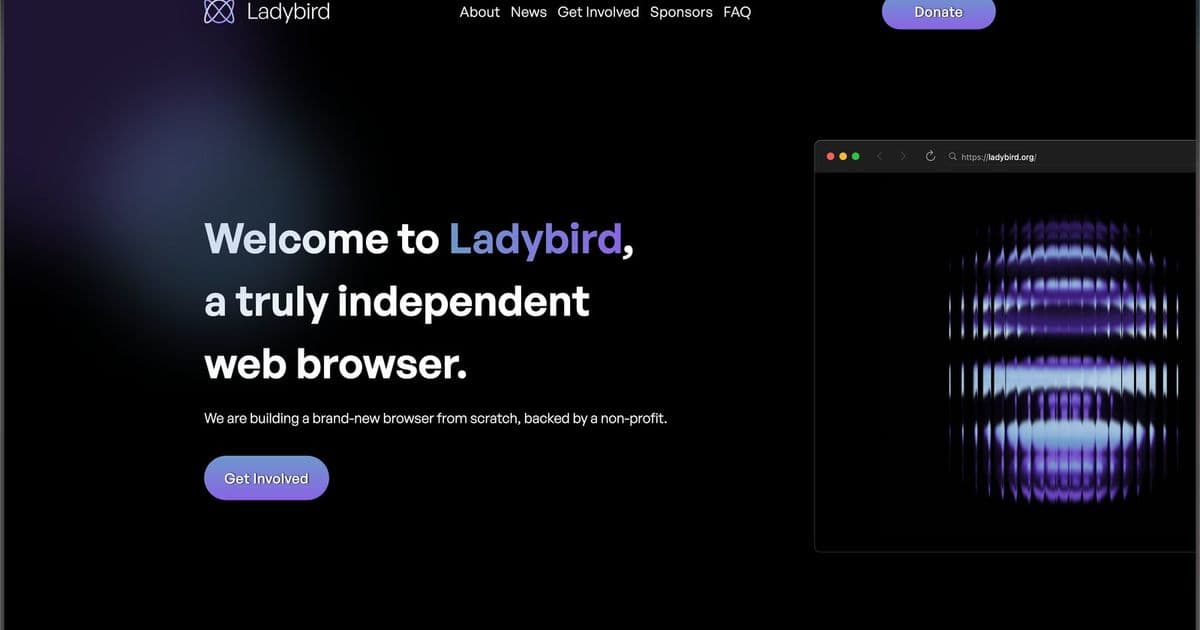
The open-source Ladybird Browser project has implemented a significant policy change, banning public pull requests to address security risks from AI-generated code. The team argues that AI tools have fundamentally changed the trust dynamics in open-source contributions.
The Ladybird Browser development team has announced a major policy shift that will reshape how the project accepts contributions, citing growing security concerns related to AI-generated code. As the browser approaches its first alpha release, the team has decided to close all public pull requests and move development in-house while maintaining the project's open-source nature.
Understanding the Decision
In a recent blog post, the Ladybird Browser team explained that this change comes from a need to ensure no major security flaws slip through as the project matures. "Until now, the team has allowed public pull requests, but as Ladybird Browser moves toward its first alpha release, it now wants to take proper care that no major security flaws or issues sneak in without the main dev team noticing," the post states.
The decision reflects a broader challenge facing the open-source community as AI tools become increasingly prevalent in software development. These tools can generate code quickly and convincingly, but they may introduce subtle security vulnerabilities or maintainability issues that aren't immediately apparent.
The Trust Factor in Open Source
For decades, open-source projects have relied on pull requests as a primary mechanism for community contributions and trust building. The Ladybird team explains this historical context:
"For decades, code contributions have been how open source projects learned who to trust. People would show up, do the work, take responsibility for their changes, and stick around. Over time, trust emerged from the work itself."
This traditional model allowed maintainers to assess contributors based on the quality and quantity of their submissions. A substantial patch typically indicated significant effort, which served as a reasonable proxy for good faith and commitment to the project.
AI's Impact on Contribution Assessment
The introduction of sophisticated AI coding tools has disrupted this established dynamic. The Ladybird team notes:
"AI tools have changed the economics of this very quickly. We use them ourselves every day, but a pull request no longer tells us as much as it used to about the person submitting it. A substantial patch used to imply substantial effort, and that effort was a reasonable proxy for good faith. That assumption no longer holds."
This creates a significant security challenge for open-source projects. When code can be generated with minimal human oversight, it becomes much harder to assess the true expertise and intentions of contributors. Malicious actors could potentially use AI to generate convincing but malicious code that might bypass initial review processes.
The New Contribution Model
With this policy change, the Ladybird Browser team has effectively "pulled up the drawbridge" and brought development in-house. However, the project remains open-source, with the code still available for public inspection and learning.
The team has asked community members to continue contributing through bug reports rather than direct code submissions. This approach allows the project to benefit from community feedback while maintaining control over the codebase that will eventually power the browser's alpha release.
Broader Implications for Open Source
Ladybird's decision reflects a growing tension in the open-source community between openness and security. As AI tools become more sophisticated, we may see more projects adopt similar policies, potentially leading to a shift in how open-source development operates.
This change could have several effects:
- Reduced opportunities for new developers to gain experience through contributing to major projects
- Increased pressure on open-source maintainers who must now handle more of the development work internally
- Potential centralization of open-source development as projects move away from distributed contribution models
- New approaches to verifying human contributions in an AI-assisted development environment
The Future of Ladybird Browser
Despite this policy shift, the Ladybird Browser team remains committed to creating a high-quality, open-source browser. By bringing development in-house for the critical alpha phase, they aim to ensure the codebase meets their security and quality standards before opening it up again in a more controlled manner.
The project's GitHub repository and official blog will continue to provide updates on development progress. Community members can still engage with the project by reporting bugs, suggesting features, and participating in discussions about the browser's direction.
As the open-source community grapples with the implications of AI tools on development practices, Ladybird's decision may serve as a case study for other projects facing similar challenges. The tension between openness and security in the age of AI remains one of the most significant questions facing software development today.
Comments
Please log in or register to join the discussion