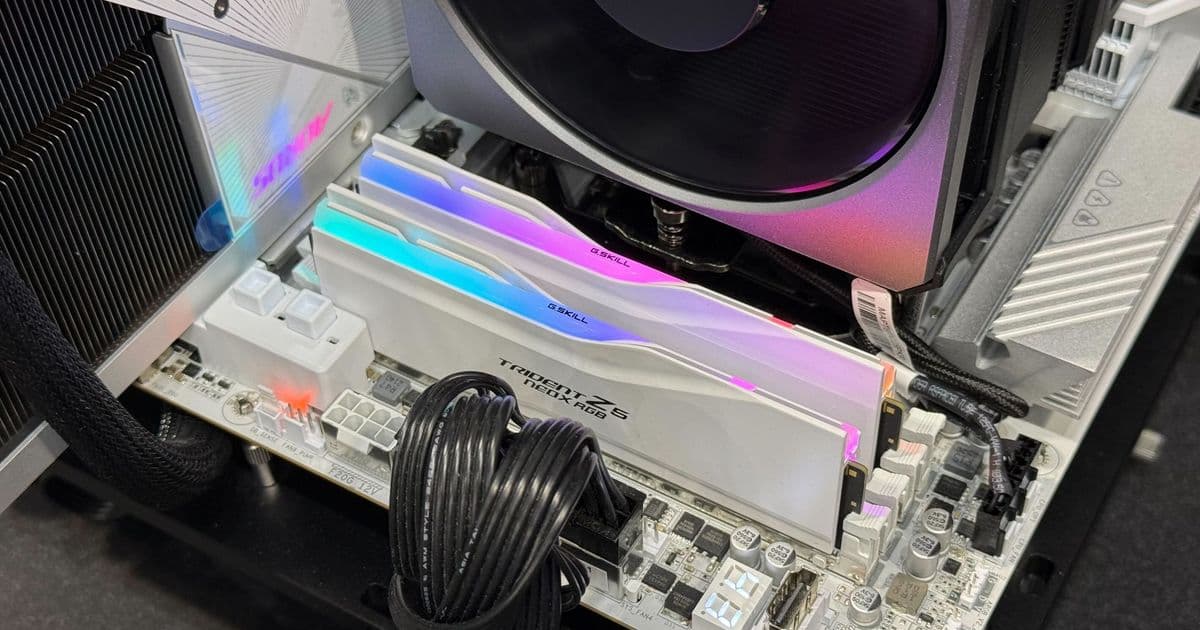
AMD's EXPO Ultra Low Latency technology enables memory manufacturers to optimize sub-timings for the first time, offering users a one-click path to lower memory latencies without manual tweaking. G.Skill is the first to market with four EXPO ULL memory kits, though the premium feature comes at a higher cost and delivers more significant benefits on non-X3D Ryzen processors.
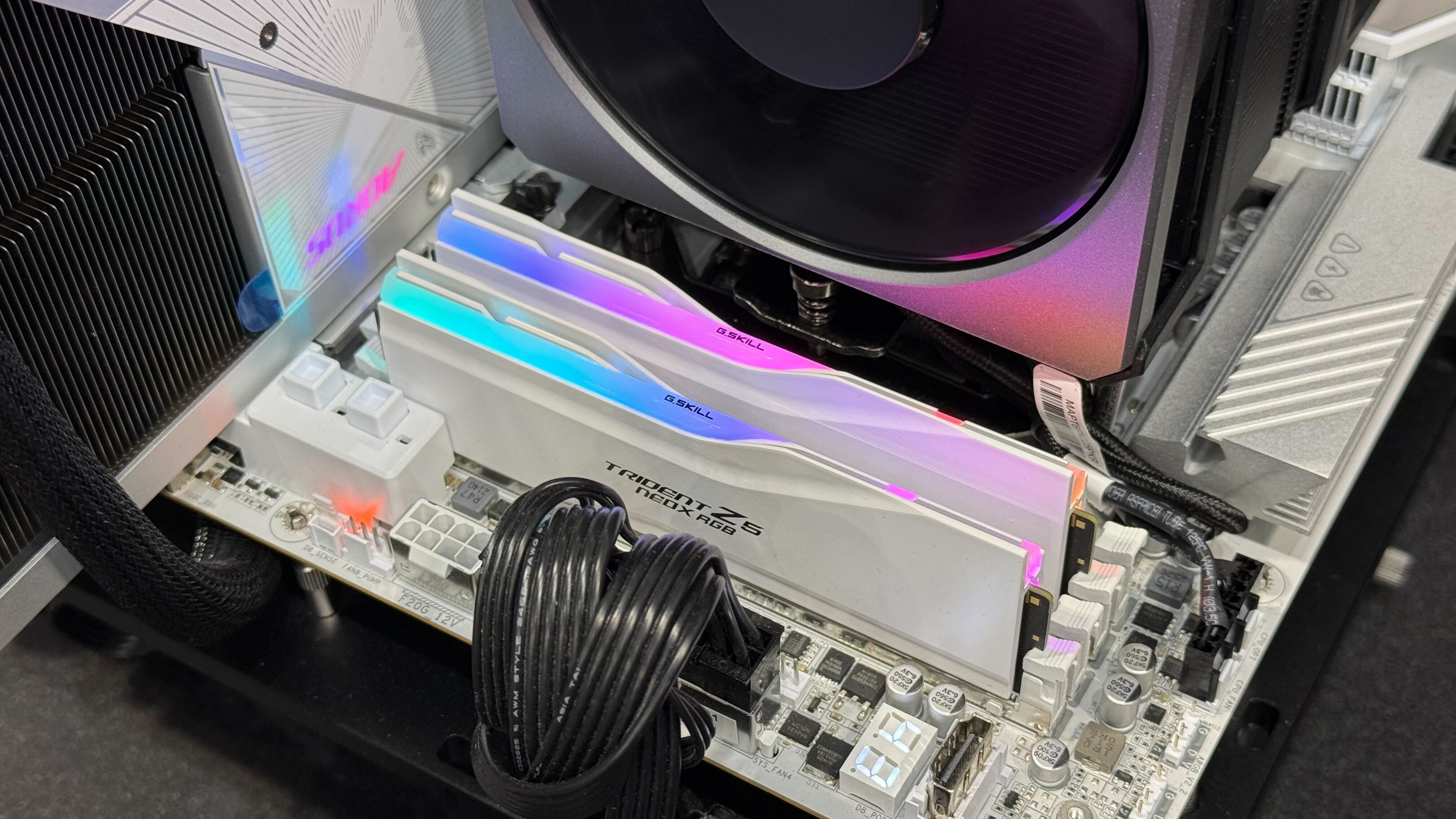
At Computex 2026, AMD announced the EXPO Ultra Low Latency (ULL) program, a new initiative designed to give users a simplified path to achieving lower memory latencies than what's possible with existing EXPO profiles. Following this announcement, G.Skill demonstrated four new memory kits that support EXPO ULL, marking the first implementation of this technology in the market.
Memory latency directly impacts CPU performance by determining how long the processor must wait to retrieve data from RAM. While DDR standards have continuously increased memory bandwidth, latency improvements have lagged significantly. When selecting memory, PC builders typically evaluate two key metrics: speed (measured in MT/s) and CAS latency (CL). For example, comparing two CL30 memory kits, the one with a higher clock rate will exhibit lower effective latency in nanoseconds because CAS latency represents a number of clock cycles rather than absolute time.
However, on modern AMD platforms, achieving memory speeds beyond 6000 MT/s introduces complications. Such speeds generally require a 1:2 multiplier mode between the integrated memory controller's clock (UCLK) and the memory clock (MCLK). Since the UCLK typically tops out around 3000 MHz, this multiplier becomes necessary for higher speeds but adds latency, potentially counterintuitively reducing performance despite increased bandwidth.
This explains why DDR5-6000 CL30 kits are widely regarded as the overclocking "sweet spot" for Ryzen 7000 and Ryzen 9000 CPUs. These kits allow the UCLK and MCLK to operate in 1:1 lockstep, providing the best balance of low latency and reasonable cost. Even with faster memory options available, the additional latency introduced by the 1:2 multiplier often makes speeds beyond 6000 MT/s counterproductive for gaming performance on AMD platforms.
{{IMAGE:3}}
The introduction of EXPO ULL suggests there's still room for optimization beyond the standard DDR5-6000 CL30 configuration. Prior to EXPO ULL, DRAM module manufacturers were limited to adjusting only the four primary timings within EXPO profiles, leaving potential performance improvements on the table. EXPO ULL changes this by affording memory makers greater freedom to fine-tune the sub-timings within each of these four primary timings, achieving even lower latencies that can be included directly in the memory's SPD (Serial Presence Detect).
Historically, tweaking memory sub-timings on Ryzen platforms using community-developed tools was a common practice among enthusiasts seeking maximum performance. However, the advent of Ryzen X3D processors with their substantial 3D V-Cache has reduced these CPUs' sensitivity to memory latency adjustments. As a result, many users now simply opt for a DDR5-6000 CL30 kit with EXPO enabled and consider their system optimized.
EXPO ULL eliminates the need for this tedious and tricky manual process by shifting the burden of determining optimal sub-timings to memory manufacturers. Users can now achieve these improvements through the simple one-click EXPO activation process rather than engaging in complex timing adjustments.

It's important to note that EXPO ULL doesn't fundamentally alter the performance characteristics between X3D and non-X3D CPUs. While both can benefit from EXPO ULL kits, the performance gains are significantly more pronounced on non-X3D processors. This explains why AMD is highlighting EXPO ULL's benefits with a Ryzen 7 9700X rather than the Ryzen 7 9850X3D that might be expected given its gaming pedigree.
The implementation of EXPO ULL requires stricter binning of individual memory chips during production. This additional characterization process means that supporting the feature isn't merely a software change that can be applied to existing modules. G.Skill indicates that the extra work involved in this stricter binning process will result in EXPO ULL kits being priced higher than standard EXPO memory.
Consequently, EXPO ULL is positioned as a premium, niche addition to the EXPO program rather than a broad replacement for standard profiles. Demanding gamers who require the lowest memory latency for optimal performance in CPU-bound scenarios will likely find EXPO ULL kits most valuable, regardless of their specific Ryzen CPU choice. However, the actual price premium and performance benefits—particularly for AMD's popular X3D chips—remain to be seen in today's already high-priced memory market.
For enthusiasts and system builders, EXPO ULL represents an important evolution in memory technology, offering a manufacturer-validated path to lower latencies without requiring expert knowledge or time-consuming manual tuning. As more memory vendors adopt the standard, we may see broader availability and potentially more competitive pricing, making this performance-enhancing feature accessible to a wider audience of AMD users.
Comments
Please log in or register to join the discussion