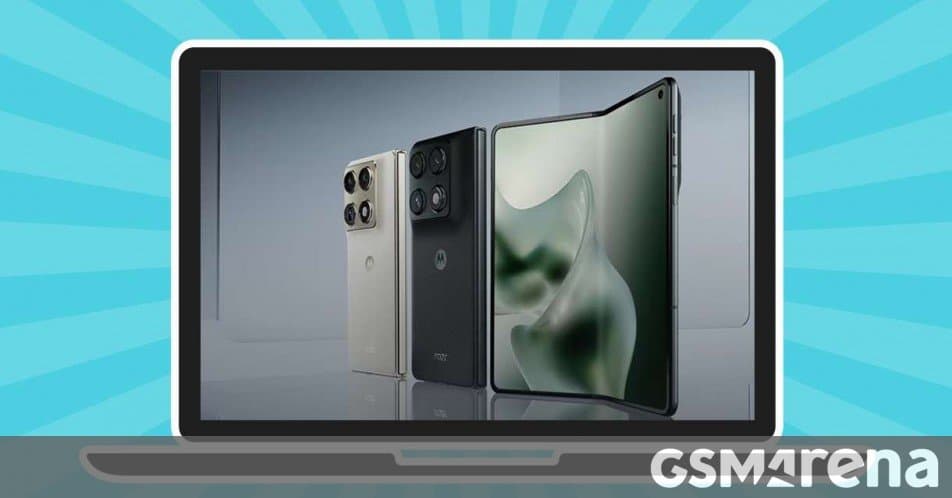
Motorola officially enters the book-style foldable market with the Razr Fold, while its new Signature flagship brings top-tier specs. The week also saw massive battery announcements from Honor and OnePlus, plus a BlackBerry-inspired surprise.
The second week of January 2026 delivered a flurry of mobile announcements, headlined by Motorola's long-awaited entry into the book-style foldable race. While the company has found success with its clamshell Razr line, the new Razr Fold directly challenges Samsung's Galaxy Z Fold series. Alongside this, Motorola unveiled a traditional flagship, the Signature, which appears to be a direct response to the premium competition. Beyond Motorola, the week was dominated by battery capacity wars, with both Honor and OnePlus revealing phones that push the 10,000mAh boundary.
Motorola's Dual Flagship Strategy
Motorola is making a significant move by splitting its flagship approach. The company officially announced the Motorola Signature, a conventional high-end smartphone, and the Motorola Razr Fold, its first book-style foldable.
The Signature is built around the Snapdragon 8 Gen 5 (the standard version, not the Elite variant rumored for some competitors). It features a large 6.8-inch 165Hz LTPO AMOLED display, which should offer smooth scrolling and efficient power management. For power users, the 5,200mAh battery is paired with 90W wired and 50W wireless charging, promising rapid top-ups. The camera system is a triple 50MP setup, though the specific sensor types (main, ultrawide, telephoto) weren't detailed in the initial announcement. The price is set at £899.99/€999, positioning it squarely against other Android flagships. However, its release date remains unconfirmed.
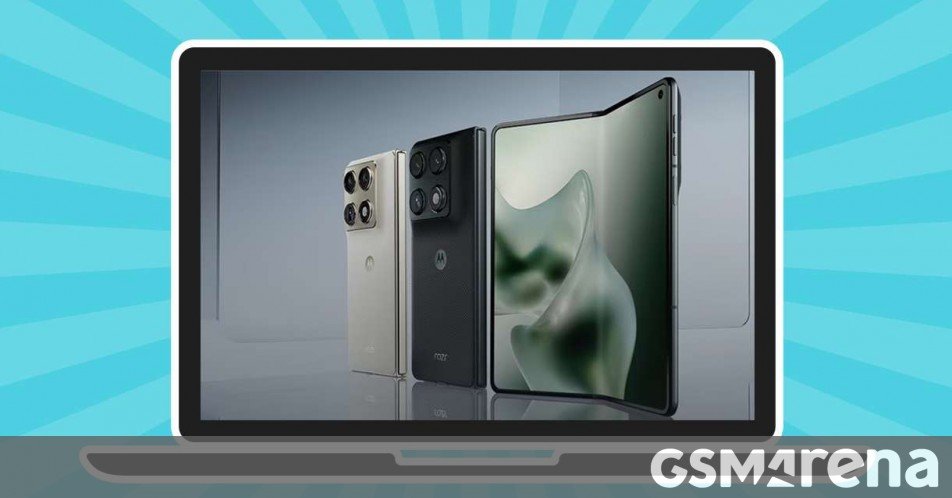
The Razr Fold marks a new chapter for Motorola's foldable lineage. While details are sparse, we know it features an 8.09-inch inner display and a 6.56-inch cover screen. The camera array includes a triple 50MP rear system (with 1x, 0.6x, and 3x focal lengths), a 32MP selfie camera on the outer display, and a 20MP camera on the inner screen. Motorola has not yet released pricing or a firm launch date for the Razr Fold, leaving consumers waiting for more information to compare it against the upcoming Galaxy Z Fold8.
The Battery Arms Race Continues
If there's one clear trend from this week, it's that manufacturers are prioritizing raw battery life. Two phones, in particular, stand out.
Honor unveiled the Power2, a device that packs a staggering 10,080mAh battery. To put that in perspective, that's more than double the capacity of most current flagship phones. Despite this massive power cell, Honor managed to keep the phone under 8mm thick and weigh it at 216g, which is an impressive engineering feat. The phone is powered by the Dimensity 8500 Elite chipset and is currently available in China starting from CNY 2,699.
OnePlus is also joining the high-capacity club with its new Turbo 6 and Turbo 6V models. Both phones feature 9,000mAh batteries and support 80W fast charging. The standard Turbo 6 uses a Snapdragon 8s Gen 4 chipset, while the more affordable Turbo 6V is equipped with a Snapdragon 7s Gen 4. These devices are clearly aimed at users who prioritize longevity above all else.
A Blast from the Past and Other Notable Debuts
In a surprising move that plays on nostalgia, the Clicks Communicator was introduced. This $499 device is a modern take on the BlackBerry form factor, featuring a 4.03-inch AMOLED display running Android 16 with a custom Niagara Launcher, but its main draw is the physical QWERTY keyboard. It weighs 170g and will support swappable back panels for customization.
Realme also launched the 16 Pro+, a phone focused on photography and display quality. It features a 200MP main camera, a 50MP 3.5x periscope telephoto lens, and an 8MP ultrawide with autofocus. Selfies are handled by a 50MP front camera. The display is a 6.8-inch 144Hz panel, and it's powered by a Snapdragon 7 Gen 4 chipset. The battery is another heavyweight at 7,000mAh. The Realme 16 Pro+ is available in India starting at INR 39,999.

Industry Rumors and Future Tech
The week's news wasn't just about official announcements. Several key rumors and industry reports shed light on the future of mobile tech.
TSMC's upcoming 2nm manufacturing process is reportedly set to significantly increase chip costs. This means that flagship phones in 2026 could see a noticeable price hike as manufacturers absorb or pass on these higher production costs for their next-generation processors.
Samsung showcased a new foldable display technology at CES 2026 that features a nearly invisible crease. This advancement could be used in future Galaxy Z Fold devices and has even been rumored as a potential supplier for a future Apple iPhone Fold. It's a significant step toward making the foldable experience feel more seamless.
Finally, the rumor mill continues to churn around Samsung's next flagship. The Galaxy S26 series is once again expected to be announced in February, with a retail release to follow in early March. Leaks also suggest the series will adopt a MagSafe-like magnetic charging standard, further standardizing accessories across the industry.
In Other News
- Price Hikes on the Horizon: The move to TSMC's 2nm process is expected to make 2026 flagship phones significantly more expensive.
- Samsung's Foldable Progress: The company's new crease-free display technology could appear in the Galaxy Z Fold8 and even future iPhones.
- OnePlus Enters the Battery King Arena: The new Turbo 6 and 6V models join Honor in pushing battery capacities toward the 10,000mAh mark.
This week was a clear indicator that the mobile industry is pushing forward on multiple fronts: new form factors from established players, a relentless pursuit of all-day battery life, and foundational technology improvements that will shape the devices we use in the coming years.
Comments
Please log in or register to join the discussion