
Motorola is offering unprecedented savings on its flagship 2025 Razr Ultra foldable phone, bundling a free Moto Watch Fit and slashing prices by up to $650 with trade-ins. This strategic move intensifies competition in the premium foldable market, challenging rivals like Samsung. For developers and tech enthusiasts, it highlights shifting consumer trends and the growing accessibility of high-end hardware innovations.

Motorola has launched a compelling promotion for its 2025 Razr Ultra foldable smartphone, combining deep discounts with a free Moto Watch Fit—a move that underscores the fierce battle for dominance in the emerging foldable segment. According to ZDNET, the Razr Ultra's price has dropped from $1,500 to $1,299.99, and buyers receive a $200 smartwatch at no extra cost. More significantly, trade-ins can unlock up to $550 in additional savings, potentially lowering the final price to $850 for the 1TB model—a near 43% reduction. This deal exclusively targets the high-capacity variant, leaving the 512GB version at its standard price.
Why This Deal Matters Beyond Savings
At its core, the Razr Ultra is a technical powerhouse, featuring Qualcomm's Snapdragon 8 Elite chipset, 12GB of RAM, and a 50MP main camera capable of capturing intricate details. The phone's 7-inch Super HD pOLED inner display and 4,700mAh battery position it as a contender against Samsung's Galaxy Z Flip series. ZDNET's Prakhar Khanna praised its Alcantra and wood finishes for improved grip, calling it "easier to hold and grip than competing flip phones." However, managing editor Kerry Wan noted a drawback: "The softer material attracted dust particles and finger grease," highlighting the real-world usability challenges in foldable design.
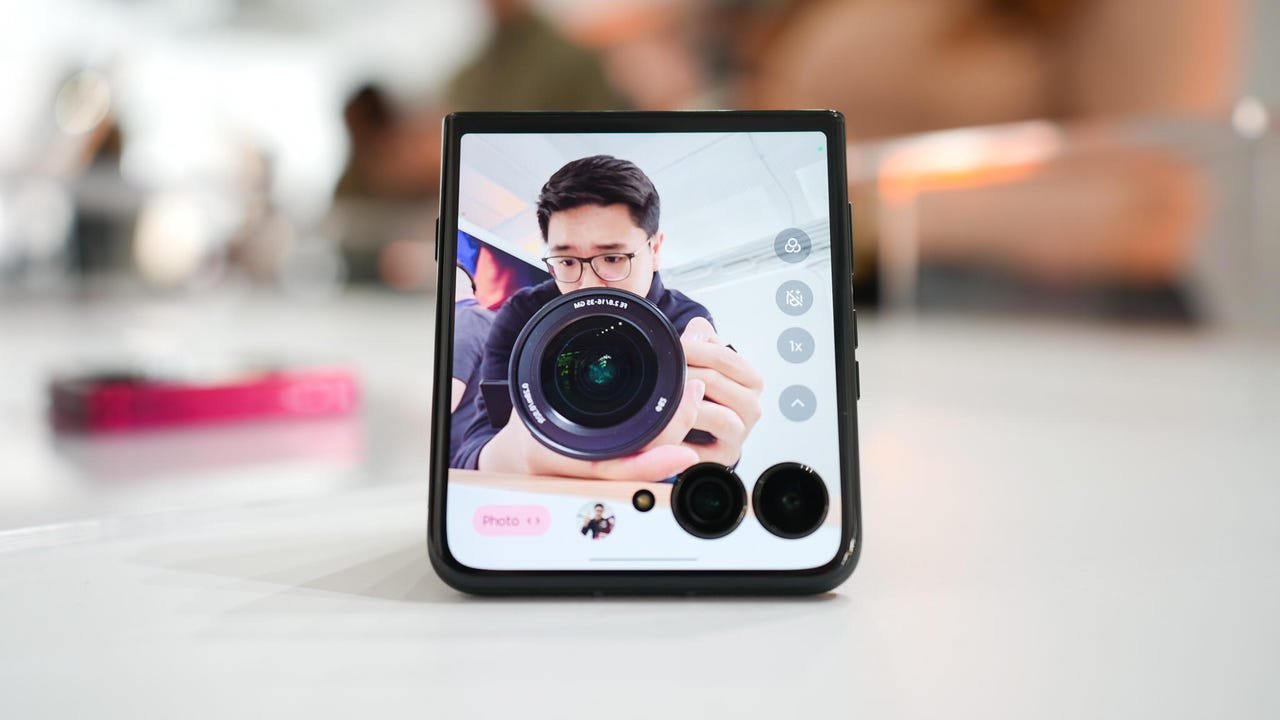 Caption: Kerry Wan/ZDNET
The promotion isn't just a sales tactic—it's a strategic play to accelerate foldable adoption. With Samsung dominating the market, Motorola's aggressive pricing, including trade-in bonuses, lowers the entry barrier for consumers and developers experimenting with foldable-specific apps. This could spur innovation in app optimization for dual-screen experiences, much like early carrier subsidies boosted smartphone proliferation. As ZDNET's deal rating suggests, leveraging the trade-in program transforms this offer from a solid 3/5 to a must-buy 5/5, emphasizing how ecosystem incentives are reshaping hardware economics.
For the tech industry, this deal reflects broader trends: manufacturers are betting big on foldables as the next growth frontier, using bundles and discounts to overcome consumer hesitancy. Yet, it also raises questions about sustainability—can such margins hold as components like flexible displays evolve? Motorola's gamble might just fold the competition in its favor, making premium innovation more accessible than ever.
Comments
Please log in or register to join the discussion