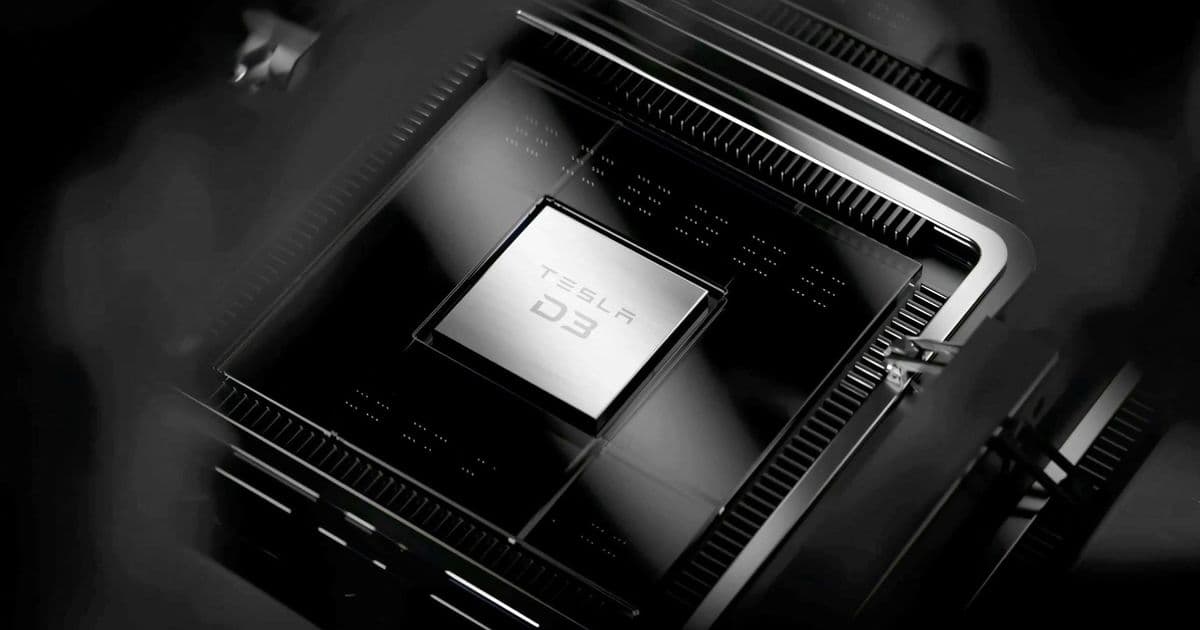
Elon Musk announces ambitious Terafab 2 nm foundry project, but faces significant technical and financial hurdles in competing with established semiconductor giants.
Elon Musk has unveiled yet another ambitious moonshot project, this time in the form of a Terafab chip foundry that aims to revolutionize semiconductor manufacturing for Tesla and SpaceX. The announcement comes at a precarious time for Musk's empire, with Tesla stock down 16% year-to-date and an impending SpaceX IPO on the horizon. The joint venture between Tesla, SpaceX, and xAI promises to produce one terawatt of computing power annually, consolidating every stage of semiconductor production from logic and memory to packaging and testing.
The Technical Reality Gap
The most glaring issue with Musk's Terafab announcement is the target of 2 nm process technology. This represents the most advanced production node in semiconductor manufacturing, a realm currently dominated by TSMC and Samsung. These industry giants have spent decades and invested hundreds of billions of dollars to reach this level of sophistication, building not just the technology but the entire ecosystem of supply chain relationships, specialized equipment vendors, and accumulated expertise that cannot be replicated overnight.
Tesla currently relies on these established foundries for its chip supply, and the machines needed for 2 nm production have multi-year waiting lists. The semiconductor manufacturing industry operates on a timeline measured in years, not months, with each process node requiring extensive research, development, and validation before mass production can begin.
The Scale Problem
Musk's vision extends far beyond traditional chip manufacturing. He envisions sending 100 million tons of solar energy capture equipment into space annually to power AI satellites. The demand projections are staggering: Optimus robots alone would require 100–200 GW of chips, while satellite arrays would demand terawatts of computing power that exceed the output of every current and projected chip manufacturer combined through 2030.
This level of ambition creates a fundamental disconnect with reality. The global semiconductor industry, valued at over $500 billion annually, would need to expand by orders of magnitude to meet these projections. Current leading-edge foundries operate at a fraction of this capacity, and scaling up involves not just building more fabs but also securing the specialized equipment, raw materials, and skilled workforce needed for advanced manufacturing.
Financial Hurdles
The capital expenditure math reveals another significant challenge. Tesla's $20 billion budget for 2025 represents its largest ever, yet the company generated less than $4 billion in profit during that period. The Terafab facility alone carries a price tag of $25 billion, and this estimate comes before the inevitable cost overruns that have plagued every Musk moonshot project to date.
History provides a cautionary tale in Tesla's 4680 battery cell program. Announced with great fanfare at Battery Day 2020, Musk promised 10 GWh of production within a year and 50% cost reductions. Four years later, Tesla has achieved only about 2% of that original volume goal, and the 4680 battery continues to face price and performance challenges, including the slow charging curve in the Cybertruck.
The Complexity Factor
Chipmaking represents orders of magnitude more complexity than battery cell production. Semiconductor manufacturing involves hundreds of precise steps, contamination-free environments, atomic-level precision, and equipment that costs tens of millions of dollars per machine. Each wafer can cost thousands of dollars, and yields must be extremely high to achieve profitability.
Established players like TSMC, Intel, and Samsung have spent decades perfecting these processes. They've built relationships with equipment suppliers like ASML (which holds a monopoly on extreme ultraviolet lithography machines), developed proprietary techniques, and created the institutional knowledge that allows them to consistently produce working chips at scale.
The Strategic Context
The timing of this announcement raises questions about its true purpose. With Tesla facing declining sales, increased competition in the electric vehicle market, and mounting pressure to deliver on previous promises, the Terafab project could serve as a distraction or a way to generate positive headlines. The impending SpaceX IPO adds another layer of complexity, as investors will be looking for growth opportunities beyond the core rocket launch business.
Musk has a history of announcing ambitious projects that either never materialize or take far longer than promised to deliver. The Hyperloop, the Tesla Semi, and various other initiatives have faced significant delays or scaled-back implementations. The Terafab announcement follows this pattern, promising revolutionary change while glossing over the practical challenges.
The Path Forward
While the Terafab and orbital data centers may indeed represent the future of computing, the timeline Musk proposes appears unrealistic. Even if Tesla and SpaceX could overcome the technical and financial hurdles, the project would likely take many years to reach even partial implementation of the promised capabilities.
The semiconductor industry moves at a glacial pace compared to software development. Process nodes take years to develop, fabs take years to build, and supply chains take years to establish. Musk's track record of rapid iteration and aggressive timelines works well for software and some hardware projects but faces fundamental physical and economic constraints in semiconductor manufacturing.
The Bottom Line
The Terafab announcement represents classic Musk hyperbole: an audacious vision that captures headlines but crumbles under scrutiny. While the goals of vertical integration and advanced computing power are laudable, the execution challenges are so significant that the project may never materialize as described. The semiconductor industry has humbled many well-funded entrants before, and without the decades of accumulated expertise and established relationships that TSMC and Samsung possess, Tesla and SpaceX face an uphill battle that goes far beyond simple engineering challenges.
The most likely outcome is a scaled-back version of the project that focuses on specific niches where Tesla can leverage its existing capabilities, rather than the all-encompassing terawatt-scale foundry Musk envisions. Until then, the Terafab remains a fascinating thought experiment rather than a concrete plan for the future of computing.
Comments
Please log in or register to join the discussion