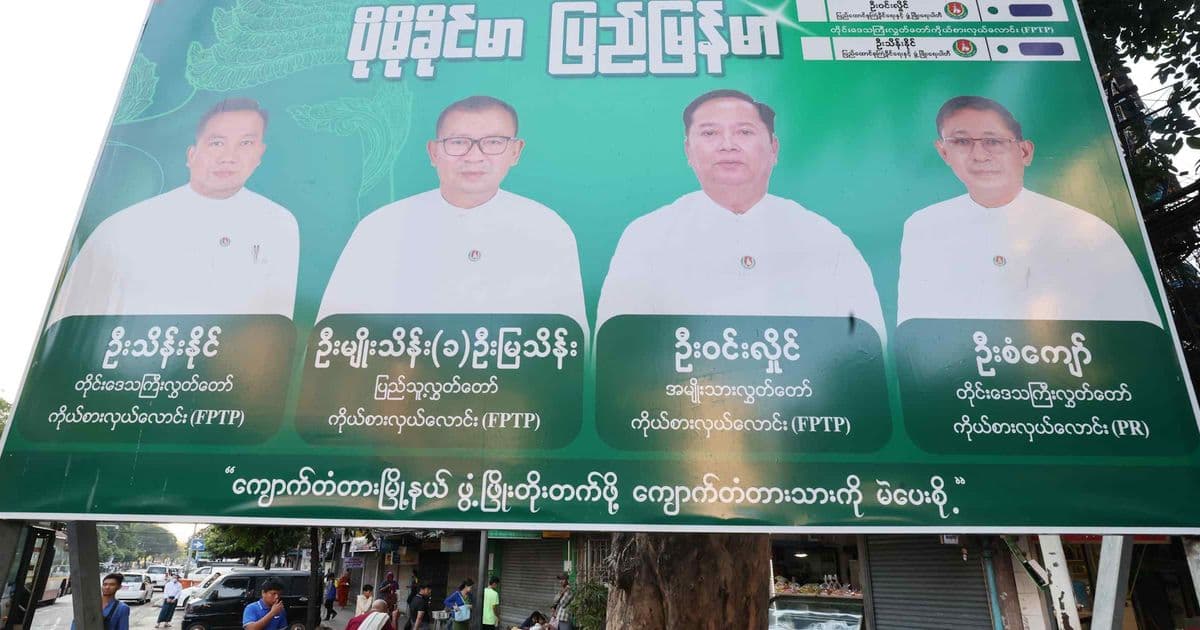
Myanmar's military regime concludes its three-phase general election with the outcome predetermined, as the Union Solidarity and Development Party (USDP) is set to secure a landslide victory in a process dismissed by international observers and opposed by ethnic minority groups.
Myanmar's military regime is holding the final round of its three-phase general election on Sunday, January 26, 2026, in what analysts universally characterize as a sham process designed to cement the junta's control. The outcome is already decided, with the military-backed Union Solidarity and Development Party (USDP) expected to record a significant victory that will formalize the military's political dominance in the war-ravaged country.
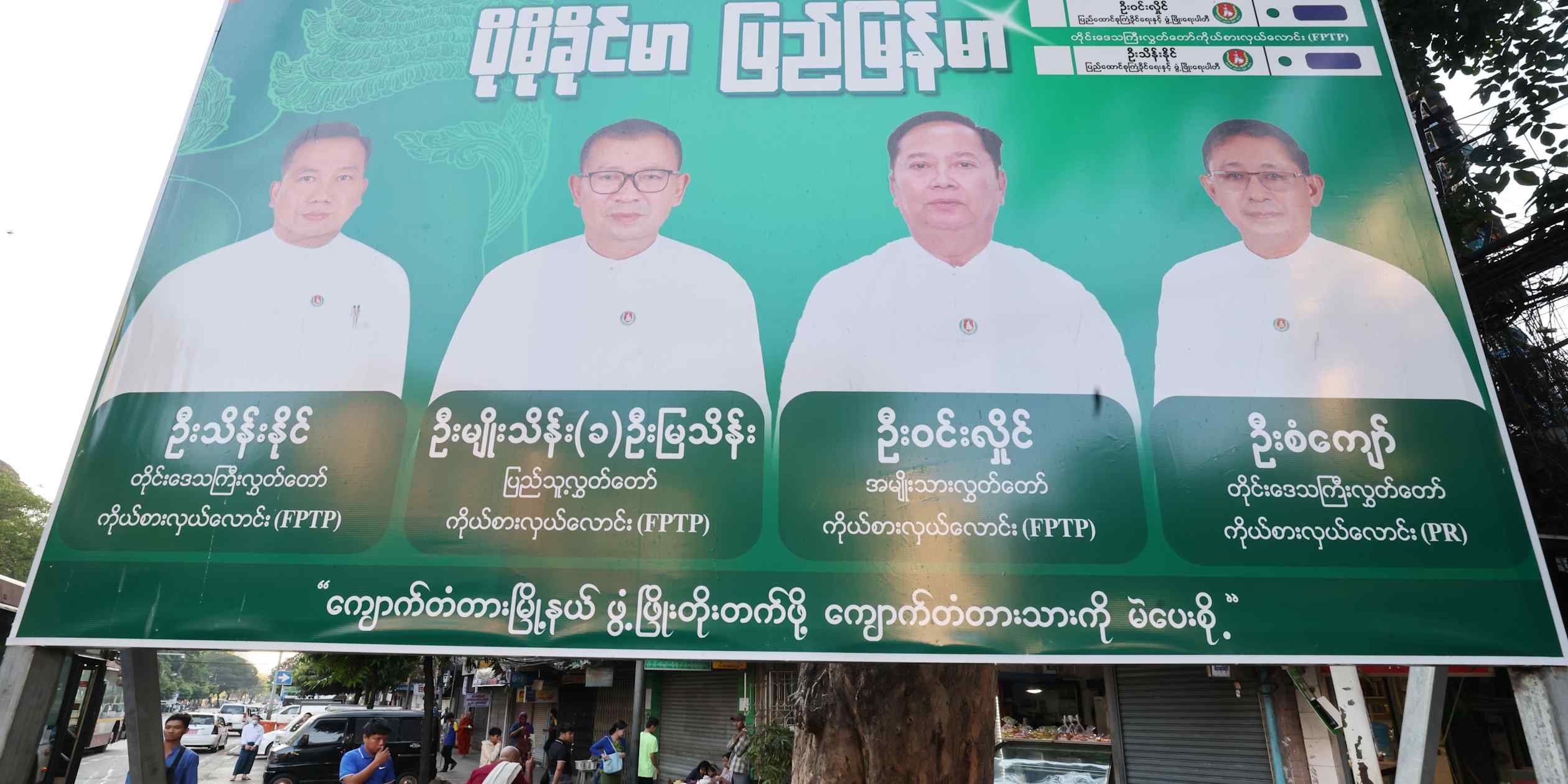
The election has been structured across three phases since December 2025, with the final phase covering remaining constituencies. Campaign posters for USDP candidates have been prominently displayed in Yangon and other major cities, despite widespread voter apathy and ongoing civil conflict. The military regime, which seized power in a February 2021 coup, has systematically excluded the National League for Democracy (NLD), the party of ousted leader Aung San Suu Kyi, from participation. NLD members face imprisonment or have been forced into hiding, effectively eliminating any meaningful opposition.
International Rejection and Regional Divisions
The election process has faced categorical rejection from key regional bodies. The Association of Southeast Asian Nations (ASEAN) announced it will not certify the election results or send observers, with Malaysia's Foreign Minister stating the bloc cannot validate a process lacking inclusivity and credibility. This position reflects deep divisions within ASEAN, where some members like Thailand and Cambodia have engaged with the junta, while others like Indonesia and Malaysia maintain a harder line.
China and Russia, however, have signaled support for the election, viewing it as a pathway to stability in a strategically important neighbor. Beijing's backing is particularly significant given Myanmar's role in China's Belt and Road Initiative and its access to the Indian Ocean. Russia has provided military and diplomatic support to the junta since the coup. This great power rivalry over Myanmar's political future complicates any unified international response.
Ethnic Minority Opposition and Civil War Context
Myanmar's ethnic minority groups, which constitute roughly 40% of the population, have shown mixed but largely negative reactions to the election. Many ethnic armed organizations (EAOs) that control significant territory in border regions have rejected the process entirely. The Karen National Union, the Kachin Independence Army, and the Arakan Army have all denounced the election as illegitimate, continuing their armed resistance against the central government.
The civil war, now entering its fifth year, has displaced over 2 million people and created a humanitarian crisis. The election occurs against this backdrop of ongoing conflict, with the military regime controlling only about 40% of the country's territory. The junta's strategy appears to be consolidating political legitimacy in urban centers while continuing military operations in ethnic minority regions.
Strategic Implications for Myanmar's Future
The election's predetermined outcome will likely deepen Myanmar's isolation from Western democracies while strengthening ties with China and Russia. The USDP's expected victory will formalize a political system where the military holds 25% of parliamentary seats by constitutional mandate, plus additional seats through the election, ensuring permanent military influence over governance.
For the international business community, particularly in Southeast Asia, the election reinforces Myanmar's status as a high-risk investment destination. Foreign direct investment, which had already plummeted since the coup, will likely remain stagnant. The country's energy sector, telecommunications, and manufacturing face continued uncertainty, with sanctions from the U.S., EU, and UK limiting access to Western capital and technology.
The junta's consolidation of power through this electoral process represents a strategic shift from pure military rule to a hybrid model that maintains military control while providing a veneer of democratic legitimacy. This approach may help the regime secure recognition from some regional partners and potentially ease certain economic pressures, though comprehensive sanctions from Western nations will remain in place.
Economic and Social Consequences
Myanmar's economy, which contracted by nearly 20% since the coup, shows no signs of recovery. The election does little to address fundamental issues: currency instability, banking system collapse, and widespread unemployment. The military's focus on political consolidation has come at the expense of economic governance, with the kyat losing over 60% of its value against the dollar since 2021.
Socially, the election exacerbates existing divisions. Urban populations in Yangon and Mandalay, while largely opposed to military rule, face intimidation and surveillance that suppresses dissent. In ethnic minority regions, the election is viewed as irrelevant to communities focused on survival and resistance. The Rohingya population, already excluded from citizenship and voting rights, remains in refugee camps in Bangladesh or internally displaced.
Regional Security Implications
Myanmar's instability has regional security consequences. The country serves as a corridor for drug trafficking, human smuggling, and arms trade. The election's failure to address these issues, combined with the military's continued focus on internal suppression rather than border security, concerns neighboring countries like Thailand, India, and Bangladesh.
The junta's reliance on Chinese and Russian support creates a geopolitical fault line in Southeast Asia. As ASEAN struggles to maintain its centrality in regional affairs, Myanmar represents a test case for the bloc's ability to influence member states' internal affairs. The election's outcome will likely force ASEAN to either accept a pariah state within its ranks or develop new mechanisms for addressing member states' democratic backsliding.
What Comes Next
Following the final phase, the USDP will form a government that mirrors the military's control structure. Civil society organizations expect continued repression, with the military using the election's conclusion to justify further crackdowns on dissent. International human rights groups warn that the election's legitimization of military rule could embolden the junta to intensify operations against ethnic armed organizations.
For Myanmar's diaspora and opposition groups, the election represents another setback in their struggle for democracy. However, many analysts note that the military's victory may be pyrrhic—securing political control while losing legitimacy and economic viability. The country's long-term stability depends not on elections but on genuine political dialogue that includes all stakeholders, a prospect that appears increasingly remote as the military consolidates its power.
The international community now faces a dilemma: how to engage with a regime that has seized power through a coup and conducted sham elections, while addressing the humanitarian crisis and preventing further regional instability. The election's conclusion marks not an end to Myanmar's crisis, but a new phase in its prolonged struggle between military authoritarianism and the aspirations of its people for genuine democracy.
Comments
Please log in or register to join the discussion