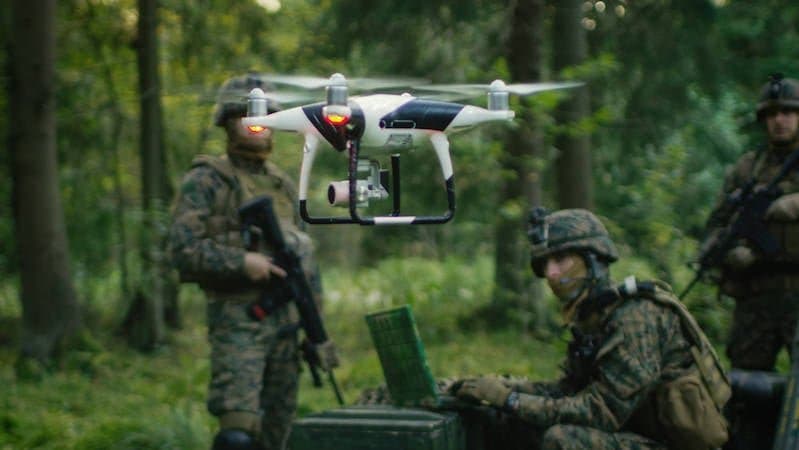
NATO faces urgent need to overhaul air defenses as cheap drone swarms overwhelm expensive interceptors, with experts calling for scalable, layered systems inspired by Ukraine's battlefield experience.
NATO is facing an urgent need to overhaul its air defenses as cheap, mass-produced drones are reshaping modern warfare, experts warn. The alliance's current reliance on expensive interceptor missiles costing millions each is proving unsustainable against the threat of drone swarms, which can be produced for as little as $20,000 per unit.
The Center for European Policy Analysis (CEPA) recently held a debate highlighting how Ukraine's four-year conflict has demonstrated that quantity and affordability now trump exquisite hardware in modern warfare. Gordon "Skip" Davis, former deputy assistant secretary general for NATO, noted that adversaries like Iran are combining precision weapons with cheap, mass-produced drones to overwhelm air defense systems.
Ukraine has taken the lead in developing cost-effective countermeasures, manufacturing tens of thousands of interceptor drones annually and delivering them to frontline units at rates exceeding 1,500 per day. Instead of relying solely on expensive interceptors, Ukraine has built a layered system where cheap one-way interceptor drones costing as little as $2,000 now account for the majority of drone takedowns across the country.
This approach is typified by the small Bullet model produced by Ukrainian defense firm General Cherry, which can reach speeds of up to 310 km per hour, engage targets at distances of up to 20 km, and operate at altitudes of up to 6 km. The system represents a fundamental shift from NATO's traditional doctrine of technological superiority toward integrated systems, scalable production, and rapid adaptation.
Jason Israel, senior fellow for Defense Technology Initiative at CEPA, emphasized that software and interoperability are equally vital pieces of the puzzle. The various drones operated by NATO allies will need to integrate with command-and-control systems to coordinate operations. "We can't have 200 different types of drones in the future that don't speak to each other," he stated.
Human operators remain a key part of the command chain, but Federico Borsari, CEPA Fellow for Transatlantic Defense and Security, noted that operators need proper training to respond appropriately to drone threats. NATO countries are "very interested" in integrating Ukrainian technologies and benefiting from Ukrainian experience, which dates back to 2015 when volunteer organizations first helped Ukraine's depleted forces resist Russian aggression in the Donbas region.
However, Davis warned that there doesn't seem to be any great sense of urgency for these changes at the political level in many Western nations. The conflicts in Ukraine and the Middle East have demonstrated that some nations have no qualms about targeting civilian infrastructure with drone attacks.
In response to these threats, the UK and several European allies last month launched the Low-Cost Effectors & Autonomous Platforms (LEAP) program, which will initially focus on developing an affordable surface-to-air weapon to counter drones and missiles, with production targeted for 2027. The UK has also purchased six new Land Ceptor anti-aircraft missile systems to bolster its air defenses.
The conclusion is clear: NATO must move from a model built around technological superiority to one built around integrated systems, scalable production, and rapid adaptation. As drone technology continues to evolve and become more accessible, the alliance's ability to defend against mass drone attacks will determine its effectiveness in future conflicts.
Comments
Please log in or register to join the discussion