
National Audit Office warns UK lacks comprehensive plan for catastrophic solar events, despite some forecasting capabilities
The UK's National Audit Office (NAO) has delivered a sobering assessment of Britain's readiness for catastrophic space weather events, warning that the country is essentially holding a "cocktail umbrella" against the potential devastation of a major solar storm.
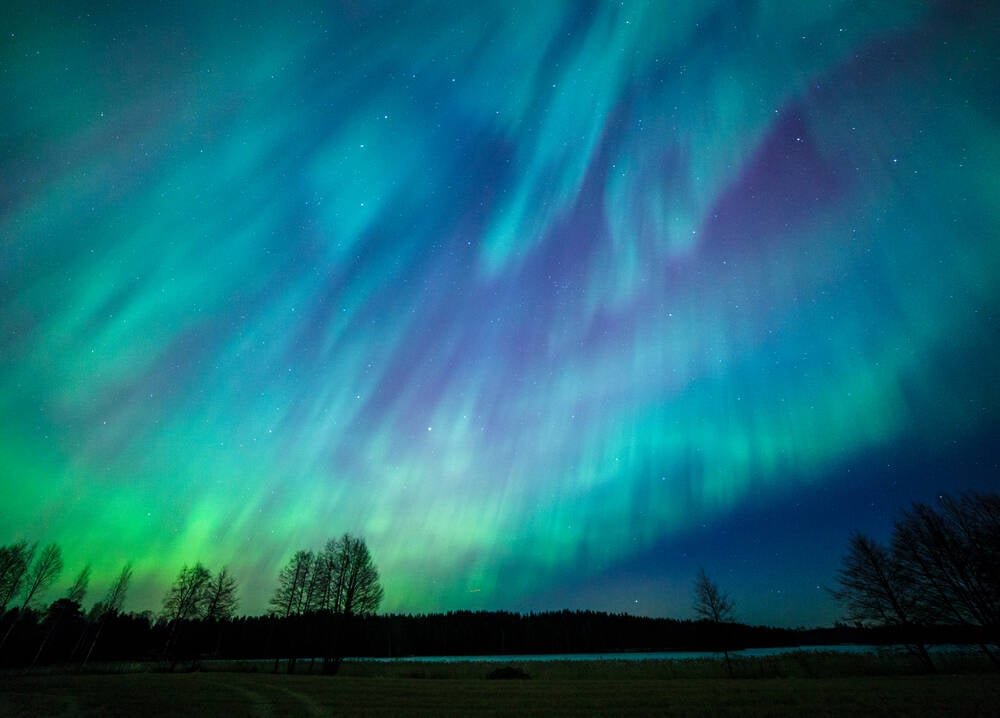
The report, published on March 23, 2026, commends the UK's space weather forecasting abilities but delivers a stark warning about the nation's overall preparedness for severe solar events that could cripple modern infrastructure.
The Carrington Threat
The NAO's concerns are rooted in historical precedent. On September 1, 1859, a massive solar flare triggered what became known as the Carrington Event, one of the largest magnetic storms ever recorded. Telegraph machines across the world shocked operators and sparked small fires. In today's electronics-dependent society, the consequences would be far more severe.
According to the report, a similar event today could:
- Disrupt global communications systems
- Cause widespread power outages
- Disable satellite navigation
- Damage critical infrastructure
The government itself has acknowledged the risk, estimating in 2025 a 5-25 percent chance of a severe space weather event occurring by 2030.
Forecasting: A Bright Spot in the Dark
Despite the overall preparedness concerns, the UK's Met Office has made significant strides in space weather monitoring. Since opening its space weather monitoring center in 2014, the Met Office has developed capabilities that have earned international respect.
The center can provide up to 96 hours' warning of an impending space weather event, depending on its type. This crucial window allows operators to take preventive measures such as shutting down power transformers to prevent damage.
However, this capability comes with significant limitations. The UK lacks its own space weather satellites and must rely on data from partners like the United States Space Weather Prediction Center. The country's primary data source, the Solar and Heliospheric Observatory (SOHO), launched in 1995 and has long exceeded its primary mission lifespan.
The £300 Million Question
The UK government has invested £300 million in the European Space Agency's Vigil space weather mission, which promises faster and more accurate space weather warnings. However, this mission isn't expected to launch until 2031, leaving a substantial gap in the UK's long-term forecasting capability.
More concerning is that while the Met Office has begun considering what might come after Vigil, there has been no formal planning for post-2031 capabilities.
The Governance Gap
The NAO's most damning criticism focuses on the UK government's lack of a coherent response strategy. The report states that "the centre of government has an incomplete understanding of how sectors plan to respond to a severe space weather emergency."
In practical terms, this means:
- No clear understanding of cascading effects across different sectors
- No defined level of resilience the UK aims to achieve
- No established risk appetite for residual impacts
- No comprehensive testing of emergency scenarios
The government has yet to set out what outcome it is looking to achieve or what level of residual impacts it is willing to accept.
Recommendations and Response
The NAO has made several urgent recommendations:
- Scenario Testing: The Department of Science, Innovation and Technology (DSIT) should develop a plan to test scenarios by September 2026
- Whole-of-Society Approach: Add details for a comprehensive societal response by March 2027
- Formal Planning: Establish clear planning for post-2031 capabilities
A government spokesperson responded to the NAO's findings, stating: "While extreme space weather events are rare, the UK is better prepared than ever before – backed by world-class monitoring from the Met Office Space Weather Operations Centre, one of only a handful of 24/7 centres of its kind globally."
The spokesperson also highlighted the £300 million investment in the Vigil mission and promised a new Severe Space Weather Preparedness Strategy to be published later in 2026.
The International Context
The UK's space weather preparedness challenges mirror those faced globally. Recent solar storms have already caused headaches for spacecraft and satellite operators. The May 2024 storm, while causing only minor impacts, moved thousands of satellites from their orbits.
International efforts continue to improve space weather prediction. The European Space Agency's Solar Orbiter mission aims to help scientists predict destructive coronal ejections, while the US weather agency has offered $396 million contracts for next-generation space weather monitoring.
The Bottom Line
The NAO's report paints a picture of a country that has made progress in understanding and forecasting space weather but has yet to develop the comprehensive preparedness strategy needed to protect against a catastrophic event.
As the UK continues to rely on aging satellites and faces a multi-year gap before new capabilities come online, the question remains whether Britain's "cocktail umbrella" will be sufficient when the next major solar storm arrives.
For now, the government's commitment to a new preparedness strategy offers hope, but the clock is ticking on both the technological and governance fronts. When the next Carrington-level event occurs—and experts agree it's a matter of when, not if—the UK's level of preparation will be put to the ultimate test.
Comments
Please log in or register to join the discussion