Subnautica 2's early access launch faces backlash over restrictive EULA terms that raise concerns about digital ownership, privacy rights, and content creator permissions despite strong initial sales and player counts.
Subnautica 2 has made a splash in the gaming community with its early access debut, boasting impressive player numbers and strong sales figures. However, beneath the surface of this successful launch lies a brewing controversy that's increasingly reflected in negative Steam reviews. The source of discontent centers around the game's End-User License Agreement (EULA), which contains terms that many players find unacceptable.
What's New: The Controversial EULA Terms
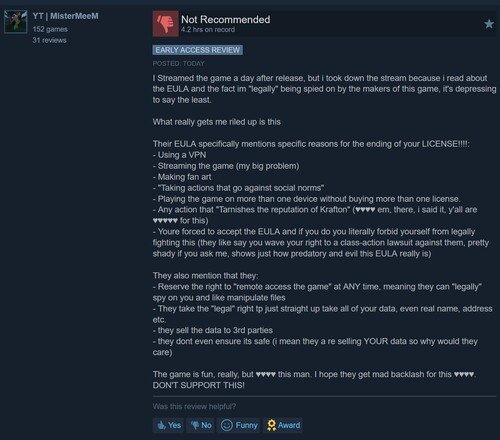
The most concerning aspects of Subnautica 2's EULA revolve around ownership rights, privacy protections, and content usage permissions. Unlike traditional purchases where consumers own their copies, Krafton's terms establish that buyers only receive a license to play the title. This distinction becomes particularly significant when considering the game's solo campaign structure, which doesn't appear to require server authentication for basic functionality.
Privacy concerns take center stage in many critical reviews. The EULA explicitly prohibits players from using VPNs to mask their IP addresses, raising questions about user autonomy and data protection. More alarmingly, the terms grant the publisher remote access to the game without requiring user consent, potentially allowing Krafton to monitor gameplay or make changes to installed copies without players' knowledge. The collection of personal information, including legal names and email addresses, adds another layer of concern for privacy-conscious gamers.
Content creators face their own set of restrictions. Streamers, YouTubers, and mod authors who wish to showcase or modify Subnautica 2 must navigate terms that prohibit profiting from gameplay content without explicit permission from Krafton. These limitations come at a time when the game's modding community is expected to grow significantly following the full release, potentially stifling creativity and community-driven innovation.
How It Compares: Industry Standards and Legal Context
When compared to industry practices, Subnautica 2's EULA represents one of the more restrictive approaches to digital ownership. Many modern games, particularly those with solo or offline components, still allow greater flexibility in how players can access and share their purchases. The prohibition on VPN usage stands in contrast to games that respect player privacy and offer more control over personal data.
From a legal standpoint, the enforceability of these terms remains questionable. In European Union countries with robust consumer protection laws, similar EULA provisions have faced significant challenges in court. The EU's digital consumer rights framework often prioritizes purchaser rights over publisher control, potentially limiting Krafton's ability to enforce the most restrictive clauses.
This situation isn't entirely unique to Subnautica 2. The gaming industry has seen increasing tension between publishers and consumers over digital ownership rights. Organizations like Stop Killing Games have highlighted how restrictive terms can lead to digital games becoming unplayable if servers are shut down or publishers go out of business, creating preservation challenges for gaming history.
Who It's For: Affected Players and Considerations
The EULA controversy primarily affects several key groups within the gaming community:
- Traditional gamers who value ownership rights and expect permanent access to their purchases without intrusive monitoring.
- Privacy-conscious players who prefer to control their personal data and have concerns about how their gameplay is tracked.
- Content creators who rely on gameplay footage, streaming, or modding for their livelihood or community engagement.
- Modding communities that thrive on player creativity and modifications that extend a game's lifespan.
For players considering Subnautica 2, the EULA terms present a significant consideration. While the game itself appears to offer the immersive underwater experience fans expect, the restrictive terms may outweigh the benefits for some. Those who prioritize digital ownership rights, privacy protections, or content creation freedoms might want to carefully weigh these factors before purchasing.
The controversy surrounding Krafton's EULA comes at a sensitive time for the publisher, which has reportedly faced criticism for firing lead developers allegedly to avoid bonus payouts. This history has led some to question whether the company will prioritize community interests or maximize control and revenue.
The Bigger Picture: Digital Ownership in Gaming
Subnautica 2's EULA controversy highlights a growing tension in the gaming industry between publisher control and consumer rights. As digital distribution becomes the norm, questions about ownership, privacy, and content usage are becoming increasingly important for players worldwide.
While the negative reviews currently represent a minority opinion—Subnautica 2 maintains a "Very Positive" rating on Steam—the vocal opposition on social media suggests these concerns resonate deeply with significant segments of the player base. As the game moves through early access and toward full release, it remains to be seen whether Krafton will address these concerns or maintain the restrictive terms.
For players, the situation underscores the importance of reading and understanding EULAs before making purchases. In an era where digital goods increasingly dominate our entertainment landscape, being informed about the terms governing our access to these products has never been more crucial.
Comments
Please log in or register to join the discussion