
Apple's highly anticipated foldable iPhone faces significant hurdles with its hinge mechanism, potentially delaying or canceling the product despite solving display crease issues.
iPhone Ultra: Major design issues could delay Apple's foldable indefinitely, says leaked info
Apple's much-rumored entry into the foldable smartphone market has encountered a critical roadblock, with recent leaks indicating that the company's first foldable device, internally known as the iPhone Ultra or iPhone Fold, may face indefinite delays due to durability concerns. According to a report from a well-connected supply chain insider, trial production has stalled because the hinge mechanism fails to meet Apple's stringent quality standards after repeated folding tests.
Display Crease Problem Solved, But Hinge Remains Major Concern
While Apple has reportedly made significant progress in one of the foldable industry's most persistent challenges—the display crease—internal testing shows the screen maintains a "visually creaseless" appearance even with long-term use. This represents a notable achievement, as most current foldable devices from competitors like Samsung still display noticeable creases when unfolded.
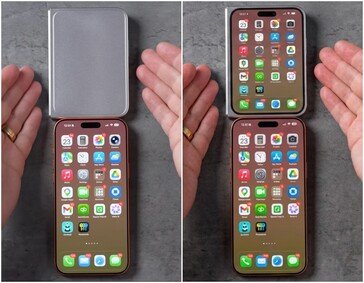 iPhone Ultra/Fold design model next to iPhone 17 Pro Max
However, the mechanical hinge mechanism has emerged as the primary bottleneck. Unlike the display, which appears to hold up well under stress testing, the physical moving components of the hinge are reportedly showing unacceptable levels of wear and tear after high-frequency folding cycles. This mechanical failure represents a significant departure from Apple's typical product quality standards, which have historically set the benchmark for the industry.
Apple's Commitment to Quality May Override Market Pressures
What's particularly noteworthy about this situation is Apple's apparent willingness to delay or even cancel the product rather than release a compromised device. The company has historically been reluctant to enter new product categories until it can deliver a truly premium experience, as evidenced by its late entry into the smartwatch and smartphone markets.
This stance contrasts with many competitors who have prioritized getting foldable devices to market quickly, often resulting in products with noticeable compromises. Samsung, for example, has iterated significantly on its foldable designs over multiple generations, addressing durability issues with each new release.
Potential Timeline and Market Implications
If Apple can resolve the mechanical challenges in time, the first foldable iPhone is expected to be announced alongside the iPhone 18 Pro series in September 2026. The device would reportedly be powered by the new 2nm A20 Pro chip and feature Apple Intelligence capabilities, positioning it as a premium offering in the growing foldable market.
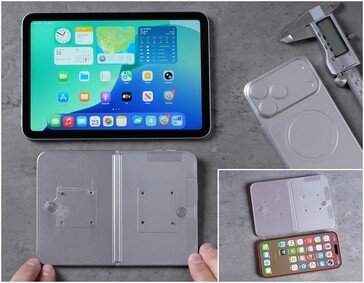 iPhone Ultra/Fold design model next to iPad mini
However, if these hinge issues persist, a launch slip into 2027 becomes increasingly likely. Such a delay would represent a significant setback for Apple's foldable ambitions, potentially allowing competitors to further establish themselves in the premium foldable space.
How Apple's Foldable Would Compare to Existing Options
Should Apple ultimately bring its foldable to market, it would enter a space currently dominated by Samsung's Galaxy Z Fold and Z Flip series. Samsung's latest offerings, such as the Galaxy Z Fold 5 and Z Flip 5, have made significant strides in durability compared to earlier generations, but still face challenges with long-term hinge integrity and display creasing.
Apple's approach appears to be aiming for a more refined experience from the outset, with potentially fewer visible compromises than current-generation foldables. The company's attention to detail in areas like display quality, hinge mechanics, and overall user experience could differentiate its offering in a market that has yet to see widespread adoption.
Who This Product Would Be For
If launched, Apple's foldable would likely target early adopters and professionals willing to pay a premium for cutting-edge technology. The device would probably be positioned as a productivity tool, potentially offering a tablet-like experience when unfolded while maintaining smartphone portability when closed.
Pricing would almost certainly exceed current iPhone models, with estimates suggesting a starting point around $1,999 or higher, placing it firmly in the premium segment of the market. This would limit its initial audience to Apple's most dedicated customers and those specifically interested in foldable technology.
The potential delay also raises questions about Apple's broader strategy for foldable devices. Industry analysts have speculated that Apple might be developing multiple foldable form factors, including a more traditional Z Fold-style device and potentially a Flip-style clamshell. The challenges encountered with the current development could impact these other projects as well.
As the foldable market continues to evolve, Apple's entry—or lack thereof—could significantly influence the direction of the category. The company's ability to solve the mechanical challenges while maintaining its design and quality standards will ultimately determine whether it can successfully compete in this emerging space.
Comments
Please log in or register to join the discussion