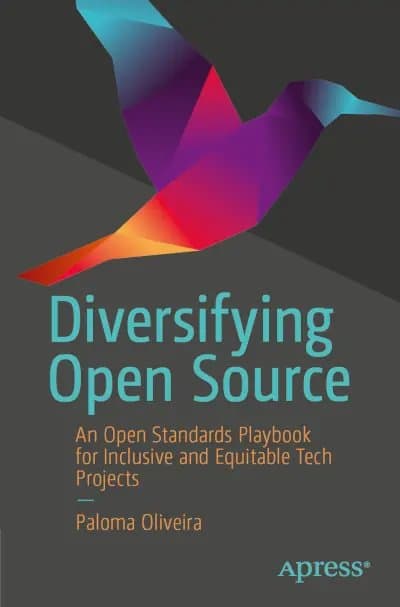
Paloma Oliveira's 'Diversifying Open Source' provides actionable frameworks for addressing systemic barriers in tech projects while sparking debate about political philosophy's role in open source reform.
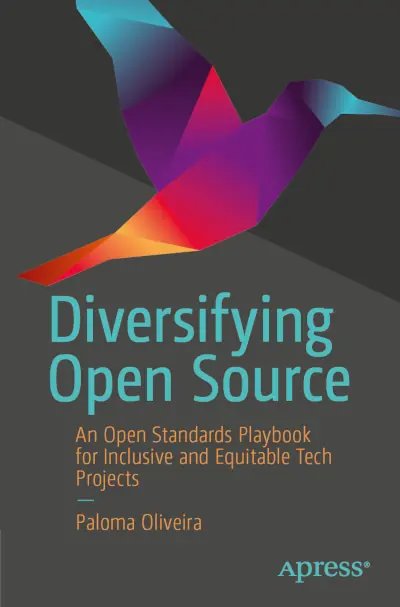
The open source movement faces intensifying scrutiny over who benefits from its collaborative model. A new tactical guide by Paloma Oliveira, Diversifying Open Source: An Open Standards Playbook for Inclusive and Equitable Tech Projects, confronts these systemic issues head-on with uncommon specificity. Unlike theoretical critiques, the book maps concrete pathways for communities to dismantle exclusionary practices while acknowledging philosophical tensions within the movement.
Oliveira's analysis identifies overlooked exclusion mechanisms embedded in technical decisions. "When projects focus purely on technical excellence without considering accessibility, they create implicit barriers," the book states, citing documentation limited to English, community meetings scheduled during North American business hours, and development environments requiring high-end hardware as examples of choices that passively gatekeep participation. This framework connects technical infrastructure to social outcomes, arguing that neutrality claims often mask unconscious bias.
Geographic representation receives particular emphasis. While many tech discussions default to U.S.-centric perspectives, Oliveira deliberately centers Global South contexts and European regulatory frameworks. The book draws parallels between corporate extraction of open source value and historical colonial resource exploitation, challenging communities to examine power dynamics in contribution hierarchies.
Practical implementation forms the book's backbone. Step-by-step templates for inclusive documentation, contribution guidelines, and governance models are provided alongside communication strategies for community change management. These resources are openly licensed and available through a companion GitHub repository, enabling immediate implementation.
However, the integration of political philosophy generates debate. Sections exploring concepts like "nebular sovereignties" and "regional platforms" shift into academic territory that some readers may find disconnected from daily open source maintenance. Reviewer Terence Eden notes: "While it starts as very casually written, it quickly finds itself getting into the weeds of political philosophy." The book occasionally substitutes fictional parables for empirical case studies, a choice that may weaken arguments for practitioners seeking concrete evidence.

Despite these contentions, the playbook's actionable nature resonates. It includes pragmatic solutions like multilingual OpenLibrary integration suggestions and Kobo publishing workflows that address distribution inequities. Oliveira also cites existing community critiques, including Eden's 2020 analysis of problematic license proliferation in corporate open source projects.

The book's hybrid approach—blunt political analysis with templates for README reform—reflects open source's ongoing identity struggle between technical pragmatism and social transformation. As Eden summarizes: "If you want to help Open Source succeed, you owe it to yourself to engage with these ideas." By forcing examination of uncomfortable truths while providing modification blueprints, Oliveira reframes inclusivity as an engineering requirement rather than an ideological luxury.
Diversifying Open Source is available through public library networks and direct channels including the author's website and publisher's platform.
Comments
Please log in or register to join the discussion