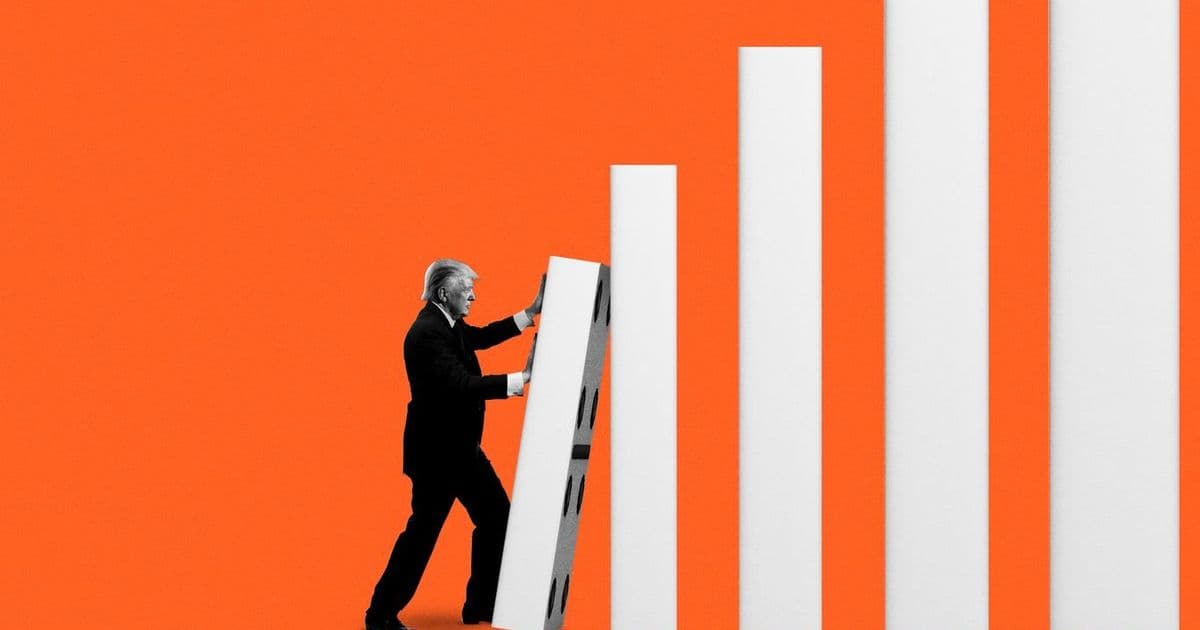
Recent statements and legal maneuvers highlight Donald Trump's expansive interpretation of presidential authority, raising constitutional concerns.
Recent political maneuvers by former President Donald Trump have ignited fresh debates about the scope of executive power. His public statements and legal filings in early 2024 suggest an interpretation of presidential immunity that constitutional scholars argue could fundamentally reshape the balance of power in the U.S. government.

The core contention centers around claims made in federal court documents filed on January 8th, where Trump's legal team asserted that presidential actions—even those occurring after leaving office—should be shielded from criminal prosecution. This argument builds upon previous claims that a president cannot be held accountable for official acts while in office, regardless of their nature.
Legal experts from Harvard and Yale have analyzed these filings as part of a broader pattern. Professor Laurence Tribe noted: 'The latest briefs attempt to extend absolute immunity beyond constitutional text or historical precedent. If accepted, this would create a dangerous precedent where former presidents operate above the law.'
Historical context reveals this stance diverges sharply from established norms. The Nixon v. Fitzgerald (1982) decision granted limited civil immunity for official acts, while the Clinton v. Jones (1997) ruling explicitly rejected immunity for unofficial conduct occurring during presidency. Trump's position appears to seek broader protections than any previous administration.
Constitutional implications extend beyond individual cases. If validated by courts, such interpretations could:
- Nullify key checks-and-balances mechanisms
- Create permanent legal immunity for former executives
- Undermine the principle that no individual is above the law
Ongoing cases testing these theories include:
- Federal election interference charges (DC Circuit)
- Georgia election subversion prosecution
- Classified documents litigation (Southern District of Florida)
Political strategists observe these maneuvers serve dual purposes: delaying legal consequences while testing boundaries of executive authority. Recent polling shows 58% of Americans believe presidents shouldn't have immunity for actions outside official duties, though opinions split sharply along partisan lines.
As these cases progress through appellate courts, their outcomes may ultimately reach the Supreme Court, potentially resulting in landmark decisions about presidential power that could reshape American governance for decades.
Comments
Please log in or register to join the discussion