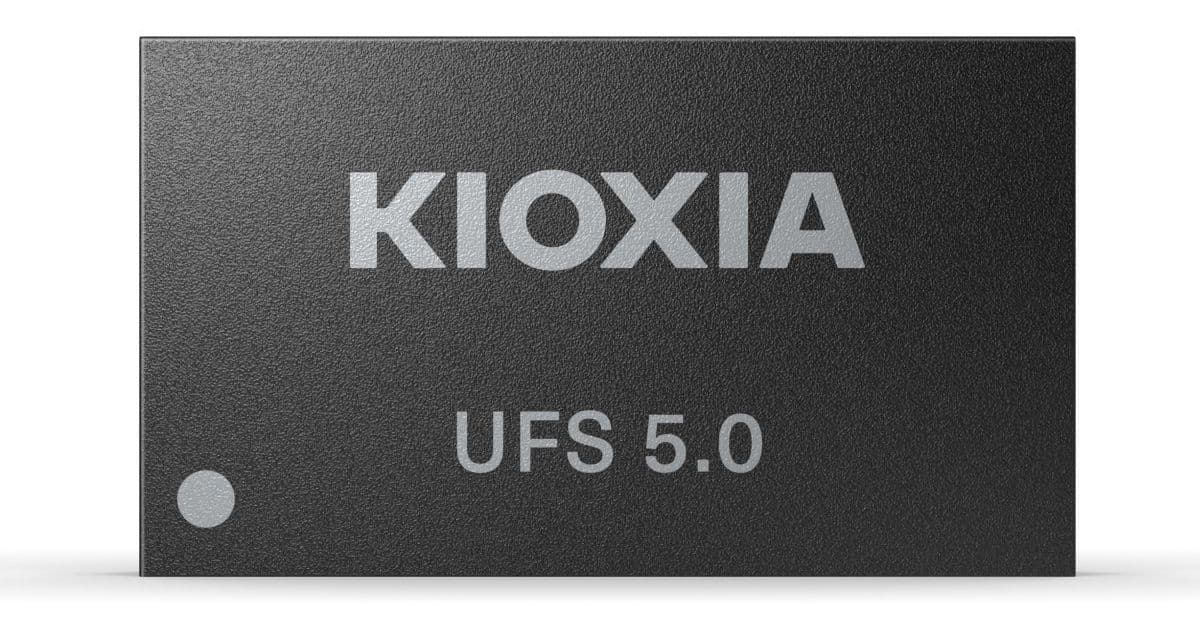
The new UFS 5.0 storage standard delivers 10.8 GB/s speeds, outpacing PCIe 4.0 SSDs and potentially revolutionizing mobile device performance.
The organization that sets standards for solid state storage has just published the UFS 5.0 specification, which enables support for sequential read/write speeds as high as 10.8 GB/s. That's almost twice as fast as UFS 4.0, which topped out at 5.8 GB/s, and it's even faster than most PCIe 4.0 NVMe SSDs, since a PCIe 4.0 x4 connection tops out at 8 GB/s for unidirectional data transfer speeds.
UFS (Universal Flash Storage) storage is used in mobile devices like high-end smartphones and tablets, as well as automotive systems. It's less common in PCs, but some cheaper Chromebooks and budget Windows laptops do use eMMC or UFS storage instead of SSDs.
With UFS 5.0 now surpassing PCIe 4.0 speeds, maybe we'll start to see it used in high-end PCs in the future… although it still lags behind PCIe 5.0 (which supports SSDs with read/write speeds as high as 16 GB/s).
In addition to the speed boost, JEDEC Solid State Technology Association says that UFS 5.0 brings "enhanced signal integrity," "improved power integrity," and "advanced data protection" when compared to earlier versions of the specification.
It may take a little while for devices with UFS 5.0 storage to hit the streets, but JEDEC's press release includes quotes from Samsung, Sandisk, SK Hynix, MediaTek and KIOXIA, indicating that plenty of major players in this space are already working to support the new standard and/or preparing to launch their own UFS 5.0 flash storage products.
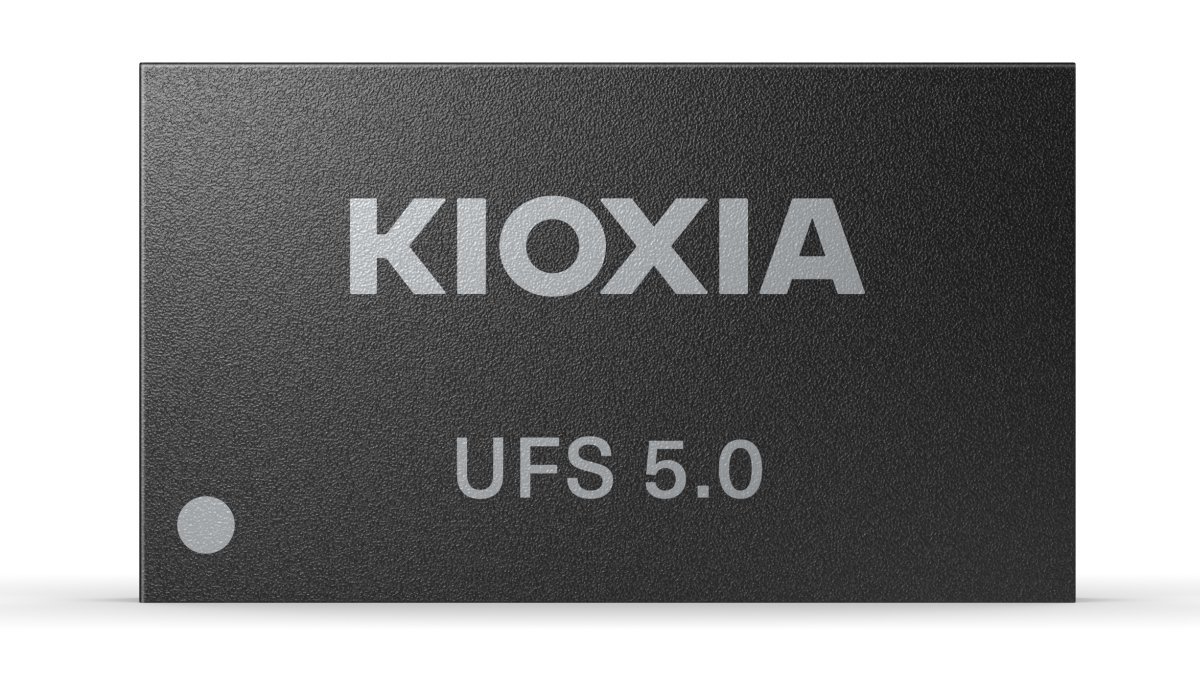
KIOXIA, for example, is already sampling 512GB and 1TB flash storage packages that measure just 7.5 x 13mm (0.3" x 0.5"), demonstrating the impressive density and miniaturization possible with this technology.
Why This Matters for Mobile Computing
The implications of UFS 5.0 extend far beyond simple speed benchmarks. For mobile devices, storage performance has historically been a bottleneck that limits overall system responsiveness. While CPU and RAM technologies have advanced rapidly, storage interfaces have often lagged behind, creating a performance ceiling that affects everything from app launch times to camera buffer speeds.
With 10.8 GB/s sequential read speeds, UFS 5.0 effectively eliminates storage as a performance constraint for most mobile workloads. This means:
- App launch times could become nearly instantaneous, as the storage can feed data to the processor faster than most mobile CPUs can process it
- 4K and 8K video recording will see massive improvements in sustained write performance, eliminating dropped frames during extended recording sessions
- Gaming experiences will benefit from faster asset loading, reducing pop-in and loading screens in mobile games
- AI and machine learning workloads on-device will accelerate, as large model files can be accessed and processed more quickly
The Technical Architecture Behind the Speed
UFS 5.0 achieves these impressive speeds through several architectural improvements over previous versions:
Multi-lane architecture: UFS 5.0 utilizes multiple lanes for simultaneous data transfer, similar to how PCIe works but optimized for flash storage's characteristics. This parallel approach allows for much higher aggregate throughput than single-lane designs.
Advanced error correction: The "enhanced signal integrity" mentioned by JEDEC likely refers to more sophisticated error correction algorithms that can maintain data integrity at higher speeds without the overhead that would otherwise slow things down.
Improved power management: "Improved power integrity" suggests better voltage regulation and power delivery systems that can sustain high-speed operation without excessive power consumption or heat generation—critical for mobile devices where battery life and thermal management are paramount.
Advanced data protection: This likely includes stronger encryption capabilities and more robust data integrity checking, ensuring that the increased speed doesn't come at the cost of data security or reliability.
Market Impact and Adoption Timeline
The involvement of major industry players in the UFS 5.0 announcement is a strong indicator of imminent adoption. Samsung, Sandisk, SK Hynix, MediaTek, and KIOXIA represent a significant portion of the mobile storage and chipset market, and their early commitment suggests we could see UFS 5.0 devices by late 2024 or early 2025.
For consumers, this means:
- Flagship smartphones in 2025 will likely feature UFS 5.0 storage as a key selling point
- High-end tablets will benefit from the combination of fast storage and powerful processors
- Automotive systems will see improved performance for infotainment and autonomous driving features
- Budget devices may eventually adopt UFS 5.0 as prices decrease, though initial implementations will likely remain in premium segments
How UFS 5.0 Compares to Other Storage Technologies
To put UFS 5.0's 10.8 GB/s speed in perspective, here's how it compares to other common storage interfaces:
- UFS 4.0: 5.8 GB/s (previous generation)
- PCIe 4.0 x4: 8 GB/s (common in modern PCs)
- UFS 5.0: 10.8 GB/s (new standard)
- PCIe 5.0 x4: 16 GB/s (next-gen PC storage)
- PCIe 6.0 x4: 32 GB/s (future PC storage)
What's particularly interesting is that UFS 5.0 now exceeds the performance of PCIe 4.0, which has been the standard for high-performance PC storage for several years. This represents a significant milestone in mobile storage technology, demonstrating that mobile-focused interfaces can now compete with PC-centric standards.
However, UFS 5.0 still lags behind PCIe 5.0, which supports speeds up to 16 GB/s. This gap suggests that while UFS 5.0 is excellent for mobile applications, PC users who demand the absolute highest storage performance will still need PCIe 5.0 or future standards.
The Future of Mobile Storage
The development of UFS 5.0 raises interesting questions about the future of storage in computing devices. As mobile storage continues to advance, we may see several trends emerge:
Convergence of mobile and PC storage: As UFS technology approaches and potentially exceeds PCIe 4.0 speeds, we might see more PC manufacturers adopt UFS for certain applications, particularly in ultra-thin laptops where space and power efficiency are critical.
New use cases emerge: The combination of UFS 5.0's speed and its small form factor could enable new applications in areas like augmented reality, real-time video processing, and edge computing where both performance and physical size matter.
Storage as a performance differentiator: As other components in mobile devices become increasingly commoditized, storage performance may become a key differentiator between premium and budget devices, similar to how camera quality has evolved over the past decade.
Potential for UFS in data centers: While currently focused on mobile and automotive applications, the efficiency and performance of UFS could eventually make it attractive for certain data center workloads where density and power efficiency are more important than absolute maximum speed.
What This Means for Developers
For software developers, UFS 5.0 represents both an opportunity and a challenge. On the positive side, applications can now assume much faster storage access, enabling:
- Larger, more complex datasets to be loaded quickly
- More sophisticated caching strategies that rely on fast storage
- Real-time processing of large media files without buffering
- Faster application startup and resume times
However, developers will also need to consider that not all devices will have UFS 5.0 immediately, creating a performance disparity between high-end and mid-range devices. This may require:
- Adaptive loading strategies that adjust based on available storage performance
- Graceful degradation for features that rely heavily on fast storage
- Performance testing across different storage configurations to ensure consistent user experiences
The bottom line is that UFS 5.0 represents a significant leap forward in mobile storage technology, one that will have ripple effects throughout the mobile computing ecosystem. As devices with this technology begin to ship, we can expect to see new applications and use cases emerge that take full advantage of the increased storage performance, potentially changing how we think about what's possible on mobile devices.
Comments
Please log in or register to join the discussion