An exploration of the complex relationship between enthusiasts and evolving technology through the lens of one blogger's journey through accessibility, hardware hacking, and open-source experimentation.
The digital landscape has always been a frontier for those willing to push boundaries, yet few capture the delicate balance between progress and frustration as vividly as the author behind 'Insane Rambles About Technology.' This collection of posts spanning nearly two years reveals not merely a technical diary, but a philosophical meditation on what it means to be a tinkerer in an increasingly complex technological ecosystem.
At the heart of this exploration lies the tension between accessibility and innovation. The post detailing 'My Accessibility Stack and the future on Wayland' represents a crucial intersection where personal need meets technological evolution. Wayland, the modern display server protocol for Linux systems, promises improved security and performance yet presents significant challenges for assistive technologies. The author's struggle to make their environment work underscores a fundamental truth: progress often comes at the cost of familiarity, and those with accessibility requirements face disproportionate hurdles during technological transitions.
This theme resonates throughout the collection, particularly in the post about 'Failing At Locoting Into My Desktop.' The one-day 'failed hackjob' speaks volumes about the precarious nature of self-hosted solutions and the constant battle between convenience and control. In an era where cloud services promise seamless experiences, the author's commitment to maintaining local control represents a counter-cultural stance valuing autonomy over ease of use.
The technical depth displayed in posts like 'AMD's NPU working on Fedora Linux' reveals a sophisticated understanding of emerging hardware capabilities. Neural Processing Units represent the next frontier in computing efficiency, yet the author's 'week-one guide to a bleeding edge stack' acknowledges the inherent instability of working with technology still in its infancy. This documentation serves not merely as a tutorial, but as a time capsule capturing the state of hardware-software integration at a particular moment in technological evolution.
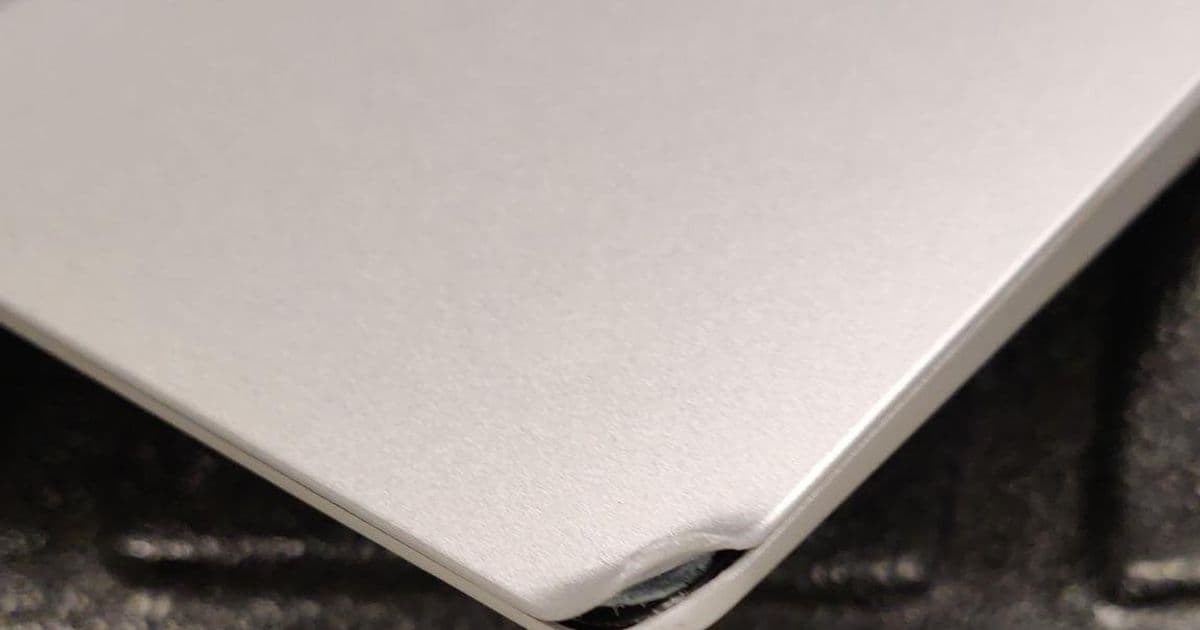
Hardware hacking emerges as a recurring motif, with 'Fixing my Framework with a vise grip' standing as a particularly vivid example. The image of someone using a vise grip to repair a modern laptop encapsulates the ethos of this blog: making do, adapting, and finding solutions outside conventional channels. The Framework laptop itself represents an interesting development in the tech industry—a modular, repairable computer designed for tinkerers. Yet even this forward-thinking device requires unconventional maintenance, highlighting the gap between ideal design and real-world usage.
The relationship between humans and technology takes unexpected turns in posts like 'Getting roasted as a furry' and 'Another Animal Costume.' These entries, seemingly out of place in a tech blog, actually reveal something profound about how we interact with digital identities and avatars. The technical infrastructure that enables virtual personas—from VRChat to gaming platforms—becomes invisible until something goes wrong, forcing us to confront the fragile nature of our digital existences.
The gaming posts, particularly 'EmuDeck is Magic,' demonstrate how open-source software can transform consumer hardware. EmuDeck enables the Steam Deck to function as a retro gaming console, extending the life of existing hardware while preserving gaming history. This represents a powerful counterpoint to the disposable culture that often accompanies technology, showing how community-developed tools can breathe new life into devices.
The author's experiments with AI, documented in 'Switch AI,' reveal a thoughtful approach to emerging technologies. Rather than simply accepting the hype around artificial intelligence, the post presents a practical application that extends the usefulness of existing hardware. This pragmatic approach—testing capabilities rather than accepting promises—characterizes the author's methodology throughout the blog.
Perhaps most telling is the post titled 'How not to build a home server And then how to build a server.' This meta-commentary on the learning process captures the essence of the tinkerer's journey. The willingness to document failure as thoroughly as success represents not just technical honesty, but a recognition that progress emerges from iteration and experimentation.
The collection concludes with reflections on time and technology, as seen in 'One Year with the Prusa XL.' The 3D printer, a tool that creates physical objects from digital designs, becomes a metaphor for the author's relationship with technology itself—something that requires constant calibration, maintenance, and refinement to produce meaningful results.
Through these varied posts, a coherent philosophy emerges: technology should serve human needs, not the reverse. The author's willingness to experiment, document failures, and share knowledge represents a vital contribution to the digital commons. In an era where technology often feels imposed rather than chosen, these 'insane rambles' serve as both documentation and resistance—proof that individuals can still shape their technological environments, even as those environments become increasingly complex.
The blog's eventual resurrection after hosting failures ('The website is back up, again') symbolizes the resilience of this approach. Technology may fail, hosting may lapse, but the knowledge persists, shared freely with those who follow a similar path. In this way, the blog transcends mere technical documentation to become a testament to the enduring human impulse to understand, modify, and improve the tools that shape our lives.
Comments
Please log in or register to join the discussion