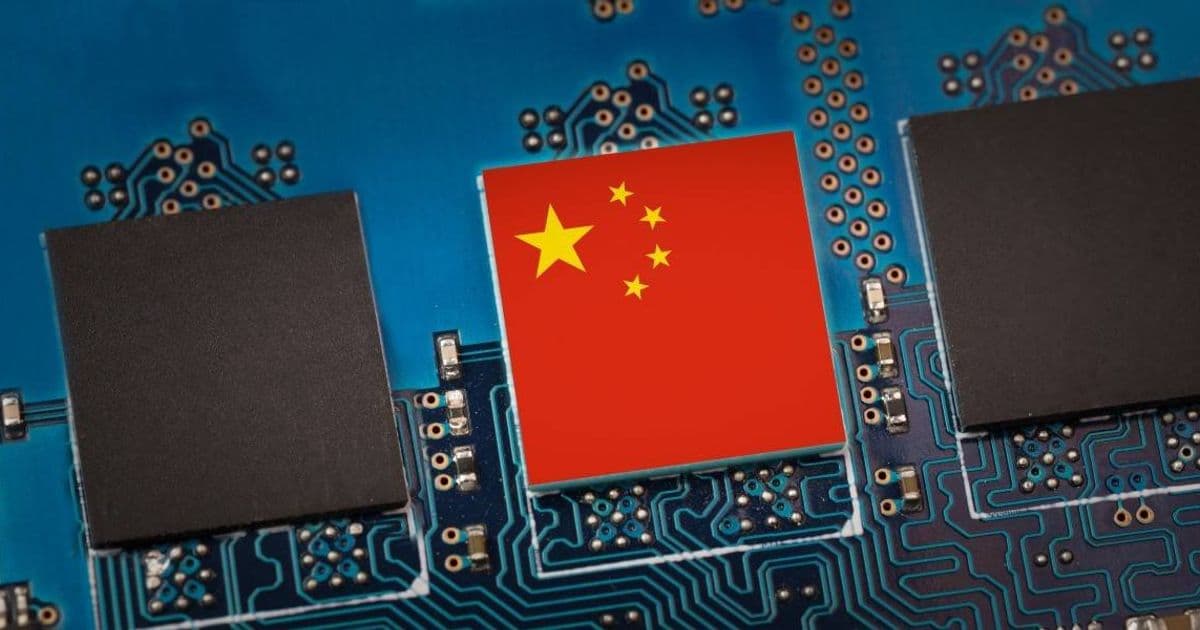
China warns of semiconductor supply chain crisis after Nexperia cuts Chinese staff from SAP systems, while Indonesia bans social media for under-16s and India's PC market struggles to grow.
China's Ministry of Commerce has issued a stark warning about potential global semiconductor supply chain disruptions following a dispute between Dutch chipmaker Nexperia and its Chinese operations, while other Asian nations grapple with their own tech policy challenges.
Nexperia-China Dispute Escalates
The controversy centers on Nexperia, a Dutch semiconductor company owned by Chinese conglomerate Wingtech Technologies, which found itself at the center of a geopolitical tug-of-war. In late 2025, the Dutch government seized control of Nexperia's local operations, citing concerns about illegal technology transfers to China.
Tensions flared again last week when Nexperia China claimed its Dutch parent company cut off access to critical business systems including SAP and Microsoft 365 for all Chinese employees on March 3rd. This move effectively paralyzed the company's ability to process new orders, according to Chinese officials.
Nexperia China stated that as of Friday, it could only maintain "basic production operations" while working to minimize disruption to production and delivery schedules. However, Nexperia's Dutch entity pushed back, telling Reuters that its Chinese subsidiary's statements were "factually incorrect and misleading."
China's Ministry of Commerce condemned the action as creating "new conflicts and difficulties" for ongoing negotiations. The ministry issued a pointed warning: "If this triggers another global semiconductor supply chain crisis, the Netherlands must bear full responsibility."
The dispute highlights the increasingly fraught relationship between Western governments and Chinese tech companies, particularly in strategic sectors like semiconductor manufacturing. Nexperia produces chips in high demand for automotive applications, making any supply disruption particularly concerning for global manufacturers.
Indonesia Bans Social Media for Under-16s
Meanwhile, Indonesia announced a sweeping ban on social media access for children aged 16 and under, set to take effect March 28th. Communications Minister Meutya Hafid cited concerns about cyberbullying and addiction risks as justification for the controversial policy.
"We understand that this step may cause discomfort at first. However, the government cannot remain silent when the future of children is at stake," Hafid stated in a speech announcing the ban.
The restrictions will impact major platforms including YouTube, TikTok, Facebook, Instagram, Threads, X (formerly Twitter), Bigo Live, and Roblox. With Indonesia's population of nearly 300 million, approximately 75 million residents will be affected by the ban.
This represents a significant market restriction for Big Tech companies operating in Southeast Asia's largest economy. The ban raises questions about enforcement mechanisms and potential workarounds that tech-savvy youth might employ.
India's PC Market Shows Modest Growth
India's personal computer market continues to struggle with penetration despite posting its "strongest year ever" in 2025, according to analyst firm IDC. Vendors shipped 15.9 million PCs to India last year, with 8.6 million going to businesses and 7.3 million to consumers.
While this represents an 8.6 percent year-over-year growth, the numbers pale in comparison to India's population of over 1.4 billion. The 7.3 million consumer PCs translate to roughly one new PC for every 192 Indians, highlighting the massive untapped potential in one of the world's largest markets.
Vietnam Launches National AI Initiative
Vietnam's government announced the creation of a national AI fund to establish AI cluster hubs at high-tech parks, digital technology zones, and innovation centers. While the government hasn't specified the investment amount, it indicated that funds will support investors building technical infrastructure.
Amazon Web Services also signaled increased interest in Vietnam, with Vice President of Data Center Planning and Delivery Kerry Person promising to develop local talent and expressing desire for expanded government business relationships.
China Concerned About AI's Employment Impact
China's Minister of Human Resources and Social Security Wang Xiaoping revealed growing government concern about artificial intelligence's impact on employment. While the ministry plans to "actively harness AI in creating new job opportunities and empowering traditional jobs," Wang acknowledged the "profound impact" AI development has on employment.
A Japanese media report quoted Wang as describing the situation as "of great concern to everyone," suggesting Chinese officials are grappling with how to balance AI advancement with workforce stability.
Regional Tech Developments
Other notable developments across Asia include:
Panasonic announced it has begun taking orders for datacenter-grade liquid cooling equipment in Europe, developed in partnership with Italian company Tecnair S.p.A, which Panasonic acquired in 2023.
The Japanese electronics giant also unveiled new datacenter cooling technology for small facilities in regions where outdoor temperatures fall below 10°C, using ambient cold to generate chilled water.
Vietnam's government continues to position itself as an emerging tech hub, with multiple announcements suggesting coordinated efforts to attract investment and develop domestic capabilities.
These developments collectively illustrate the complex interplay between technological advancement, government regulation, and market dynamics across Asia. From semiconductor supply chain tensions to social media restrictions and AI workforce concerns, the region's tech landscape continues to evolve amid growing geopolitical complexity.
The Nexperia dispute in particular serves as a microcosm of broader tensions between China and Western nations over technology control, supply chain security, and economic influence. As governments increasingly view tech companies through the lens of national security and economic competitiveness, similar conflicts are likely to emerge across other strategic sectors.
For global tech companies operating across borders, these developments underscore the growing importance of navigating complex regulatory environments and geopolitical sensitivities. The ability to maintain operations while satisfying multiple, sometimes conflicting, governmental requirements may become a defining challenge of the coming decade.
Comments
Please log in or register to join the discussion