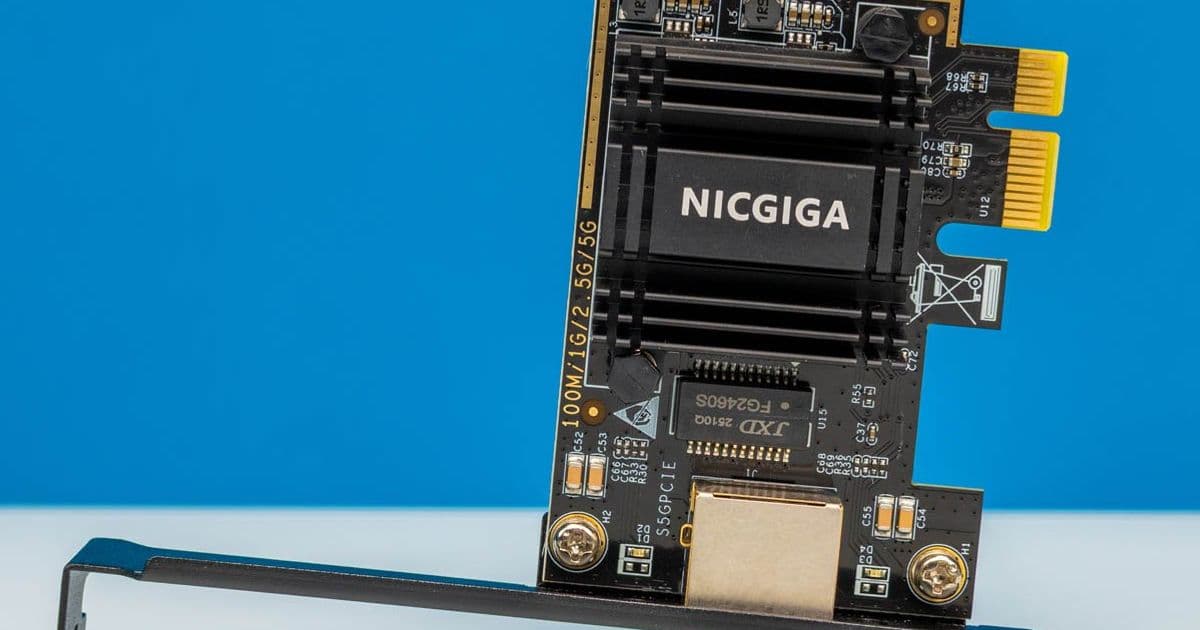
Nicgiga's compact 5GbE PCIe adapter offers solid performance at $36, using the reliable Realtek RTL8126 chip found in most budget 5GbE cards.
Networking Facebook Twitter Pinterest Linkedin ReddIt Email Print Copy URL
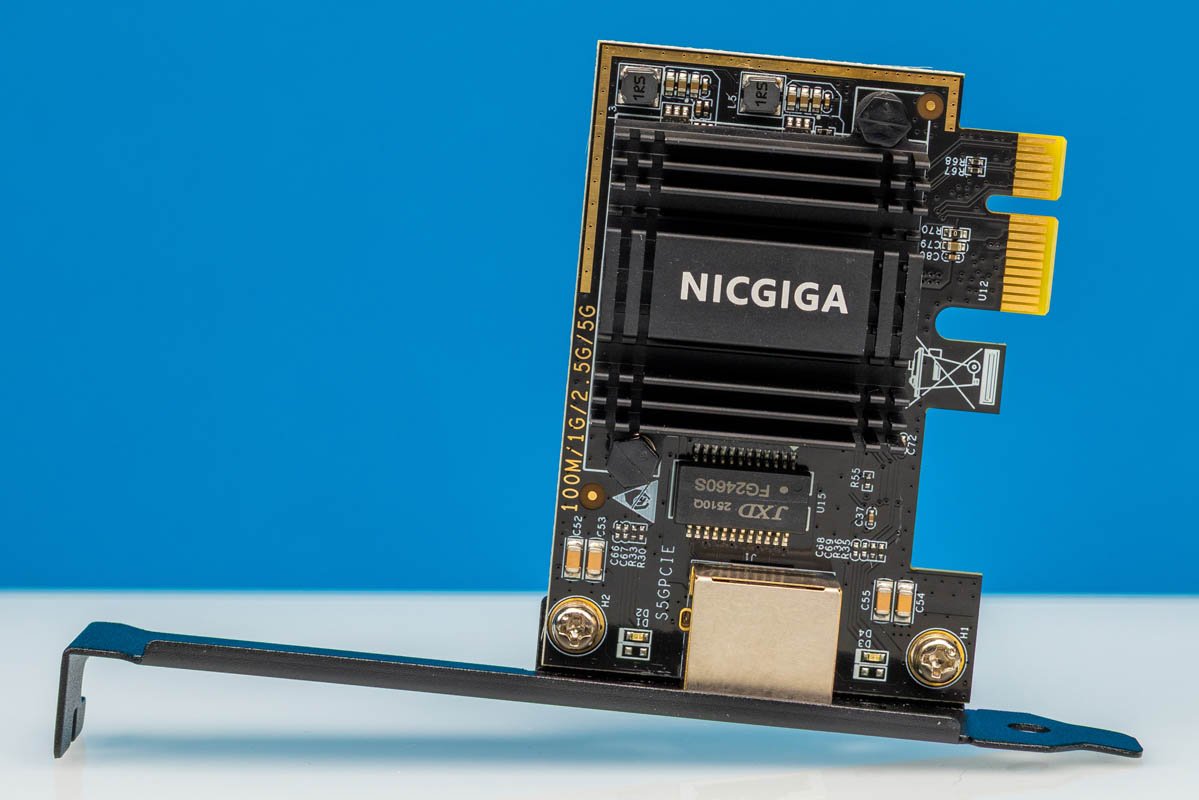
We've been running a series on 5GbE networking this month, and one of the cards we purchased for testing is the Nicgiga 5GbE adapter. For those wondering about the name, it's literally "Nic" (as in network interface card) plus "Giga" - straightforward branding at its finest.
This is another Realtek RTL8126-based card, joining the growing ecosystem of budget 5GbE adapters. The RTL8126 chip supports 2.5GbE and 1GbE speeds as well, making it a versatile option for users upgrading from older networking hardware. We purchased ours for $36, which puts it slightly above the BrosTrend 5GbE card we previously reviewed at $34-35, but we wanted to showcase the available options in this price segment.
Hardware Overview
The card is a small PCIe Gen3 x1 device, designed to be as compact as possible for its form factor. This makes it ideal for systems with limited expansion space or when you need to preserve airflow around other components.
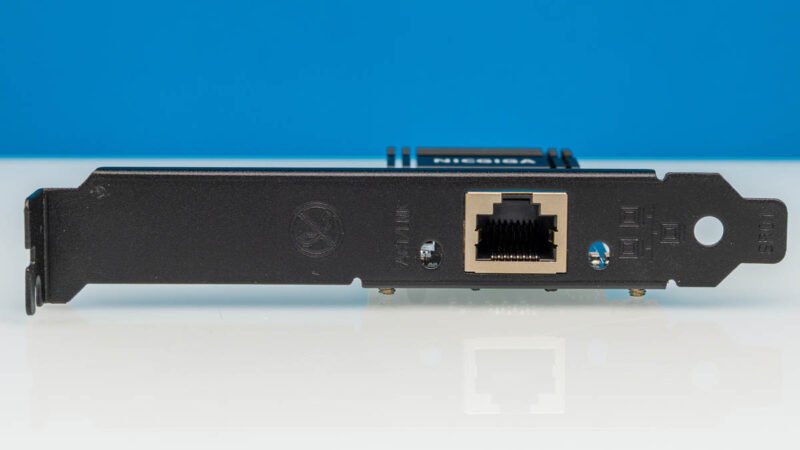
Here's the single network port - straightforward and functional without any unnecessary frills.
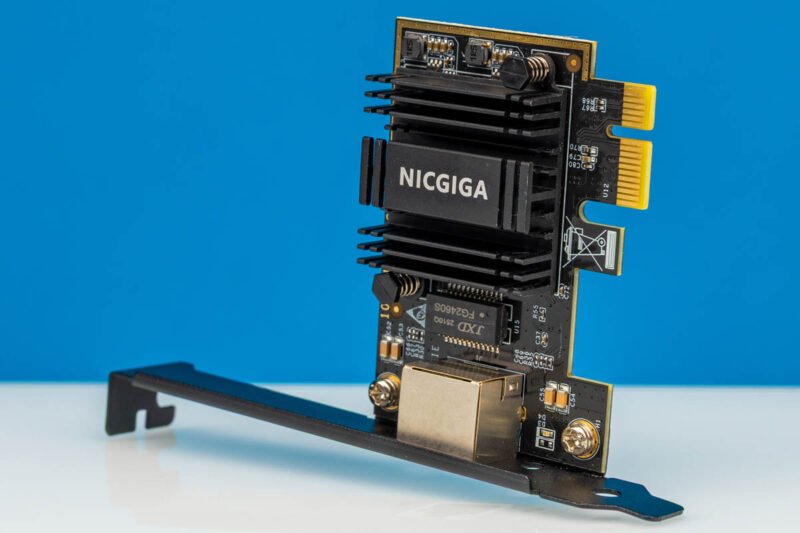
Something worth noting about the thermal design: unlike some server-grade NICs that feature front-to-back airflow designs, this heatsink uses an up-and-down airflow pattern. This could be relevant for systems with specific cooling requirements or dense server chassis.
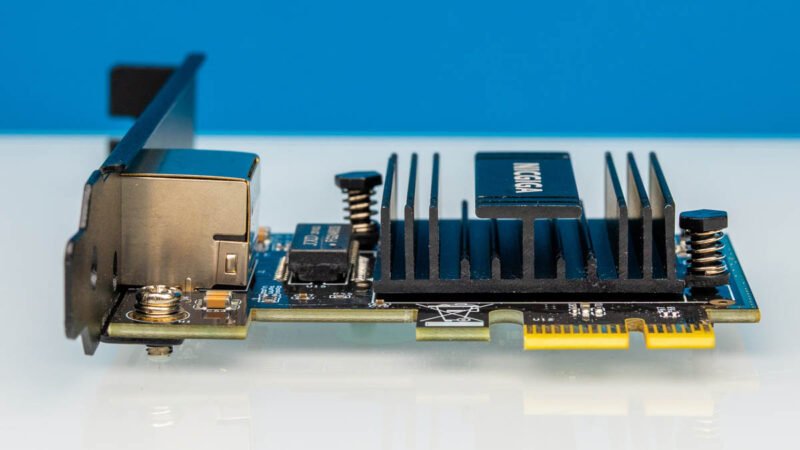
Unlike some competitors, the heatsink doesn't use a thick thermal pad between it and the RTL8126 NIC chip. This design choice might affect long-term thermal performance under sustained load, though we didn't observe any thermal throttling during our testing.
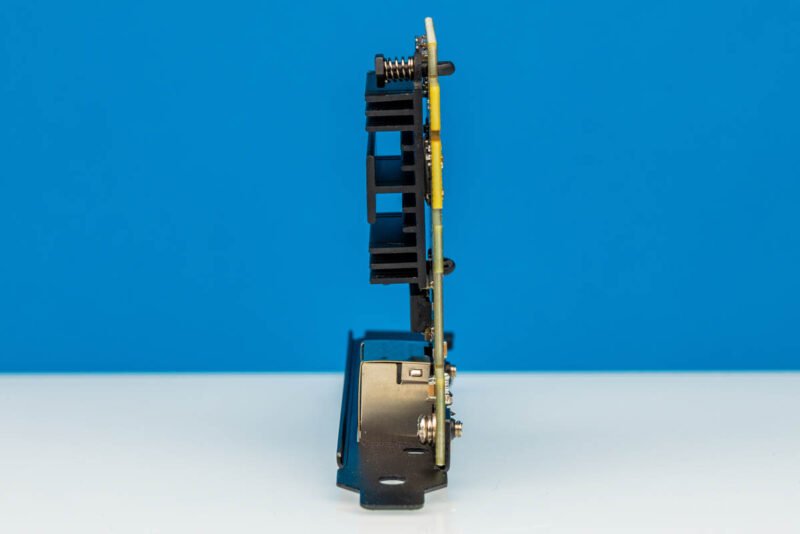
The back of the card is fairly bare - no surprises here, just the standard mounting points and minimal componentry.
{{IMAGE:6}}
The low-profile bracket included with the card allows for installation in space-constrained systems, making this a versatile option for both desktop and small form factor builds.
{{IMAGE:7}}
Here's the Realtek RTL8126 NIC chip that we find on almost all of these 5GbE adapters. The widespread adoption of this chip has led to excellent driver support across operating systems, though you may still need to install drivers depending on your OS version.
Performance Testing
The Realtek RTL8126 is continually getting better support, but it's worth noting this is a 2023-era NIC that we really started seeing in cards in 2024. For a consumer CPU, that might seem old. For a NIC, 2.5 years old (at the time of this review) is relatively new.
We ran our standard iperf3 testing on this adapter:
{{IMAGE:8}}
Nicgiga 5GbE Realtek RTL8126 Performance
Overall, this is spot on with the other RTL8126 NICs that we have tested with this setup. The performance is exactly what you'd expect from this chipset - reliable and consistent, hitting the advertised speeds without any surprises.
Final Thoughts
This is certainly not the fanciest NIC on the market. At the same time, it's a Realtek RTL8126 5GbE NIC that is fairly inexpensive. The BrosTrend 5GbE card came in nicer packaging, had better branding, and cost $1-2 less, so that's usually our go-to recommendation.
Still, pricing changes over time, and these tend to be about $13-16 more than a 2.5GbE NIC. So if you have a PCIe Gen3 x1 slot and were thinking about adding a 2.5GbE NIC, this costs a few dollars more and offers the potential to run at the higher speeds when your network infrastructure supports it.
{{IMAGE:9}}
Overall, this NIC was cheap, and it worked. At the same time, aside from price, there is no real differentiator for this NIC. That's why we're buying more of the BrosTrend units right now, but if this was less expensive, we might choose this one instead.
Where to Buy
If you want to purchase one of these, here is an Amazon Affiliate link to what we purchased.
For users considering this card, the decision ultimately comes down to price and availability. The performance is identical to other RTL8126-based cards, so you're essentially paying for the brand name and potentially better customer support. If Nicgiga offers competitive pricing in your region, this is a perfectly viable option for adding 5GbE connectivity to your system.
Comments
Please log in or register to join the discussion