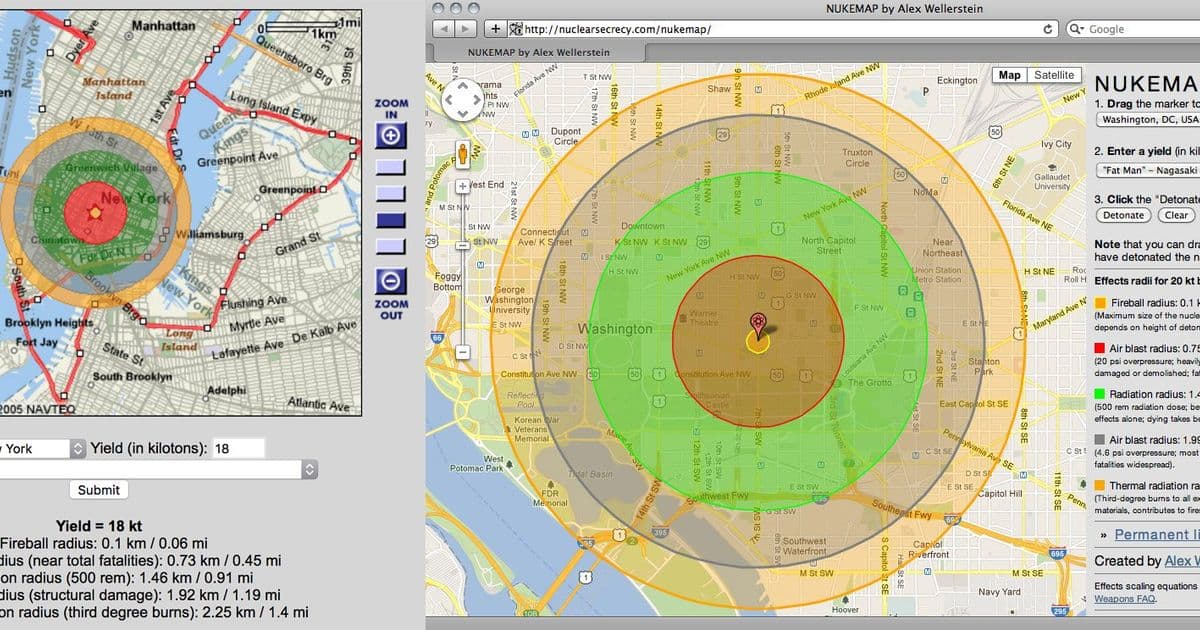
A nuclear effects simulation tool used by millions faces existential threat when Google's mapping fees jump from $200 to $1,800 monthly, forcing a migration to open-source alternatives.
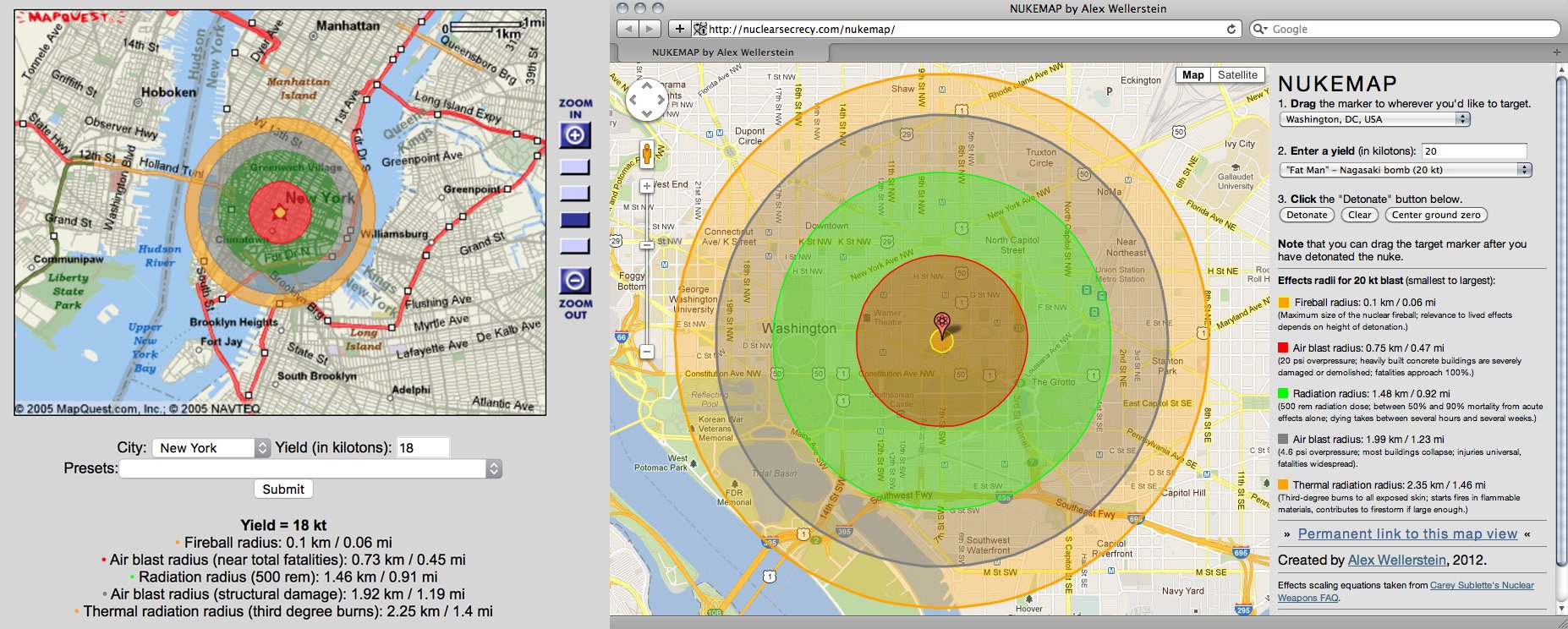
For over seven years, historian Alex Wellerstein's NUKEMAP leveraged Google Maps to help the public visualize nuclear detonation effects. The tool served 15,000-200,000 daily users at peak, costing nothing until 2016 when Google introduced API fees. What began as manageable $200/month expenses soon became unsustainable when Google overhauled its pricing model in 2018.
"My bill jumped to $1,800 monthly—over $20,000 annually," Wellerstein explains. "That's multiple times my entire web hosting budget." When he sought relief through Google's nonprofit program, he discovered educational institutions like Stevens Institute of Technology (his employer) were explicitly excluded. Google for Nonprofits requires applicants to be charitable organizations, not academic researchers affiliated with universities.
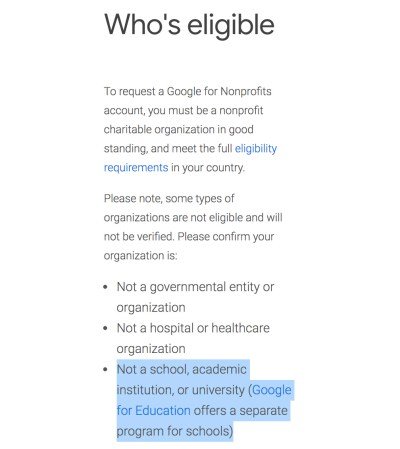
Google's nonprofit eligibility guidelines blocked academic access
The pricing calculator revealed the harsh reality: Dynamic map loads cost $7 per 1,000 requests. With NUKEMAP's traffic, expenses quickly scaled into five figures. Google's support offered no solutions—only referral to enterprise sales partners. "They clearly don't care about small developers," Wellerstein observed. "The constant deprecation of features and pricing instability makes them unreliable for long-term projects."
Facing financial impossibility, Wellerstein migrated to Mapbox and Leaflet—an open-source JavaScript library. Mapbox's transparent pricing ($0.50-$5 per 1,000 loads) combined with proactive support made the transition feasible. "They gave usage credits and assigned an actual human who suggests cost-saving improvements," he notes. The switch required developing a custom Leaflet plugin for drawing blast radius arcs, but preserved core functionality.
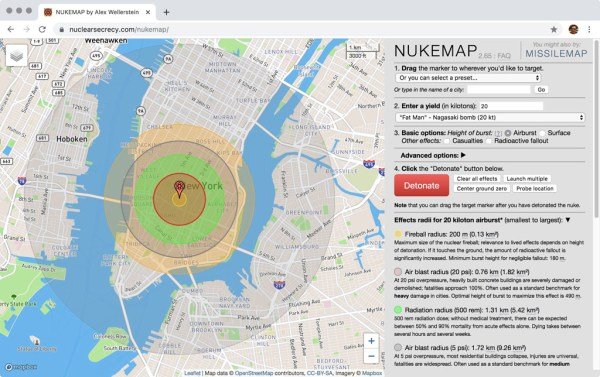
NUKEMAP 2.65 running on Mapbox + Leaflet
The move carries broader implications for developers. Wellerstein no longer teaches Google Maps API in his data visualization courses, warning students: "With Google, becoming moderately popular becomes financially toxic." Meanwhile, he enhanced NUKEMAP's capabilities during the transition, adding a fallout exposure calculator that models radiation absorption based on shelter type and duration.
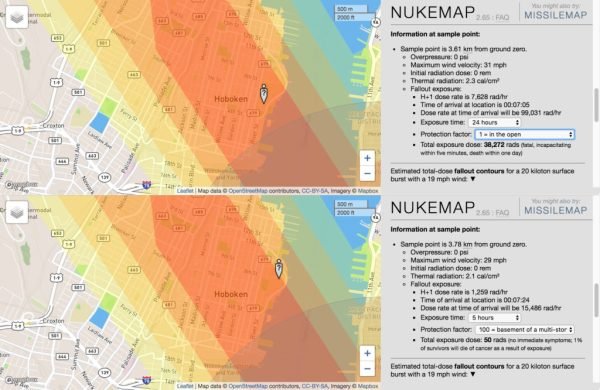
Comparative fallout exposure scenarios with protection factors
The episode reveals how platform risk impacts public-interest tools. While Google captured the educational market through institutional sales, it abandoned the ecosystem of individual creators that initially populated its platform. For projects like NUKEMAP—which continues at nuclearsecrecy.com/nukemap—the solution came not from corporate accommodation, but from adaptable open-source alternatives.
Visualization resources:
- Leaflet.js open-source mapping library
- Mapbox pricing structure
- NUKEMAP GitHub source code
Comments
Please log in or register to join the discussion