
Nvidia's DLSS 5.0 introduces real-time neural rendering, promising dramatic visual improvements for RTX 50 series GPUs this fall, though early demos show inconsistent results across different game engines.
Nvidia is breaking with tradition by launching DLSS 5.0 this fall, independent of any new graphics card release. The company unveiled the technology at GTC 2026, showcasing it alongside popular titles including Resident Evil Requiem, Hogwarts Legacy, Starfield, and Assassin's Creed Shadows. Unlike previous DLSS versions that relied on transformer and CNN models, DLSS 5.0 employs what Nvidia calls "real-time neural rendering" - a more advanced AI approach that enhances color and motion vectors to create more photorealistic gaming experiences.

Early demonstrations reveal mixed results across different game engines. While some titles show clear visual improvements, Unreal Engine 5 games like The Elder Scrolls IV: Oblivion Remastered appear to undergo a complete visual transformation. The technology's performance demands are substantial - Digital Foundry reports that Nvidia needed to pair two RTX 5090 GPUs to run the DLSS 5.0 demos at maximum potential without VRAM bottlenecks.


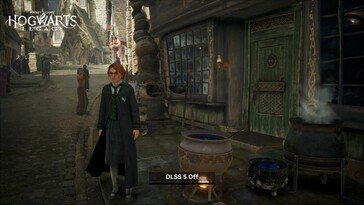
The demo comparisons between DLSS off and DLSS 5.0 versions of Starfield show subtle but noticeable improvements in texture clarity and lighting. Similarly, Hogwarts Legacy benefits from enhanced shadow details and more natural color gradients when DLSS 5.0 is enabled.

However, the technology is still in development, and Nvidia is likely refining the neural rendering models before the official launch. The company has confirmed that DLSS 5.0 will be exclusive to RTX 50 series devices this fall, with no announced plans for compatibility with older graphics cards. This exclusivity strategy mirrors Nvidia's approach with previous major DLSS upgrades, which have typically required newer hardware to function properly.
The decision to release DLSS 5.0 without a corresponding GPU launch suggests Nvidia is responding to market conditions that have made the RTX 60 series' release timeline uncertain. By pushing forward with software innovation independently, the company maintains momentum in its AI rendering technology while potentially buying time for hardware development.
For gamers, DLSS 5.0 represents a significant leap in AI-powered graphics enhancement, though the inconsistent results across different titles indicate that the technology may require game-specific optimization to reach its full potential. The substantial hardware requirements also mean that experiencing DLSS 5.0 at its best will be limited to users with the latest and most powerful RTX 50 series GPUs.
Comments
Please log in or register to join the discussion