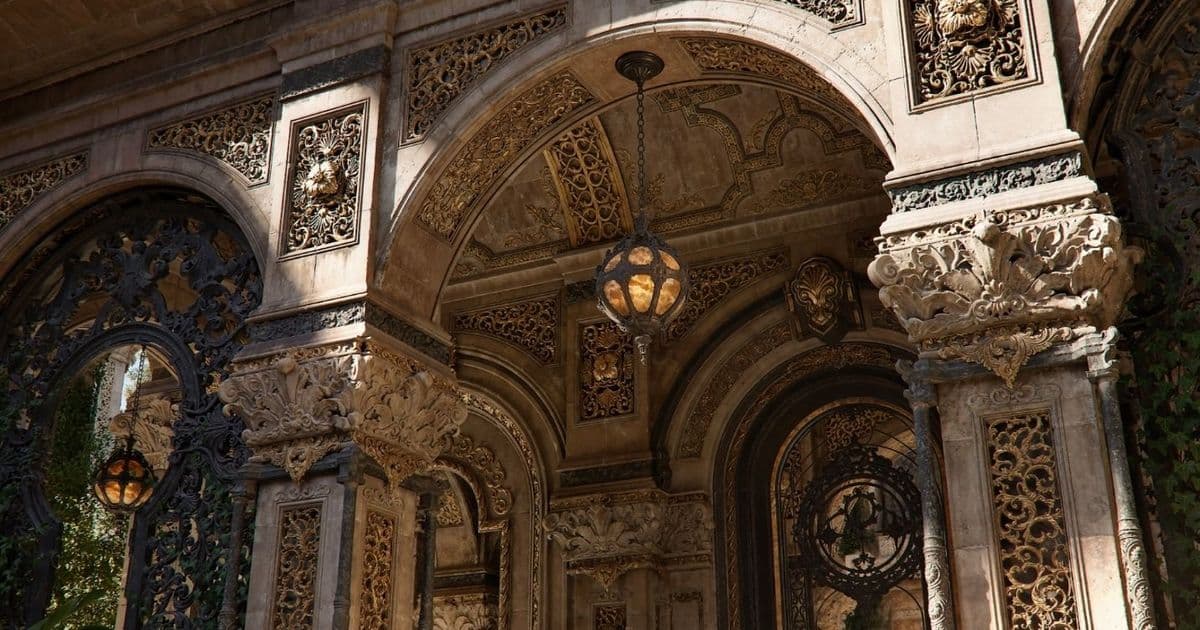
Nvidia’s RTX Mega Geometry adds a GPU‑driven cluster acceleration structure that lets full‑fidelity Nanite meshes be ray‑traced without proxy meshes. Tests on Alan Wake 2 and the RTX Bonsai Diorama demo show up to 1 GB VRAM savings, 13 % higher frame rates on RTX 4090, and a 20‑30 % performance hit on lower‑end RTX 50‑series cards, while eliminating shadow and reflection artifacts.
Announcement
Nvidia has begun shipping RTX Mega Geometry support in the RTX 50‑series GPUs and back‑ported the feature to the RTX 20‑series via driver updates. The technology promises to keep full‑detail geometry in the ray‑tracing pipeline, cut VRAM consumption by several hundred megabytes, and reduce CPU overhead when rebuilding bounding volume hierarchies (BVH). Early real‑world tests in Alan Wake 2 and Nvidia’s RTX Bonsai Diorama demo confirm the claims and outline the trade‑offs for developers.
Technical specifications
How Mega Geometry works
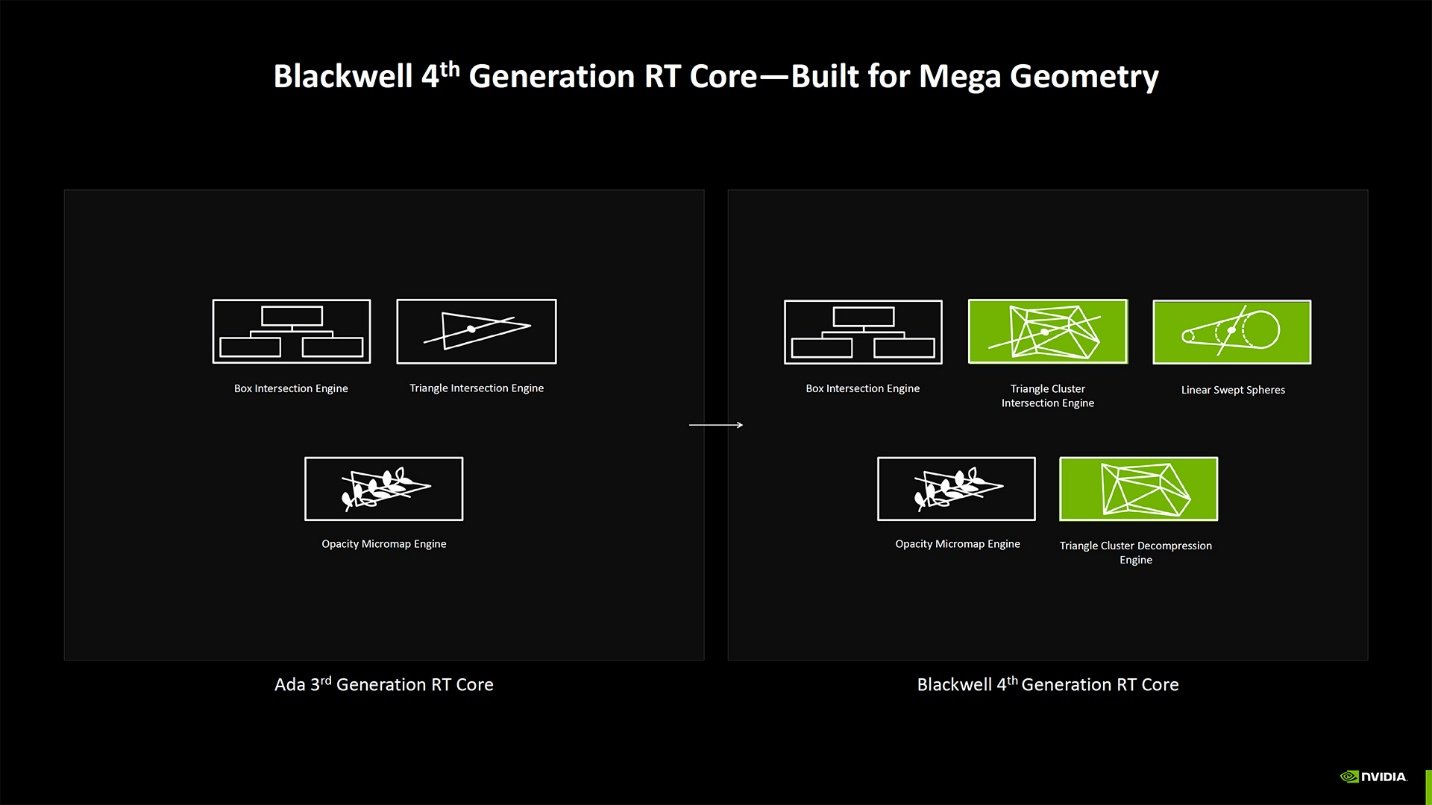
- Cluster Acceleration Structure (CLAS) – groups up to 256 triangles into a GPU‑driven batch. This lets the GPU rebuild BVHs far faster than the CPU‑centric approach used by the original DXR API.
- Fourth‑generation RT cores – Blackwell GPUs add two dedicated engines: a triangle‑cluster intersection engine and a triangle‑cluster compression engine. Together they double the ray‑triangle intersection rate of the previous generation.
- VRAM compression – By storing clusters instead of individual triangles, the CLAS reduces memory traffic, saving roughly 200‑400 MB of VRAM in dense scenes.
- CPU off‑load – CLAS construction is executed on the GPU, slashing CPU BVH‑management time by ≈70 % in the tested workloads.
Benchmarks
| Test | GPU | Resolution | Settings | VRAM saved | FPS change |
|---|---|---|---|---|---|
| Alan Wake 2 (path‑traced, max settings, DLSS Quality) | RTX 4090 | 4K native | Mega Geometry on | ~1 GB | +13 % |
| RTX Bonsai Diorama (full‑Nanite, path‑traced) | RTX 5090 | 4K (DLSS Quality) | Mega Geometry on | – | ‑21 % |
| RTX Bonsai Diorama | RTX 5090 | 1440p | Mega Geometry on | – | ‑24 % |
| RTX Bonsai Diorama | RTX 5070 | 1080p | Mega Geometry on | – | ‑27 % |
| RTX Bonsai Diorama | RTX 5060 | 1080p (DLSS SR + FG) | Mega Geometry on | – | >100 FPS (but with quality/latency loss) |
The performance hit ranges from 20 % to 27 % depending on resolution and GPU tier. On high‑end RTX 50‑series silicon the cost is acceptable for 60 FPS+ gameplay, especially when paired with DLSS Frame Generation.
Visual impact
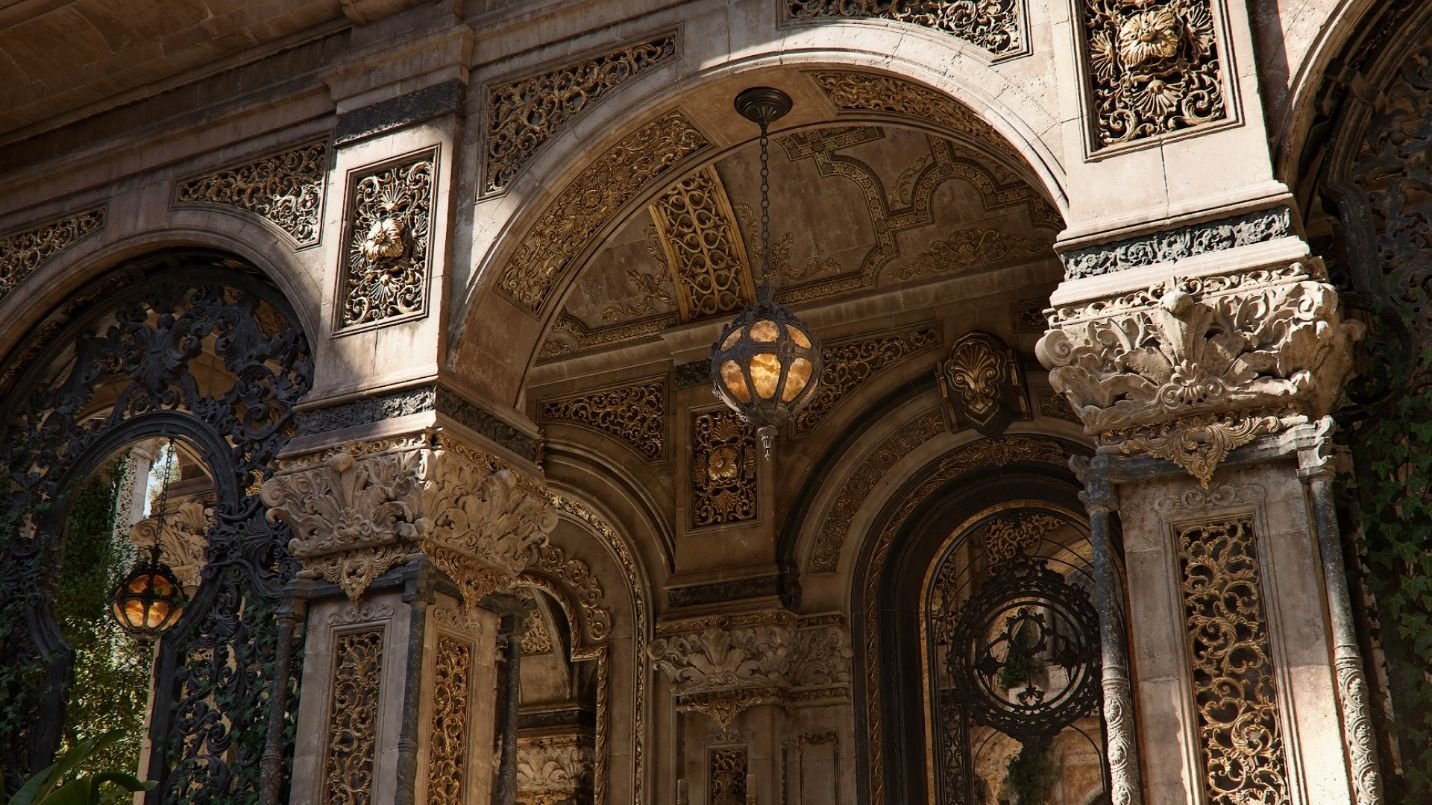
With Mega Geometry enabled, ray‑traced shadows match the underlying Nanite mesh pixel‑for‑pixel, eliminating the soft‑shadow artifacts seen in Lumen. Reflections also become accurate; missing foliage and self‑occlusion errors disappear. The demo screenshots illustrate the difference:
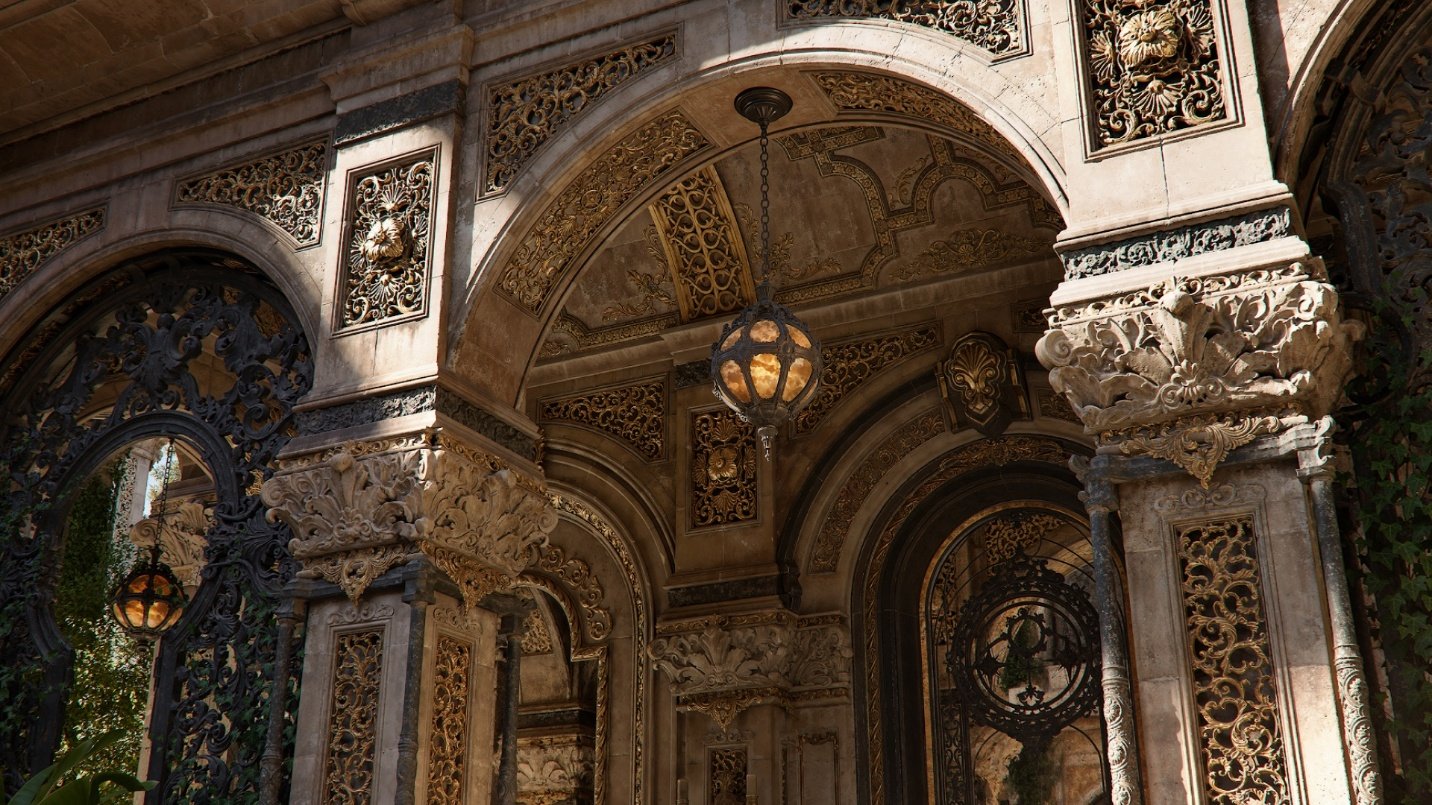 Shadow fidelity improves dramatically when full‑geometry is present in the BVH.
 Reflections show the complete leaf canopy rather than a low‑poly proxy.
Market implications
- VRAM pressure eases for high‑density titles – Games that rely on Nanite‑style virtualized geometry can now keep more assets resident in memory, reducing the need for aggressive streaming solutions. This is a direct benefit for next‑gen AAA releases that target 8K or multi‑monitor setups.
- Hardware differentiation – While the CLAS works on any RTX GPU, only the RTX 50‑series has dedicated hardware to accelerate it. Nvidia can position the RTX 5090/5080 as the optimal platform for developers who want to ship full‑fidelity path tracing without sacrificing frame rate.
- Developer workflow shift – The ability to trace full‑detail meshes removes the long‑standing practice of creating low‑poly proxy meshes for ray‑traced effects. Studios can streamline asset pipelines, focusing on a single high‑detail model rather than maintaining two versions.
- Competitive pressure – AMD’s upcoming RDNA 4 architecture includes its own ray‑tracing acceleration units, but lacks an equivalent cluster‑based BVH rebuild engine. Nvidia’s early lead may influence engine vendors (Unreal, Unity) to adopt similar GPU‑driven BVH strategies, shaping the next iteration of the DXR API.
- Future titles – Nvidia announced that Control Resonant and The Witcher 4 will ship with Mega Geometry enabled, featuring a new foliage LOD system that uses Opacity Micromaps (hardware‑accelerated on RTX 50‑series). The demo of a 5 km forest with 60 million plants ran at 80 FPS on RTX 5090 at 4K (DLSS Quality), suggesting that large‑scale, fully path‑traced worlds are becoming feasible.
Conclusion
RTX Mega Geometry represents a pragmatic step toward photorealistic real‑time graphics. By offloading BVH construction to the GPU, compressing triangle data, and providing dedicated intersection hardware, Nvidia reduces VRAM usage by up to a gigabyte and lifts frame rates by double‑digit percentages on flagship hardware. The trade‑off is a 20‑30 % performance penalty on lower‑end RTX 50‑series GPUs, which can be mitigated with DLSS and frame generation. As developers adopt the technology for upcoming titles, we can expect a noticeable shift away from proxy meshes toward full‑geometry ray tracing, raising the baseline visual fidelity of PC games.
For a deeper dive into the RTX Bonsai Diorama demo and the full benchmark suite, see Nvidia’s official developer guide.
Comments
Please log in or register to join the discussion