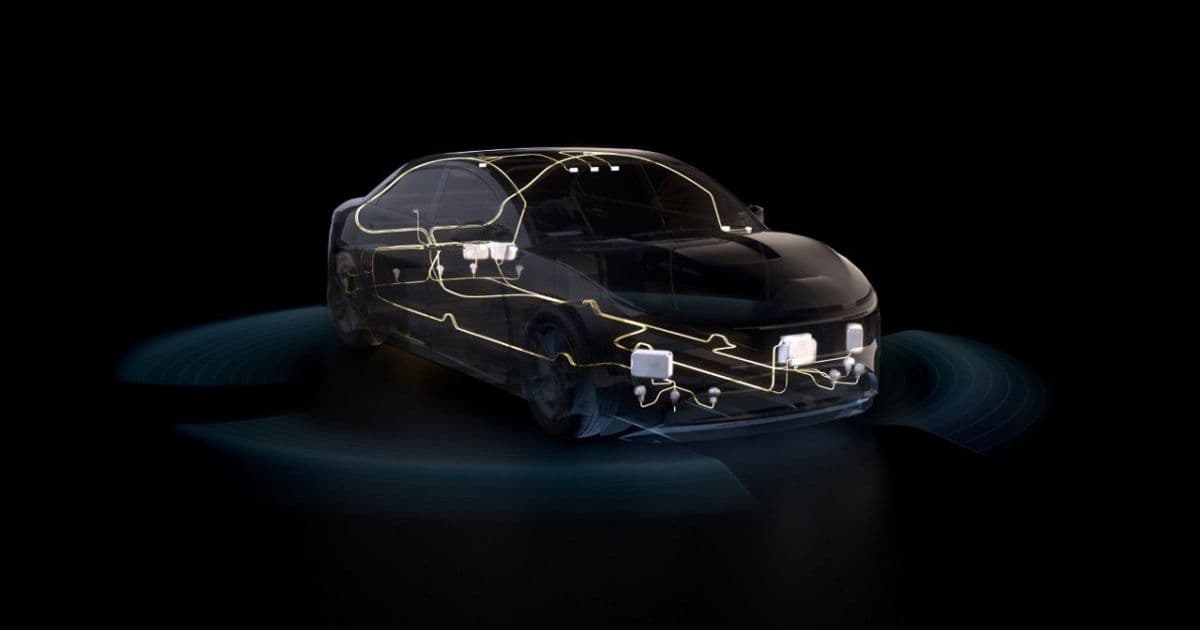
Nvidia announces BYD, Geely, Isuzu, and Nissan will adopt its Drive Hyperion autonomous vehicle platform, while Uber plans to launch robotaxis in 28 cities by 2028, marking a major expansion of the chipmaker's automotive ambitions.
Nvidia is making a bold push into the autonomous vehicle market with a series of high-profile partnerships that could reshape the future of transportation. At its GTC 2026 conference, the chipmaker announced that major automakers BYD, Geely, Isuzu, and Nissan will adopt its Drive Hyperion platform for their next-generation vehicles, while ride-hailing giant Uber plans to deploy robotaxis powered by the same technology across 28 cities by 2028.
What's Actually New
The Drive Hyperion platform represents Nvidia's comprehensive approach to autonomous driving, combining hardware and software into an integrated solution. Unlike previous announcements that focused on individual components, this marks a shift toward complete vehicle architectures that automakers can license rather than develop in-house.
The platform includes Nvidia's Orin system-on-a-chip for processing, along with AI software stacks for perception, planning, and control. For Uber, the partnership goes beyond just hardware—the companies are working on a fleet management system that will handle everything from routing to maintenance scheduling.
Why It Matters
This announcement signals a potential turning point in the autonomous vehicle industry. Rather than each automaker developing proprietary self-driving technology—a costly and time-consuming process that has yielded mixed results—Nvidia is offering a proven, scalable alternative. The company's approach mirrors its success in AI data centers, where it provides the foundational technology that others build upon.
For Uber, the robotaxi deployment represents a significant bet on autonomous technology as a path to profitability. The company has struggled with driver costs and labor relations, and removing human drivers from the equation could dramatically improve its economics. However, the 2028 timeline suggests that full autonomy remains challenging, with the companies likely planning for a gradual rollout as regulations and technology mature.
The Bigger Picture
The partnerships come amid growing competition in the autonomous vehicle space. Tesla continues to promote its own Full Self-Driving technology, while traditional suppliers like Bosch and Continental are developing competing platforms. Waymo, Alphabet's self-driving unit, has been operating robotaxis in select cities for years but hasn't achieved the scale that Uber is targeting.
Nvidia's strategy of providing a complete platform rather than just components could give it an advantage. By handling everything from the AI algorithms to the integration with ride-hailing services, the company is positioning itself as the Intel of autonomous vehicles—the essential technology provider that everyone else builds around.
Limitations and Challenges
Despite the ambitious announcements, significant hurdles remain. Regulatory approval for widespread robotaxi deployment is still uncertain, with safety concerns and liability questions yet to be resolved. The technology also faces real-world challenges, from handling unusual traffic situations to operating in adverse weather conditions.
The partnerships with BYD, Geely, Isuzu, and Nissan are particularly interesting given the geopolitical tensions surrounding autonomous vehicles. These companies represent a mix of Chinese and Japanese automakers, and their adoption of Nvidia's platform could face scrutiny in various markets.
What Comes Next
The next few years will be critical for determining whether Nvidia's automotive strategy succeeds. The company will need to prove that its platform can handle the complexity of real-world driving at scale, and the Uber deployment will serve as a high-profile test case. If successful, Drive Hyperion could become the dominant architecture for autonomous vehicles, much as Nvidia's GPUs have become essential for AI training.
For consumers, this could mean faster deployment of autonomous features across a wider range of vehicles, as automakers can leverage Nvidia's technology rather than developing everything from scratch. However, it also raises questions about data privacy and the concentration of power in the autonomous vehicle ecosystem.
The automotive industry is watching closely to see if Nvidia can replicate its data center success in a completely different domain. With billions of dollars and the future of transportation at stake, the Drive Hyperion partnerships represent one of the most significant bets yet on the future of autonomous vehicles.
Comments
Please log in or register to join the discussion